
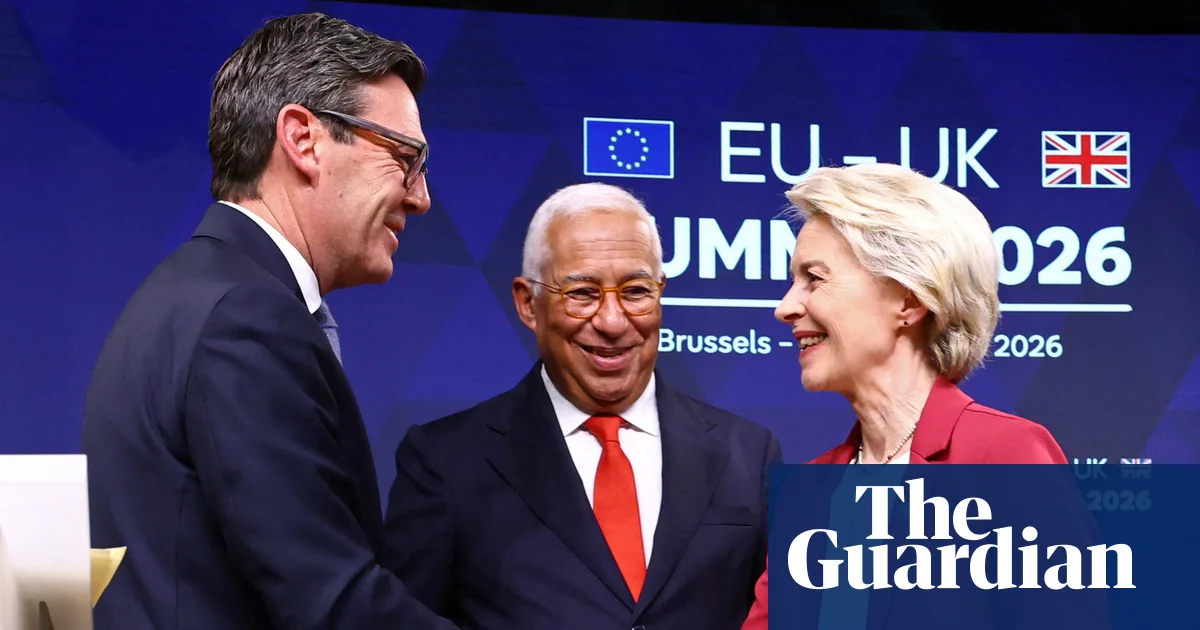
UK EU deal, Digimart Global (United Kingdom): After months of on-off negotiations, the European Union and the United Kingdom have agreed a 12-page statement setting out the next steps in their relationship, according to a report by The Guardian. Three long-expected agreements formed the core of the summit: food and drink, emissions trading and a youth exchange programme.
The food and drink deal would ease Brexit controls on the vast majority of animal and plant products traded between Britain and the EU, a change that would benefit producers of meat, dairy, wine and flowers, among other goods. The report says the deal would apply from 1 March 2028, though it notes that this depends on things going to plan.
The energy deal would relink the British and EU emissions trading schemes. This would shield industrial producers on both sides from levies on polluting products such as steel and fertilisers, as well as electricity, and is expected to enter into force in 2028.
Under the Youth Experience Scheme, up to 100,000 British people a year would be able to live, work, travel and study in the EU for up to three years, and the same number of young Europeans would be able to do so in the UK. Young people should be able to use the scheme by 2030 at the latest.
The UK will, however, be required to align with EU law in the food, drink and emissions areas, including new rules it had no say in writing. Under the arrangements described, the UK will be allowed to attend relevant EU meetings as an observer without voting rights, with a small upgrade for discussions on “emergencies of specific relevance” such as animal disease outbreaks.
Tuition fees remain unresolved
The most contentious issue has been left open for six months. The EU wants young Europeans to pay the domestic rate of tuition to study at British universities, which is capped at £9,790 in the current academic year, rather than the international rate, which can be four or five times higher.
The government has resisted this, under pressure from cash-strapped universities.
An EU statement agreed on Friday, which is not part of the joint text, said the bloc would not sign off the three deals without a deal on equal treatment on tuition fees. The prime minister rejected this link, saying the deal is done, while EU leaders have expressed confidence the issue can be resolved within six months.
Electricity, migration and other areas
The next major agreement under discussion is bringing the UK back into the EU’s internal electricity market, which the two sides aimed to complete in 2027. Five EU member states, Germany, Belgium, the Netherlands, Denmark and Luxembourg, have made this a priority, arguing it is essential to exploit the North Sea green power boom. In return, the UK would be required to contribute to the EU budget, although the report says no details on the size of that contribution are yet available.
On migration, the UK has agreed to work closely with the EU’s “Channel Action Plan”, which aims to crack down on people smugglers organising small boat crossings. The agreement promises a new structured dialogue, closer law enforcement intelligence sharing with agencies including Europol and Frontex, and improved maritime surveillance from French authorities.
Ursula von der Leyen said the approach would also save lives.
The statement also says the EU will “explore further mutually beneficial solutions” on touring artists, a step the report describes as a breakthrough after the EU had long refused to open discussions. The Musicians’ Union general secretary, Naomi Pohl, said members would be “extremely disappointed” and hoped the issue would become a priority.
A new EU-UK digital partnership is planned for early next year, and the EU appears ready to expand talks on mutual recognition of professional qualifications beyond architects.