Autonomous robot assembles antenna truss in orbit, Digi Mart USA News: A robot designed by Caltech and funded by DARPA has demonstrated a possible approach to space construction by assembling an antenna truss from individual components in orbit. Researchers have described it as the first autonomous construction of a structure in space.
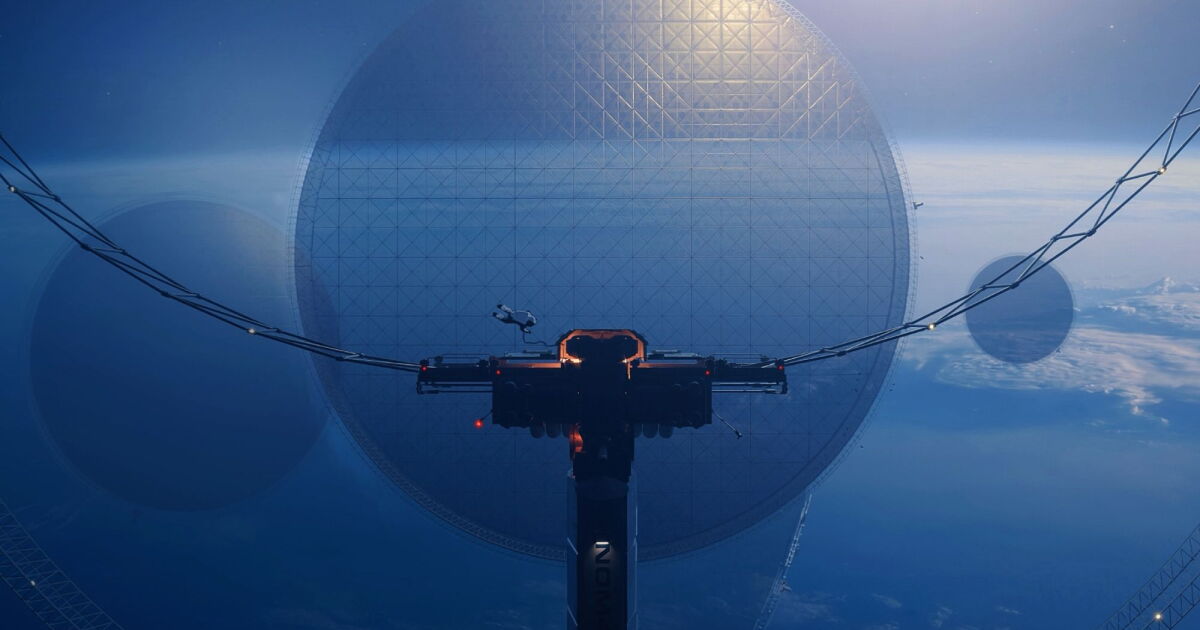
The work is part of the Autonomous In-Space Tensioned Reflector Assembly project, known as ASTRA. The robot was meant to build a 1.4-meter-wide (4.6-foot) reflector antenna from composite tubes, aluminum joints and reflective film.
Time limits restricted the task to a single support: two truss sections were launched pre-assembled, and the robot assembled a third.
DARPA’s Andrew Detor, program manager for the Novel Orbital and Moon Manufacturing, Materials and Mass-efficient Design (NOM4D) program, said the demonstration is a significant step toward massive structures in space, although nothing approaching that scale can be achieved today. The broader NOM4D vision involves shipping raw materials into orbit and manufacturing structures designed for the space environment, rather than surviving launch as finished structures.
The robot was described as operating with limited ground support. Contact with the robot was restricted to daily windows of about 15 minutes.
Engineers reviewed photographs and tested solutions on a duplicate model in their laboratory before sending commands, so the word “automated” comes with qualifications. Previous space construction, such as the Canadarm2 on the International Space Station, mostly joined hardware manufactured on Earth, while NASA’s Archinaut One project, also called OSAM-2, tested in-orbit manufacturing and deployment before ending in 2023.