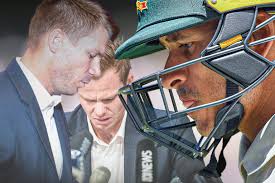
Cricket Australia 2018 ball tampering investigation, Digi Mart USA News: Eight years after sandpaper brought Australian cricket into disgrace, the latest integrity question concerns the investigation that followed. The 2018 controversy was reignited this week by retired batter Usman Khawaja, who said the ball tampering incident was not a plan hatched by three batters only.
Khawaja said the whole team was involved. Steve Smith, David Warner and Cameron Bancroft were suspended following the incident.
Khawaja’s long-time friend Warner said the revelations were “100% accurate,” adding pressure on other members of the 2018 team and on Cricket Australia. Other players have denied knowledge in recent days.
Cricket Australia’s inquiry after the 2018 incident lasted several days. It concluded that prior knowledge of the Cape Town plan was confined to Smith, Warner and Bancroft, and that no other player, support staff member or coach knew beforehand.
Reporting at the time described interviews with selected players and support staff, with findings within days.
Khawaja says he was not interviewed. He describes broader team discussions about altering the ball and alleges sandpaper had been used in the preceding Test.
Warner has criticised the investigation. The governing body has ruled out reopening the inquiry despite calls to do so.
Chief executive Todd Greenberg said other players disputed Khawaja’s version and that the board believes there is no compelling reason to revisit the findings.
The article argues that these claims require careful separation. Knowledge of earlier discussions, knowledge of earlier conduct and advance knowledge of the specific Cape Town plan are different propositions, and evidence supporting one does not automatically establish the others.
The bowlers who played at Cape Town publicly denied prior knowledge of the sandpaper plan in 2021.
The author suggests Cricket Australia could appoint an independent reviewer to assess the original inquiry’s terms, interview coverage, surviving records and the significance of the new accounts. Such a review could determine whether relevant witnesses were omitted and whether those gaps could affect the published conclusions.
The recommendation might be that no further investigation is warranted, or that targeted interviews or a broader inquiry are needed.
The author also argues that Cricket Australia should publish the review’s reasoning, with protections for confidential information, and acknowledge any limits created by missing records or the passage of time. The author notes that Australian cricket’s credibility depends on the confidence of other cricketing nations, supporters and commercial partners, who may reasonably ask whether comparable standards of accountability apply to administrators as to players.