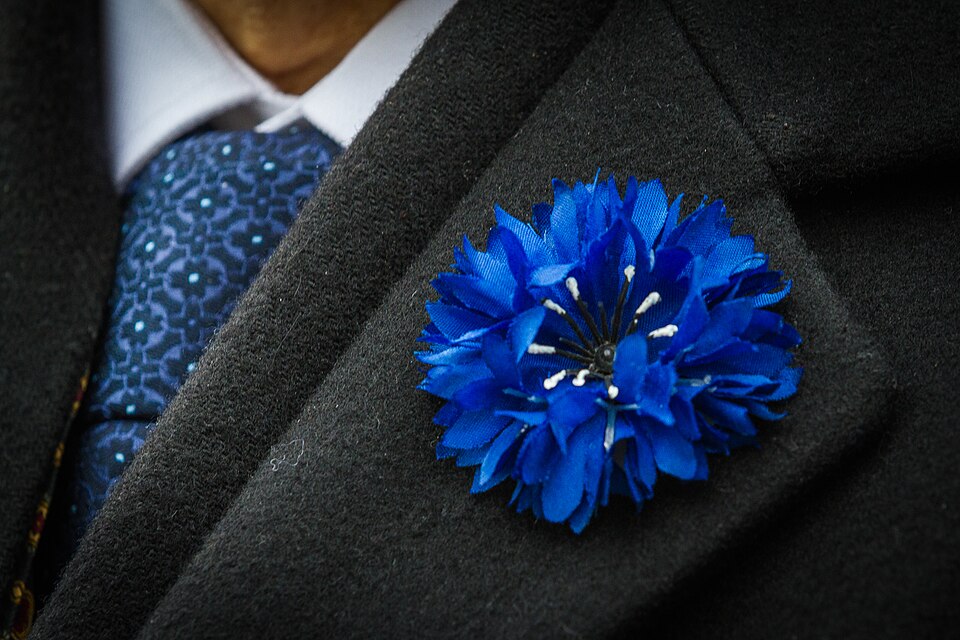
Le Bleuet de France history, Digi Mart USA News: Each November 11, a small blue flower returns to the lapels of jackets. Before becoming a badge, the Bleuet de France was a sewing project, devised at Les Invalides by two women for the severely wounded veterans of the 1914-1918 war.
One of the two women had lost her husband at the front, while the other had seen hers return with an amputated limb. The first Bleuets were stitched by the badly wounded men housed at Les Invalides.
On November 25, 1934, the Catholic weekly Le Pèlerin devoted its cover to the Armistice cornflowers. Its caption stated that “under the fingers of a severely wounded veteran, thousands of cornflowers bloomed,” sold a few days earlier to benefit disabled veterans.
The Ministry of the Armed Forces’ review Les Chemins de la mémoire reproduced that cover in its January 2018 issue.
On July 14, 1919, the Victory Day holiday, a disabled war veteran sold badges on the Champs-Élysées. Photographs from the period show the tradition of wartime fundraising in Paris.
On May 10, 2026, at Les Invalides, runners took the start of the Courses solidaires organized by the Military Governor of Paris to benefit the Bleuet de France.