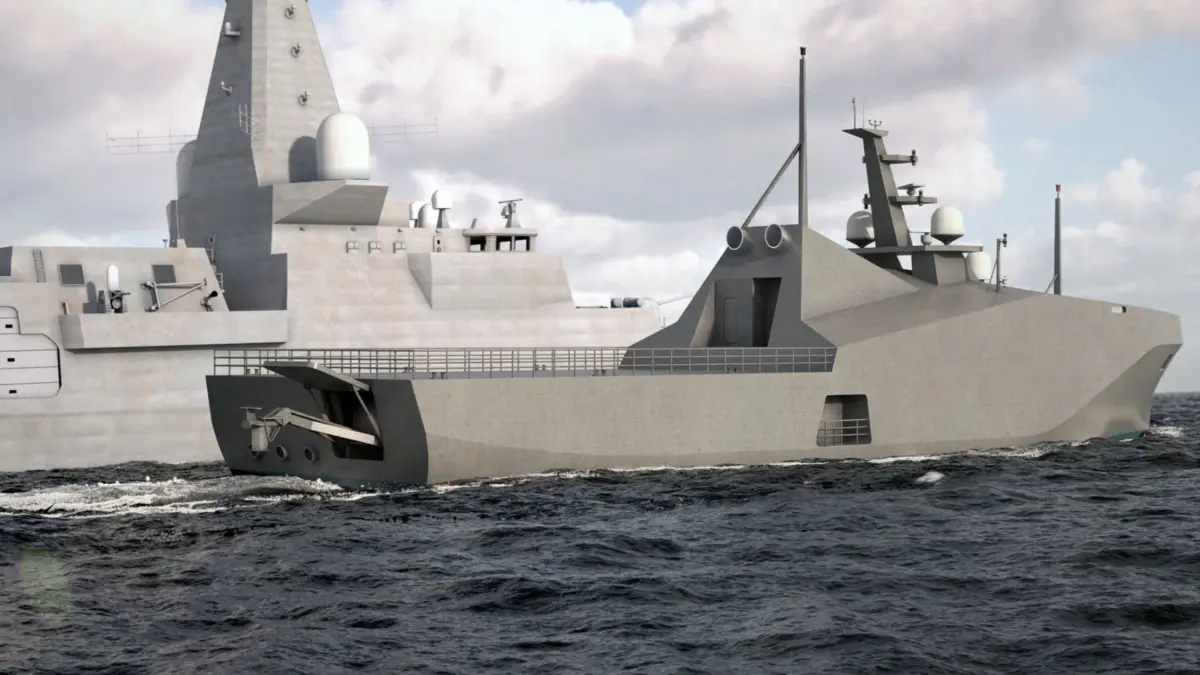
Kongsberg Arctic Hunter Royal Navy Type 92 uncrewed vessel, Digi Mart USA News: Kongsberg Maritime has unveiled a 56-metre uncrewed vessel designed to give the Royal Navy additional submarine-hunting capacity in the High North. Arctic Hunter is being proposed for the Type 92 programme, with construction planned at Birkenhead if the design is selected.
Announced ahead of the Atlantic Future Forum being held in Oslo this week, Arctic Hunter is based on an existing commercial vessel design developed for Arctic operations. The Norwegian company is working with Thales UK on sonar and military systems, and Balaena Maritime on shipbuilding, with technology collaboration agreements due to be signed during the conference.
The vessel is designed for missions lasting up to 60 days, operating from a forward support base inside the Arctic Circle. Its role would be to provide persistent anti-submarine warfare sensing alongside crewed ships and other assets.
Kongsberg describes Arctic Hunter as a remotely operated vessel with autonomous functions. Trained personnel in a shore-based Remote Operations Centre would supervise and control key maritime functions, while military effects would remain under human control.
Removing the crew from the vessel still leaves a requirement for operators ashore and maintenance support between deployments.
Space on deck would allow additional or alternative mission systems to be fitted as requirements develop. Thales UK would supply the sonar and secure military communications, although the partners have not identified the sonar model or disclosed detailed performance figures.
Kongsberg brings experience from commercial remote vessel operations, including work with Reach Subsea and the Yara Birkeland programme. The company says its uncrewed vessel technology has received approvals from DNV and the Norwegian Maritime Authority.
These underpin the commercial technology being offered, rather than approval of a completed Arctic Hunter military configuration, which would still require development and integration.
The proposed construction model separates commercial shipbuilding from the integration of military equipment. Balaena’s Birkenhead yard, formerly Cammell Laird, would build the vessels, with the partners targeting readiness for militarisation and operational deployment by the end of the decade, subject to Royal Navy requirements.
Type 92 forms part of Atlantic Bastion, the Royal Navy’s plan to combine crewed platforms with uncrewed sensors to detect and track hostile submarines. In July, the Ministry of Defence said platform numbers and construction schedules had not been determined, with detailed requirements to be considered through the concept and assessment phases.
Arctic Hunter could form part of the UK-Norway Lunna House agreement, which includes co-operation on autonomous systems in the High North. Its commercial origins offer a route to faster construction, but sustained anti-submarine operations will also depend on reliable communications, sonar integration and the ability to keep machinery running for weeks without engineers onboard.