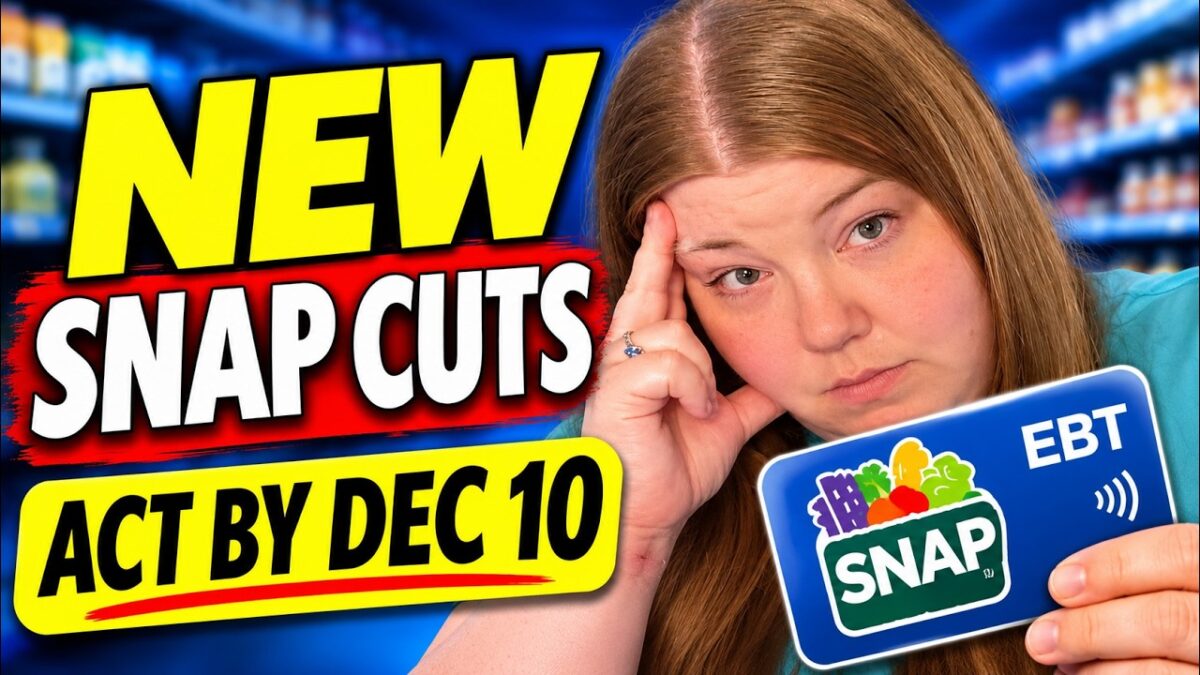
A major change to the Supplemental Nutrition Assistance Program (SNAP) is drawing attention across the United States. The U.S. Department of Agriculture has proposed new eligibility rules that could affect approximately 6.3 million people by 2029. Americans have until December 10, 2026, to submit public comments on the proposal.
Millions of American families rely on SNAP benefits to help pay for groceries and keep food on the table. Now, a newly proposed federal rule could change how some households qualify for the program, potentially putting their food assistance at risk.
On November 10, 2026, the U.S. Department of Agriculture (USDA) announced a proposal to narrow the rules that allow certain households receiving assistance through the Temporary Assistance for Needy Families (TANF) program to automatically qualify for SNAP.
According to the USDA’s analysis, the proposed change could result in approximately 6.3 million people losing SNAP eligibility by fiscal year 2029, when the policy is expected to reach its full effect.
The announcement has raised concerns among families, anti-hunger advocates and policymakers because SNAP remains an important source of grocery assistance for low-income households.
What Is the New SNAP Rule?
The proposed policy focuses on a provision known as Broad-Based Categorical Eligibility, which allows certain households receiving assistance through TANF-funded state programs to qualify for SNAP without undergoing all the usual federal income and resource eligibility assessments.
Under current regulations, TANF-related assistance can include cash payments as well as certain non-cash benefits, services and other forms of support.
The USDA proposal would narrow this approach by limiting categorical eligibility through TANF to households receiving qualifying TANF assistance under the federal definition.
This means households that receive certain non-cash services or benefits through state TANF-funded programs could lose their automatic categorical eligibility for SNAP.
However, losing automatic eligibility does not necessarily mean a household will immediately lose food assistance. Some households may still qualify under regular SNAP income, resource and other eligibility requirements.
Why Could 6.3 Million Americans Be Affected?
The USDA estimates that approximately 3.2 million households, containing around 6.3 million individuals, could stop receiving SNAP benefits as a result of the proposed categorical eligibility changes.
The agency estimates that these households represent approximately 17.6% of SNAP participants in fiscal year 2029.
The proposal would require more states to review household income and financial resources under standard SNAP eligibility rules.
This could affect households that currently qualify through broader state-level TANF assistance arrangements.
The potential impact is particularly important because state TANF programs differ in the types of benefits and services they provide.
What Happens to Families Receiving SNAP and TANF Benefits?
Families receiving both SNAP and TANF-related assistance should understand that the proposed rule does not automatically cancel their benefits.
The key issue is the type of TANF assistance a household receives.
Under the proposed approach:
- Households receiving qualifying TANF assistance could continue to benefit from categorical eligibility.
- Households receiving only certain non-cash TANF-funded services could lose this automatic eligibility route.
- Some affected households may still qualify for SNAP through standard eligibility requirements.
- State agencies may need to collect and verify additional financial and resource information.
For this reason, households should not assume that their benefits will automatically end or that they need to submit a new application immediately.
Any individual notice from a state SNAP agency should be reviewed carefully.
Why Is the 30-Day Deadline Important?
The USDA opened a public comment period following publication of the proposed rule on November 10, 2026.
The deadline for submitting comments is December 10, 2026.
This is an important distinction: the 30-day deadline is for members of the public to provide feedback on the proposed federal policy. It is not a nationwide deadline requiring every SNAP recipient to reapply or respond to keep their benefits.
Interested individuals, advocacy organizations, state agencies and other members of the public can submit comments explaining how the proposed changes could affect households.
Comments will become part of the public rulemaking record and may be considered by the government before a final decision.
Could Children Also Be Affected?
The potential impact could extend beyond adult SNAP recipients.
USDA estimates that approximately 1.8 million children could also lose eligibility for free school lunches because of the proposed changes.
This is an important concern for families who depend on multiple assistance programs to manage food expenses.
However, losing SNAP-related eligibility does not necessarily mean every affected child will lose access to school meals. Children may qualify through other school meal eligibility pathways.
Families should check with their school district or state education agency to understand the rules that apply to their circumstances.
Have Millions Already Lost SNAP Benefits?
The latest proposal comes after substantial changes to federal food assistance rules over the past year.
According to USDA figures cited by Reuters, more than 5.5 million people had already lost SNAP assistance following changes enacted in July 2025.
SNAP enrollment had fallen to approximately 36 million people, reflecting policy changes, administrative challenges and other factors.
The new proposal could create additional eligibility challenges if it is finalized and implemented.
What Should Current SNAP Recipients Do Now?
Although the proposed rule does not require all recipients to respond within 30 days, households can take several practical steps to protect their eligibility.
1. Check Your State SNAP Account
Visit your state’s official benefits portal and review any messages, notices or requests for documentation.
2. Review Your Recertification Date
SNAP recipients must complete periodic eligibility reviews. Missing an individual recertification deadline can put benefits at risk, regardless of the proposed federal rule.
3. Keep Income and Household Records Updated
Make sure your state agency has accurate information about household income, employment, family size and other required details.
4. Respond to Official Notices
If your state SNAP agency requests documents or additional information, follow the deadline provided in that specific notice.
5. Check Whether You Still Qualify Under Regular SNAP Rules
Even if a household loses categorical eligibility, it may still qualify under standard federal and state SNAP eligibility requirements.
How to Submit a Public Comment Before December 10
People who want to share their views about the proposed policy can submit comments through the official federal rulemaking website.
The relevant proposal is titled:
Supplemental Nutrition Assistance Program: Reforming Categorical Eligibility
Important details:
- Agency: U.S. Department of Agriculture
- Publication date: November 10, 2026
- Document number: 2026-22936
- Docket ID: FNA-2026-0661
- Comment deadline: December 10, 2026
Official submission website: https://www.regulations.gov/
Search for document number 2026-22936 to locate the proposal and follow the instructions for submitting a comment.
The USDA also provides information about the proposal on its official website:
Is the New SNAP Rule Already in Effect?
No. The categorical eligibility change discussed in this article is a proposed rule, not a finalized nationwide policy.
The USDA must consider the public comments and complete the rulemaking process before implementing a final version.
Until then, existing eligibility rules and individual state SNAP procedures continue to matter.
Recipients should avoid relying on viral social media posts claiming that all SNAP benefits will end after 30 days.
Final Thoughts
The proposed SNAP eligibility changes could have a significant impact on millions of Americans who rely on food assistance.
With approximately 6.3 million people potentially affected by 2029, the proposal deserves close attention from current beneficiaries, families, state agencies and policymakers.
The December 10 deadline gives the public an opportunity to share feedback on the proposed changes. However, SNAP recipients should remember that this is a public comment deadline, not an individual benefits renewal deadline.
For now, the most important step is to monitor official state SNAP notices, keep eligibility information updated and understand how the proposed changes could affect household benefits if finalized.