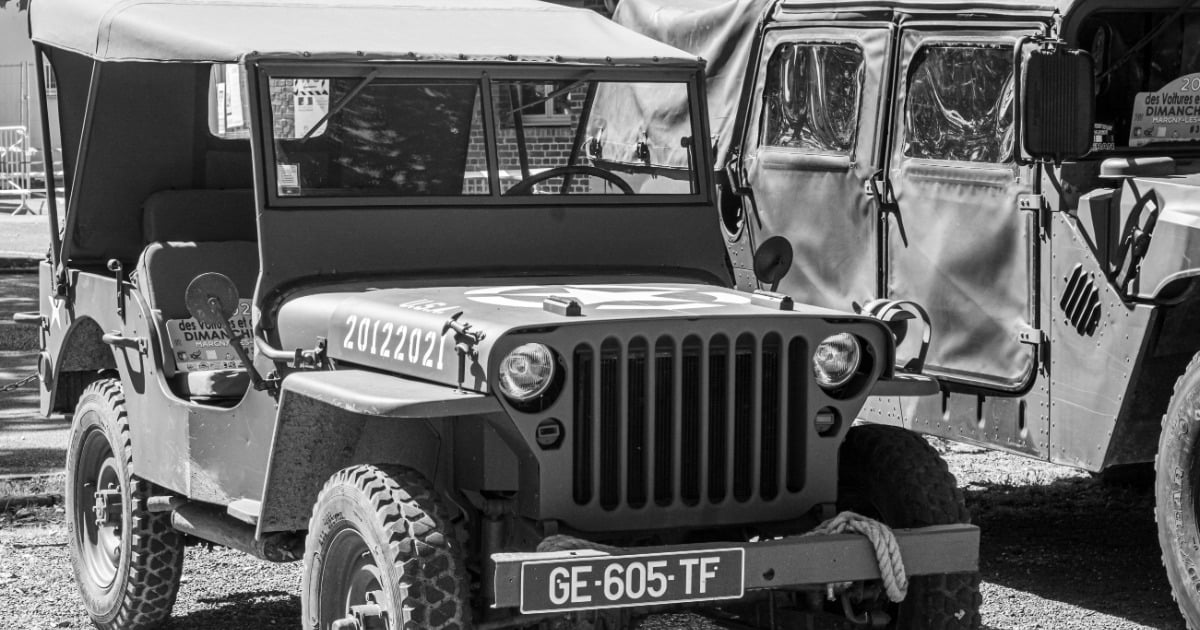
Jeep Willys del Rutor, Digi Mart USA News: In a wooden cabin near the Rutor lakes, an old red Jeep Willys American vehicle dating from the war has barely moved since it was brought up the mountain in the late 1960s. It did not arrive by track or alpine road.
It was carried in pieces, with its body on the shoulders of a team of twelve men, while its engine was transported by mules, according to ildolomiti.it.
The events took place on the Rutor glacier, in a mining village turning toward skiing. The vehicle was a post-war American model from the same family as well-known military Jeeps.
It came from Saint-Pierre, where a man had specialized in surplus vehicles of this type, and was bought by early ski instructors and guides from La Thuile and La Balme for their high-altitude projects.
Mining, the village’s mainstay, stopped in 1966, and a new future had to be found. Winter skiing was gaining ground, so guides proposed summer skiing on the Rutor glacier.
They cut a path above the Deffeyes refuge by hand, using shovels and picks, to link the refuge with the lake area where the Jeep was meant to work.
No road reached the Deffeyes refuge or the lake area. A track from Plan Praz had been imagined but never built.
The owners therefore dismantled the Jeep and hauled it up piece by piece. The compact, heavy engine went on the backs of mules, while the bare body was fixed to two long poles carried by twelve men, six in front and six behind, starting from the hamlet of La Joux.
Once at altitude, the Jeep was meant to make round trips on the new path and serve a small homemade lift that older residents called a “manovia.” Problems began almost immediately. “There was always something wrong with the engine,” recalled Bruno Boscardin, as quoted by the media outlet L’Altramontagna.
The engine was taken down to the valley, repaired, and brought back up to the glacier, but the problems did not truly disappear. In total, the Jeep covered only about thirty meters and carried almost no one.
The story reflects the transition of La Thuile at that time. Mines closed in 1966, and the vehicle arrived around 1967 or 1968.
Ski lifts were beginning to change the village’s relationship with the mountains, and the first ski lessons were organized. Pino Alliod remembered the first summer on the glacier, when a large celebration with a mass at the chapel marked the occasion.
Despite the Jeep’s failure, the manovia did operate for a time, and a ski school was organized the following year on the glacier.
Nearly sixty years later, the resort has become one of the major ski destinations in the Aosta Valley. The Jeep remains in its cabin above the refuge, sheltered from the weather and still red.
“This Jeep should be brought down to La Thuile and become a museum piece. It is an important piece of history,” Boscardin said.
Today, the situation is reversed: glaciers have lost surface area and mass, summer skiing is declining at several resorts, and in summer 2026 Cervinia closed its summer slopes, a situation highlighted in a video by Valdostan champion Federica Brignone. The small red Jeep, which barely moved, remains above as a material witness to the moment a village chose to move from mining to snow.