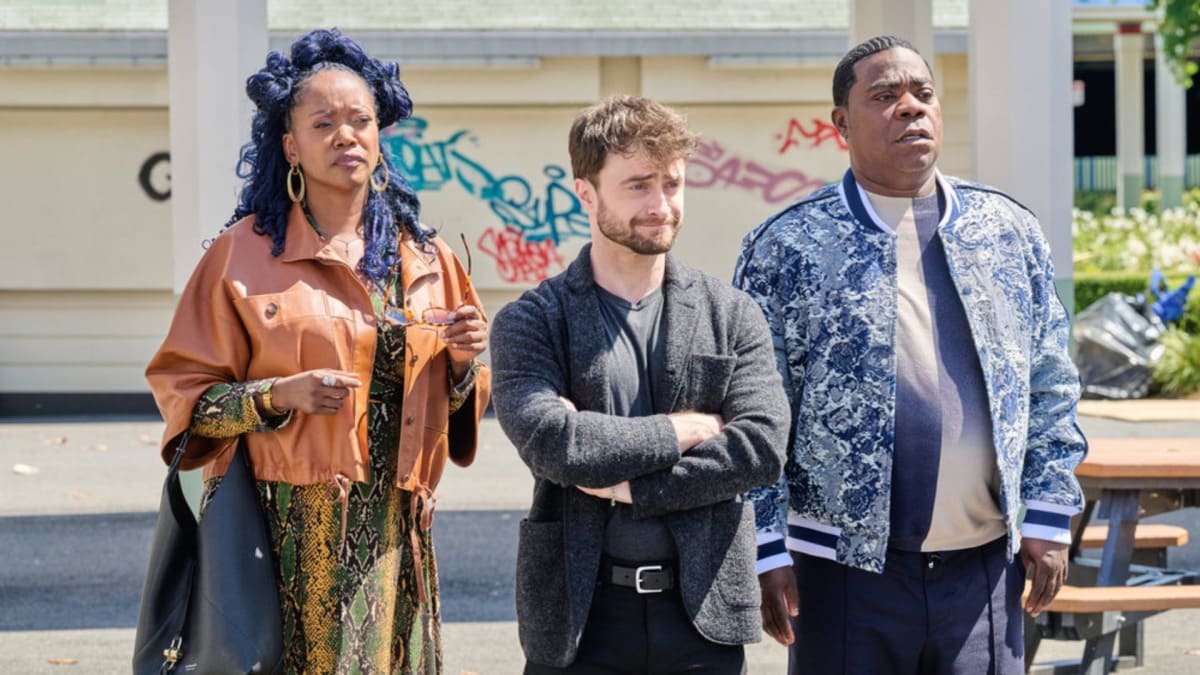
The Fall and Rise of Reggie Dinkins Season 2, Episode 2 Review, Digi Mart USA News: Late in an episode packed with potentially show-changing moral quandaries, Reggie and Monica reveal to Arthur Tobin’s cameraman, the unseen but pliable Marty, that they have just pulled off “a win-win-win.” “Our first one!” Reggie exclaims as they embrace the return to Dinkins house status quo. The callback to the very first episode’s concluding deal between Reggie, Monica, and Arthur highlights how the show plans to keep its loose, amiably low-stakes gang together.
A sitcom episode needs an inciting incident, and this week it is Arthur’s video chat with his documentarian mentor, Vernon Bellow, played as a fussy scold who cannot work his Zoom filters by veteran Broadway star André De Shields. After Arthur goes to Bellow for absolution about his cushy and questionably ethical living arrangement with his film’s subject, the elder filmmaker scoffs, “I mean, it’s not like you’re letting them pay for the film, that would be a betrayal of the most basic documentary ethics.”
But the broke Arthur is letting Reggie and Monica pay for everything, as comes to light when Monica interrupts the call to demand Arthur censor footage of her getting stuck in an elaborately disgusting pasta-eating mishap that gives the episode “Spaghetti Loop” its title. Reggie, doubling the joke, restates the arrangement with Arthur in the bluntest and most incriminating terms for Bellow to hear.
With an errant kitty face filter undermining his judgmental dudgeon, Bellow storms off, branding his former mentee with an imperious “Judas!” The review notes that the onscreen balloon effect somewhat undercuts the moment, but Arthur is still devastated.
Every inciting A-story needs a solid B-story, and Rusty undergoes a crisis of conscience when Brina, confronted by Rusty scarfing down her off-limits jam, accuses him of being a moocher. That both of these moments of destabilizing change are resolved by the end of the episode is not surprising, since that is what traditional sitcoms do.
What is satisfying is how each resolution circles back to restate narrative necessity rather than relying on mere “because we need things to stay the same” convenience.
Rusty’s problem is, because it is Rusty, more easily and buffoonishly resolved. He pays no rent and buys himself a Rolex on Reggie’s credit card for doing a good job getting takeout, although the “crust-lovers pizza” is a kick and a miss.
He also performs immeasurable service in keeping the whole crew functioning. Brina’s frustration at suddenly having to listen to Reggie’s endless pedantry about both Godzilla movies and the 1970s Knicks is squarely the territory of a slobby freeloader best pal, and the reviewer points to a cutaway gag to the freshly coiffured Brina after a Rusty-less and energized Reggie’s lovemaking turns her hair to a windblown mess as a major laugh.
Precious Way and Bobby Moynihan are strong in their roles, and it is nice to see Brina and Rusty woven more into the show here. Their reconciliation is based on a deeper understanding of how vital they are in their own ways to the Dinkins group dynamic.
Rusty’s plan to earn his keep, using Reggie’s abandoned childhood amusement park’s deathtrap slide to cash in on his $1 million kicking foot insurance policy, is thwarted when Brina finds his meticulous scheme written on the basement whiteboard. The review highlights “Find eraser” and “Erase whiteboard” as the last two, unerased steps.
Arthur’s problem is trickier and resolved more subtly. The episode acknowledges real artistic and ethical issues involved in allowing a documentary subject to pay for and assert editorial control of a film.
As Arthur concedes, it was one thing when he was just a broken has-been taking a wealthy man’s cash for a vanity project. But the series has been about Arthur and Reggie each needing a real comeback, and that will only materialize if Arthur is allowed to make a real film.
The review argues that the episode addresses how affluence has gradually eroded the filmmaker’s pretentious but genuine moral code, with Reggie’s AI-enabled massage chairs repeatedly interrupting Arthur’s soul-searching. Arthur’s acceptance into the Dinkins clan keeps forcing daily choices between art and friendship, a looming threat over a film with real stakes for both.
Reggie makes nimble use of the mockumentary format’s choppy, on-the-fly transitions to drop in backstory and motivation. He is hung up on both Rusty and Arthur’s loyalty to his generosity, because, as he explains to Monica, his impoverished childhood made him happy when he could finally take care of everyone he loved.
Arthur, meanwhile, is a deeply adrift man whose conflicted loyalties are hinted at when he hands over Fozzles, the teddy bear Reggie gave him, as he sets off to live in the woods.
Monica is the third point in this triangle of opportunistic affection, and the reviewer again praises Erika Alexander. Her Monica anchors the two blinkered manboys she is tethered to, refusing to settle for exasperated looks to camera as the sensible one amid the chaos.
Monica also comes up with an elaborately devious plan that saves the Arthur-Reggie partnership, at least for now.
The episode pulls off several twists. The first swerve, in which Arthur reluctantly takes on a sitcom directing job Monica gets him so he can pay for the film himself, turns out to be a gambit from Monica, with Reggie’s cash backing her, to stage a completely fake network comedy called Baby Daddy.
The joke that the series is not about unexpected pregnancy but a daddy-son body swap is the icing on the double-twist cake.
As Monica and the in-on-it Reggie celebrate their successful hoodwink, the echoes of that first “win-win-win” linger. The three-part arrangement began as a genuine partnership of mutual need, but here Arthur has been cut out.
The review describes it as a win-win-win in the sense that Arthur’s film will continue, yet the project has merely swapped one compromise for another. Monica brandishes a DVD of Baby Daddy to use “as leverage,” suggesting the Dinkins have not abandoned the idea that they can control Arthur’s version of Reggie’s story.
This larger conflict will be much harder to fix down the road.
Notable lines and details from the episode include Reggie and Monica’s teenage hangout Funhole Park, which the reviewer compares to Action Park but with less oversight; Rusty’s attempt to return to the NFL, which draws ridicule except from the Browns; Monica forbidding Reggie’s investment in “cyber teeth” until he learns what it means; and the reveal that Baby Daddy was originally offered to Reggie in 2002 by UPN, which accounts for the son-dad’s excitement at seeing Nelly at the Silverdome.