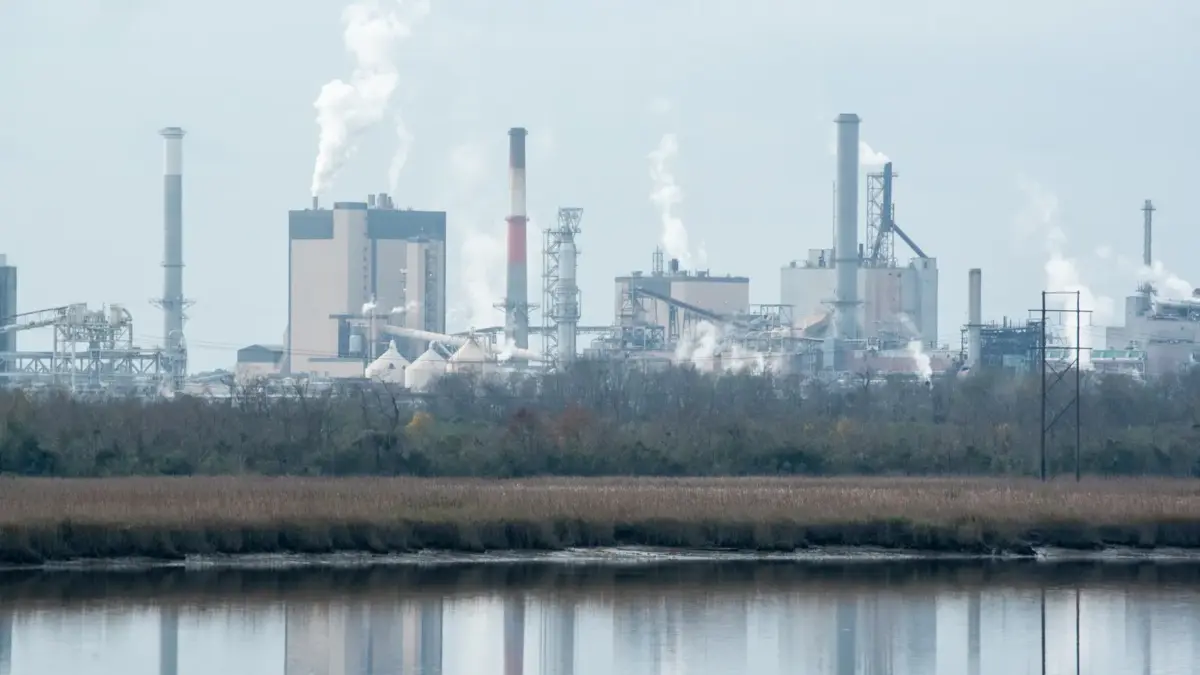
Savannah River site emergency, USA News (South Carolina): A United States nuclear facility entered an emergency status following a fire and an unfiltered ground-level radiological release, according to officials. The Department of Energy’s Savannah River site in South Carolina reported that the fire broke out at 5:39 p.m. local time (9:39 p.m. GMT).
Site officials informed local media about the unfiltered ground-level radiological release as the situation unfolded. The fire has since been extinguished, and the facility announced at 2:14 a.m. that the site area emergency had concluded.
Following the incident, the Federal Aviation Administration (FAA) issued a temporary flight restriction around the area, characterizing the event as a US Government nuclear incident. The restricted airspace encompasses a 15-nautical-mile radius from the surface up to 10,000 feet above sea level.
Employees working in the area received instructions to shelter in place for 30 minutes immediately following the incident report. While they were later permitted to leave according to initial reports from local outlet WRDW, other non-essential employees were barred from entering. Officials from the Savannah River site stated that employees not actively involved in emergency response or shutdown operations remained sheltered in place.
Additionally, rail and river transport within the vicinity experienced restrictions. Facility officials maintained that there was no nuclear contamination detected beyond the boundaries of the 310-square-mile site.
Local media reported that awareness of the incident began with calls regarding traffic near the facility’s main gate. Spanning land across three counties adjacent to the river, the Savannah River Site was originally constructed in the 1950s to produce plutonium and tritium for nuclear weapons. Today, the facility largely focuses on the long-term management and disposal of nuclear materials and waste, while remaining the sole US facility that produces tritium for the nuclear weapons stockpile. It also houses the world’s largest radioactive waste vitrification plant, converting dangerous materials into stable substances for long-term storage.