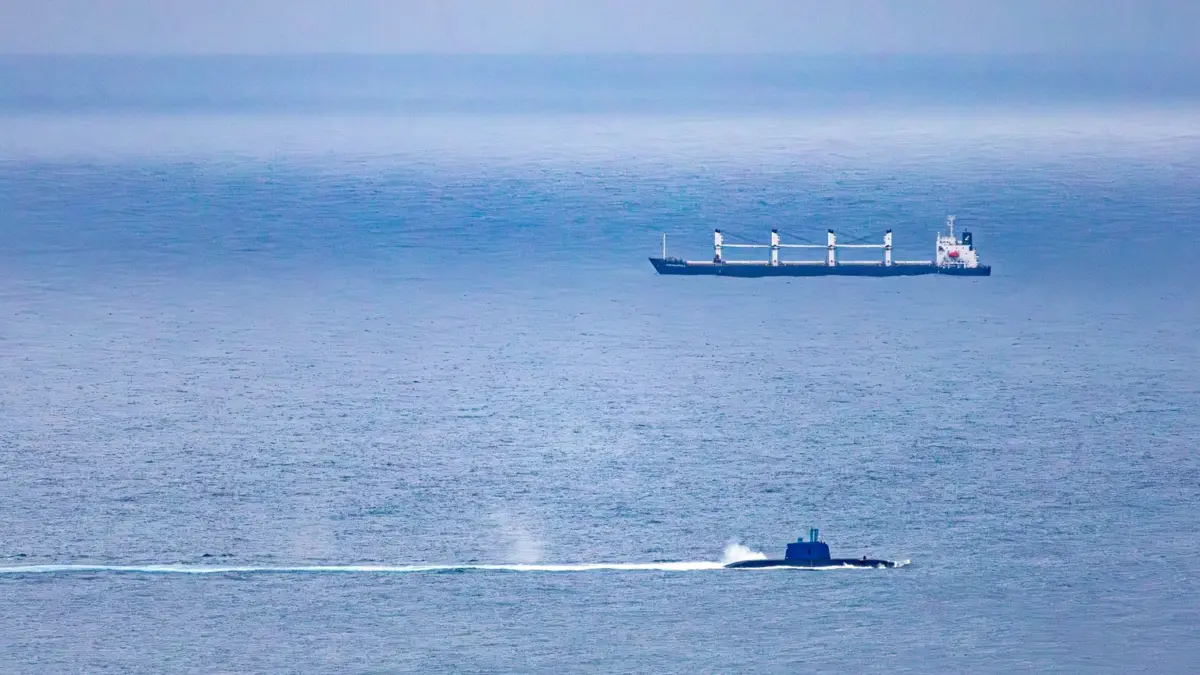
Royal Navy nuclear submarines, USA News: Three of Britain’s four Vanguard-class nuclear submarines are currently deployed at sea simultaneously. The overt show of strength marks the first time in at least seven years that three of the Trident-armed vessels have been operational at the same time. Each submarine carries more destructive capability than the total explosive power used by all sides during the Second World War.
A source described the simultaneous deployment as unusual, speaking to The Times, although the development also signals improved availability within the Royal Navy’s submarine service. One of the submarines is conducting its standard nuclear deterrence patrol, while a second is undergoing work up to relieve it, which is a routine arrangement. The third vessel, HMS Vigilant, has returned to sea for trials following an extended maintenance period.
An insider told The Times that it is really good news if Vigilant is back because it means an end to stupidly long patrols, adding that the service should be moving from a two-boat rotation to a three-boat rotation. With only two boats previously fit for service, crews have faced exceptionally prolonged deployments, making the return of a third submarine a significant operational improvement. At times, submariners have even been forced to spend more than 200 days at sea on a single patrol due to only two Vanguard boats being available for duty. HMS Vanguard, for instance, endured one of the longest-ever such deployments, remaining on patrol for over 200 days. The record currently stands at 207 days, set by HMS Victorious back in 2021.
While submerged, crew members receive just one incoming text message per week, known as a family-gram, which the captain censors to prevent any information that might harm morale or performance from reaching personnel. HMS Victorious, the fourth submarine in the fleet, has been undergoing deep maintenance at HMNB Devonport since 2023. Last week, RAF jets participated in a joint simulated nuclear strike exercise with France, the first time the two nations have conducted such war games together.
A source insisted this timing was merely a coincidence and that the three submarines being at sea was not related to any direct threat nor constituted a nuclear escalation. Nevertheless, any shift in the pattern of Britain’s nuclear-armed fleet is potentially significant and could serve as a signal to adversaries. The continuous presence of at least one Trident submarine at sea is considered the UK’s ultimate security guarantee. The capabilities of the Royal Navy have raised eyebrows as international tensions continue to spiral, triggering concerns over national security. After RAF Akrotiri was targeted in March, the Government deployed HMS Dragon, a Type 45 destroyer, but severe delays caused by maintenance backlogs led to the vessel taking three weeks to set sail. The destroyer returned to the UK earlier this month.