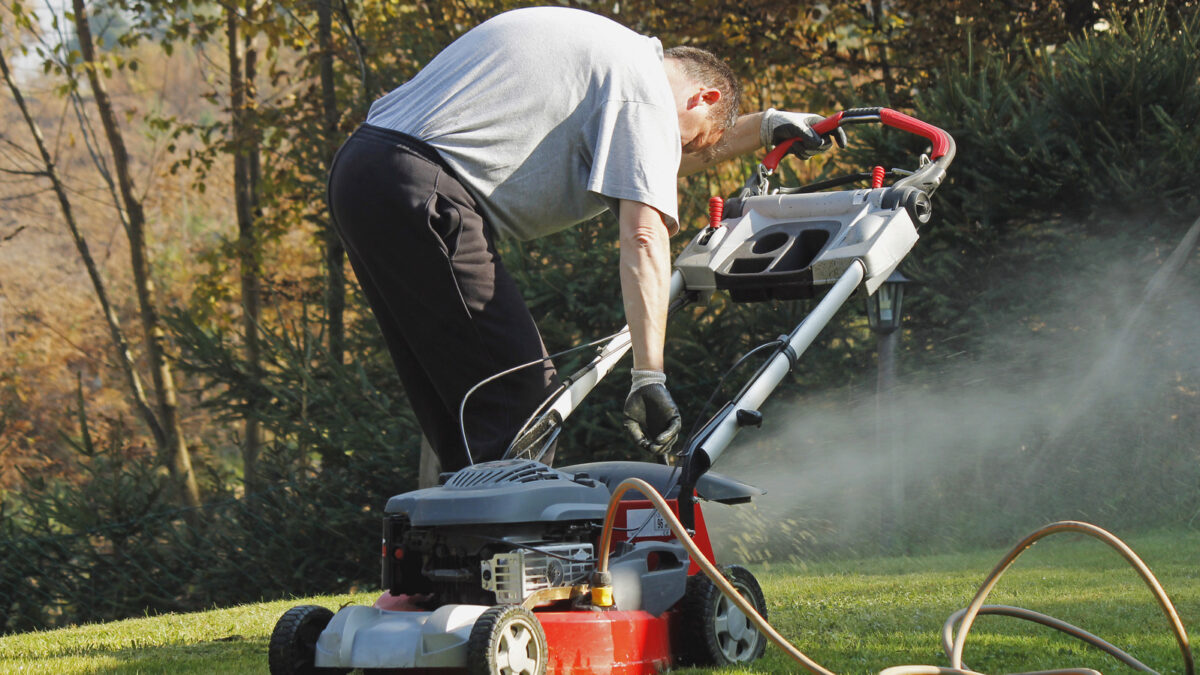
Lawn mower deck washout port, Digi Mart USA News: Any homeowner with a large yard knows that lawnmower care and maintenance is a total hassle. Getting a heavy walk-behind lawnmower on its side, or crawling underneath the deck with a putty knife, can be very frustrating.
Without a deep clean, however, packed debris can ruin a machine’s cutting power over time.
To make this easier, manufacturers have added a small hose attachment to the top of the lawn mower deck, called a deck washout port. While some owners hesitate to spray outdoor power equipment, using water properly is key to preventing rust and corrosion.
This maintenance attachment makes it easier to clean the bottom of the mower without much back strain. The owner snaps a standard garden hose onto the port.
As water enters the deck while the engine is running, the high-speed spinning blades whip the incoming stream into a cleaning mist that blasts away sticky grass buildup and debris lodged in the deck casing before it hardens.
If wet grass builds up around the raw metal parts of the mower, water can become trapped and speed up rusting, and the blades can dull more quickly. In theory, the deck should be cleaned after every mow, but cleaning at least twice a year is suitable.
The hose attachment can blast away sticky buildup within minutes without getting hands too dirty.
Running water near a gas engine requires basic precautions. Park the mower on a flat, well-drained lawn area or driveway.
With the engine completely off, attach the garden hose to the deck port coupling and turn on the outdoor spigot so the hose is pressurized.
With the water supply on, take position at the controls, either in the rider’s seat or behind the push mower handles. Start the engine and engage the blades at full throttle.
Spinning the blades as water enters churns the flow into a scouring wash. Keep the blades running for one to two minutes, or until the runoff draining from beneath the deck is completely clear.
Turn off the water supply first, shut down the engine, and disconnect the hose from the port. Once clear of the hose, restart the mower and run the blades for another few minutes.
This final step uses airflow to dry the interior of the deck, helping prevent rust during storage. Always allow the engine to cool fully before returning the mower to a shed or garage to avoid trapping heat or creating a fire hazard in an enclosed space.