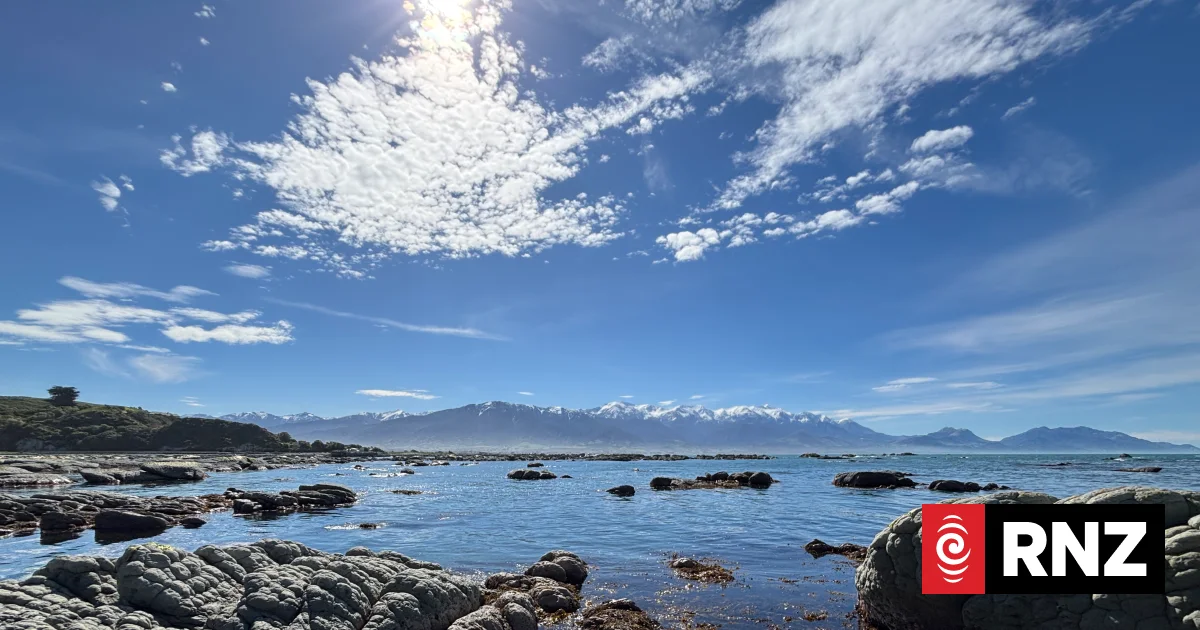
Kaikōura earthquake ten years on research findings, Digi Mart USA News (New Zealand): A magnitude 7.8 earthquake struck Kaikōura and surrounding areas just after midnight on 14 November 2016. Starting near the North Canterbury town of Waiau on the Humps Fault, the rupture spread north and north east across more than 20 faults, which the source describes as a globally unprecedented complex earthquake. The full event lasted about two minutes but caused loss of life, property damage, landslides that disrupted road and rail networks, and a structural change to about 120 km of coastline.
Earth Sciences New Zealand chief scientist of earthquake hazards Dr Anna Kaiser said the quake jumped from faults in North Canterbury to faults in Marlborough, crossing different geological regimes. Observations gathered in the following days, weeks, months and years showed the Kaikōura peninsula uplifted by about a metre, while the coastal reef north of it rose about six metres.
Along the Kekerengu Fault the ground shifted sideways by roughly 10 to 12 metres over more than 80 km, and the Leader Fault rose vertically by about three metres, forming a scarp called the Wall of Waiau. Tens of thousands of landslides were triggered, including underwater landslides in offshore canyons.
The researchers also wanted to know what the findings meant for earthquake hazards across New Zealand. The source reports that the National Seismic Hazard Model, which estimates the likelihood and strength of shaking nationwide, was revised in 2022 to include a wider range of possible earthquakes, including more complicated ruptures.
The quake also highlighted shaking in Wellington, more than 80 km away, where some buildings were severely damaged. Dr Kaiser attributes this to the energy directed northwards by the rupture and to a soft sedimentary basin beneath parts of the city that amplified ground motion.
Scientists already knew of the Wellington basin, which had been mapped by a 1967 gravity survey, and the 1985 Mexico City earthquake had shown the risks of a distant quake affecting a city built on a sedimentary basin. Because the basin is underground, its shape can only be inferred through modelling, and small differences in its shape, angle and depth can significantly change which buildings are most affected.
Emeritus Professor Tim Stern and Masters student Alistair Stronach repeated the gravity method with modern equipment, and their results, checked with a seismic reflection method, indicated a slightly different basin shape, including a maximum depth more than twice as deep in an area near the stadium. Both hope this more detailed model will help prepare the city for future earthquakes.
Marine research has also tracked the changes along the coast. University of Canterbury Professor David Schiel described how the uplift left the Wairepo reef dry and killed much of the Neptune’s necklace seaweed that had covered it, with the species now persisting at much lower abundance across a narrow tidal zone.
Bull kelp, durvillaea, was largely lost across the roughly 130 km of coastline, and extra stressors including a marine heatwave in 2017/2018 and sediment runoff from damaged catchments slowed recovery. Professor Wayne Stephenson of the University of Otago reported that mudstone reef platforms that had eroded at about one millimetre per year before the quake were eroding at two to two and a half millimetres per year afterwards.
Based on erosion, subsidence and sea level rise, he said the protection the uplift provided to the cliffs was now estimated at less than 200 years, rather than the five to seven hundred years first hoped.
Pāua populations were another concern after thousands were left stranded, and the government closed the fishery. Dr Shawn Gerrity, whose PhD research was supervised by Professor David Schiel, said abalone were observed spawning in November, in what appeared to be a response to the disaster, and juvenile pāua were abundant at all 26 monitoring sites three years later.
The fishery reopened for three months in the summer of 2021/2022, but the source states that recreational catch during that period far exceeded the five tonne allowance, and modelling suggested the population may have been contracting about 14 percent a year. The fishery reopened in 2023 under new recreational rules, including a larger minimum size and a bag limit of three pāua per person.
Dr Gerrity said the new rules appear to be working well, and that the coast has shown resilience to heatwaves, earthquakes and uplift, though intensive human use remains a challenge to manage.