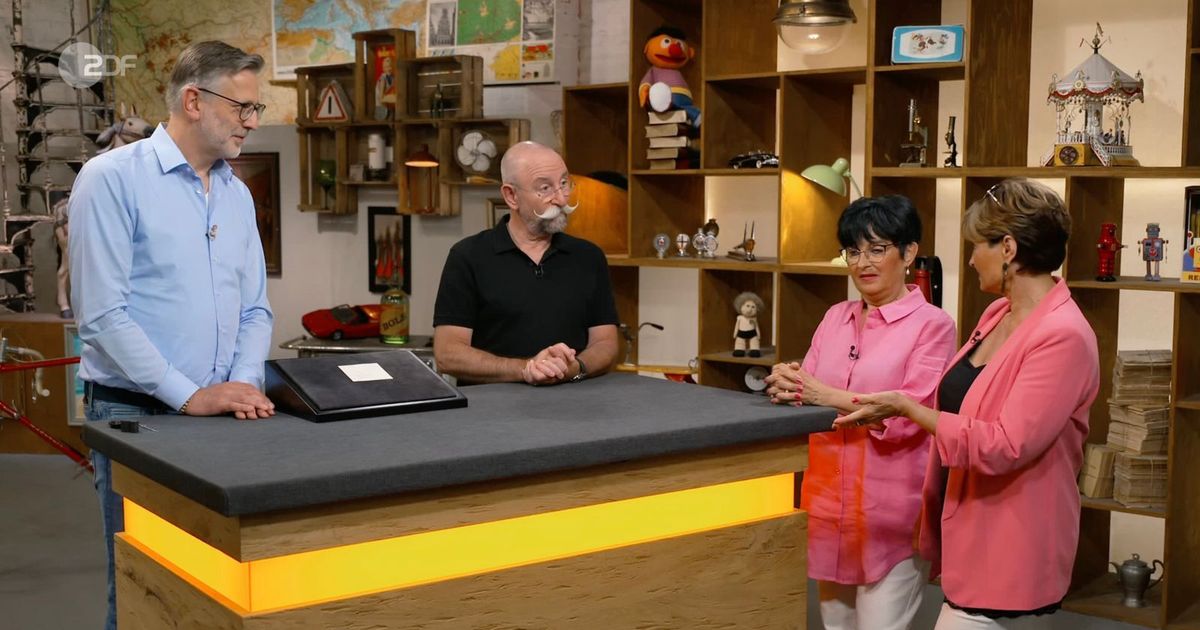
Bares für Rares Neil Armstrong autograph card, Digi Mart USA News: In the Monday edition of the ZDF show “Bares für Rares,” an inconspicuous small card initially puzzled host Horst Lichter. Apart from a signature, little could be seen on it, but the name behind it carried considerable weight, as did the sellers’ price expectation.
Lichter first considered the “sweet” card rather unremarkable, but noted: “Sometimes the small things are the big ones.” Expert Detlev Kümmel took it with humor, joking that the card could be reused after the signature was retouched away: “Then it’s clean again.”
Only in conversation with the two sisters, Silvia from Bochum and Gisela from Castrop-Rauxel, did the secret of the small card come to light. Gisela explained that her husband had obtained the sought-after autograph as a boy.
It came from Neil Armstrong, the first human to walk on the Moon.
In 1970, just one year after the historic Moon landing, the then eight-year-old attended a gliding event at the Wasserkuppe in the Rhön region. When he spotted Neil Armstrong there, he asked him for a signature.
Since then, the card had been kept out of the light in a photo album and “treated like a treasure,” Gisela said.
Expert Kümmel was familiar with Armstrong’s signatures from firsthand experience and confirmed the autograph’s authenticity: “This is an original.” After the 1969 Moon landing, the astronaut toured the world, with a stop in Germany among them. Kümmel explained that at the time he was “the most famous man in the world.”
There was one drawback, however: the autograph had been trimmed to the format of a photo. Apparently the card had “not been treated like a treasure, especially at the beginning.” In its original state, the document would have been worth considerably more and would have made “the story rounder.” “Oh,” Lichter sighed, visibly disappointed.
Gisela then surprised everyone with her price expectation: 1,000 euros. During Armstrong’s tour, numerous autographs were handed out.
“Many of his alleged fans immediately made money from them,” Kümmel said. Afterward, the astronaut signed only rarely for admirers, which has been advantageous for the present-day collector value of Armstrong signatures.
Official autograph cards were especially sought after and fetched up to 1,800 euros. “This could be something very individual, but unfortunately it’s damaged,” Kümmel said, valuing the cut card at only 500 to 800 euros.
Despite the lower estimate, the sisters brought their “piece of contemporary history” into the dealers’ room. When the famous name Neil Armstrong was mentioned there, a murmur went through the room.
Elisabeth Nüdling also recognized the location: “The Wasserkuppe is our local mountain and only ten kilometers from Fulda.”
Wolfgang Pauritsch opened the bidding at 100 euros. Walter Lehnertz considered that already a good offer and did not bid.
Nüdling raised it to 120 euros, emphasizing her regional interest: the piece could ultimately be made accessible in a museum. Julian Schmitz-Avila joked that he had thought Nüdling would now start collecting postcards.
Out of attachment to her home region, Nüdling increased again and asked for acceptance at 160 euros. Gisela, however, disagreed: “That’s far too little.” The expert’s valuation was then announced to drive bids higher.
Finally, Nüdling offered 500 euros, and both sides were satisfied.