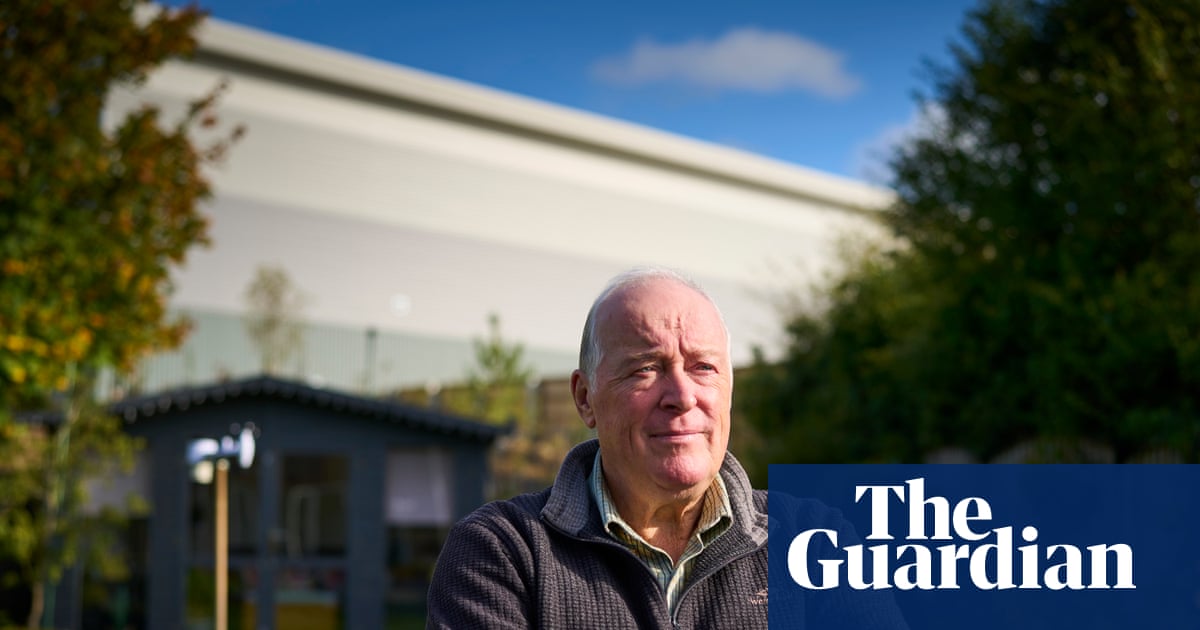
Astley warehouse noise dispute in Greater Manchester, Digi Mart USA News (Astley, Greater Manchester, England): When Stephen Retford retired from the police in 2006, he expected a quiet life after nearly three decades catching criminals. Now the former detective has taken on a case that is very close to home.
“It’s the total injustice of it,” the 70-year-old said, looking up at the 18-metre-high warehouse that towers over the village of Astley. Residents are angry about the “monster” building, comparing it to having a “cruise ship in our back garden.”
Andy Burnham expressed concern about the development weeks before he became prime minister, and Bev Craig, his successor as Greater Manchester mayor, said she was also worried. “Old industry wouldn’t have got that close to your house,” she said.
“So why is it that new industry can?”
This week, villagers will try to block plans by Whistl, the distribution firm that operates the warehouse, to use dozens of heavy goods vehicles and trailers for its round-the-clock operation. In a two-day public inquiry, they will describe how the “cacophony” of noise is already causing some residents sleep deprivation and depression.
“It’s had a profound impact on the neighbourhood,” said Retford, a burly man with a booming voice who is not easily shaken after so many years in the police. “The noise wakes you up at 2am and you can’t get back to sleep.
We’ve not had a proper night’s sleep in well over a year. It’s a living hell.”
The village is now at the front line of a nationwide campaign against large industrial buildings, from Devon to Cardiff and the Scottish Borders. Plans were announced last week for Britain’s largest datacentre at the site of the Drax power plant in North Yorkshire, and a further 315 “hyperscale” datacentres are queuing to connect to the National Grid.
Down the road from Retford’s house, a woman looks out of her daughter’s bedroom window at the Whistl warehouse just metres away. The woman, a police officer who did not want to be named, said her 10-year-old autistic son refuses to play in the garden because of the “continuously whirring” noise from the conveyor belts.
Her eight-year-old daughter has become too frightened to play in her bedroom.
“As soon as she comes home from school, those blinds will be shut because she doesn’t want anyone to see in,” she said, pointing to a CCTV camera on the warehouse facing their home. “She hates it.
She does get scared about it.”
Like many neighbours, the woman and her husband moved to Astley before plans were submitted by a firm part-owned by Peel Group, one of Britain’s largest landowners, run by billionaire John Whittaker. Back then, they were surrounded by farmland where lambs, cows and horses grazed.
Now their view is a giant block of grey steel that was named the worst new building in the UK this year. “It was a lovely view, so secluded,” she said.
“When we saw the structure of this, it was like: oh my God, what is this?”
As mayor, Burnham said earlier this year that the development had not been managed properly and that key things “should have been done differently.” Wigan Council said it acted properly in approving the superstructure despite objections from the local MP and dozens of residents. However, the council’s leader, Labour’s Nazia Rehman, admitted last month that “some lessons have been learned” and said that in future “consultations [with residents] will be proactive.” Local leaders have scrapped plans for four other giant warehouses in response to the backlash.
Helen Halbous, who moved to the estate seven years ago, said: “It’s a feeling of being screwed over by Wigan council, having been born and brought up here. People who had a voice of power [in the council] either made this awful decision or they looked away and let it happen.
It was a little mining village and now we’re this industrial centre. It’s so wrong.”
Halbous, 47, said she and her partner, Sami Halbous, now feel trapped in a house they once loved and fear they would be unable to sell. “A neighbour had their home valued and they lost 30%, and that’s if they can sell,” she said.
Residents felt misled about the size of the structure and how close it would be to their homes, Halbous said. “The plan in 2019 was for it to be used for employment.
It was never to have an 18-metre-high warehouse. Those permissions were changed [before 2024] and changed really quietly.
We wouldn’t have bought here and let ourselves get trapped like this.”
PLP, the landowner, said the size and scale of the buildings had not changed since its planning application in 2023. It said earlier plans for smaller units, submitted in 2017 by Peel, one of its biggest shareholders, had since lapsed.
Wigan Council said it recognised the “strength of feeling in the community” and does not underestimate the impact residents say the development has had on them. It said an independent review found its planning process was “legally sound” and followed national guidelines, but that there were “lessons around engagement and transparency.” It said: “We have acknowledged those findings and have taken steps to improve our approach.”
Whistl, which began operating at the site in July, has responded to the concerns by promising to use quieter vehicles and to stop their use outside between midnight and 6am. The firm said it took residents’ concerns seriously and was “committed to meeting its licensing responsibilities and being a good neighbour.” A Whistl spokesperson said the noise mitigation measures would remain in place and the overnight pause on yard activity would continue while all parties tried to “identify a sustainable, long-term solution.”
Retford became so frustrated by the disturbance that he began overnight observations to track the large vehicles clanking around near his home. He commissioned independent acoustics experts to produce a sound report, convinced that the “cacophony of rolling thunder, a booming sound” breached regulations.
A fightback fund launched by residents has so far raised £78,000, much of which will be spent on lawyers for next week’s public inquiry.
For Retford and his wife, Carole, 71, the impact has been huge. “Bloody hell, there’s not a lot of things I’ve not seen in my life,” he said.
“I don’t get easily shocked and I’m not a flaky character, but this has had a profound effect on me. We’re not fuddy-duddies or nimbys.
This is big business riding over the little people like us, saying ‘screw the lot of you’.”
Retford and his wife have spoken to their doctor about sleep deprivation. “It’s a torture for a very good reason, because it just drains you – and that is the effect it’s having on us,” he said.
Carole became close to tears. Staring up at the warehouse, she said: “It’s changed our lives.
Your moods go up and down to being very depressed and very emotional about it because there’s no way out at the minute. People use the ‘depression’ word too lightly, but if you feel there’s no way out, it does get to you.”