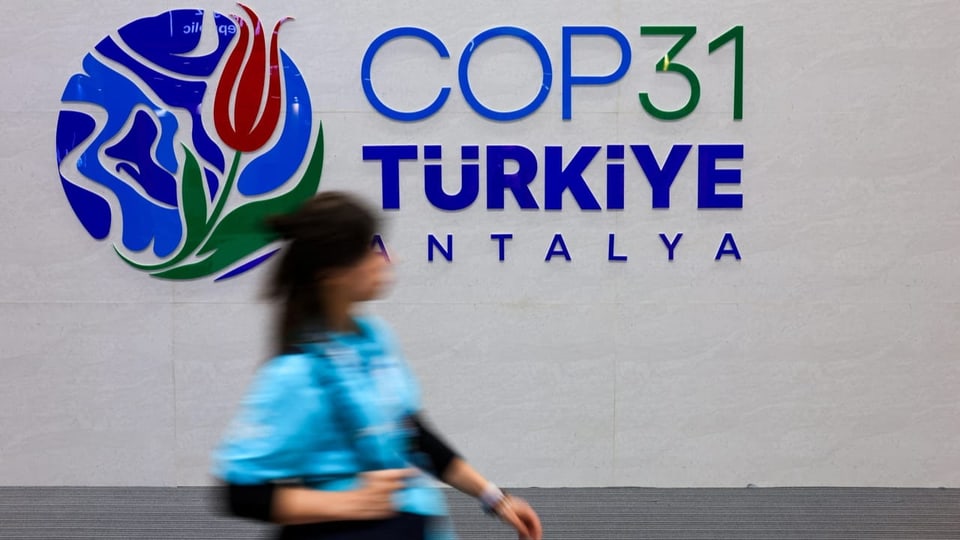
UN Climate Conference in Antalya 2026, Digi Mart USA News (Antalya, Turkey): The 31st UN climate conference takes place in the Turkish coastal city of Antalya from November 9 to an expected end on November 20. According to SRF science editor Christian von Burg, the key questions are which topics dominate the talks and what Switzerland’s interests are.
Nearly all elements of the Paris Climate Agreement have now been negotiated. The focus has shifted mainly to implementation.
The central question is how countries can reduce their greenhouse gas emissions in regular interim steps to the extent they have announced.
Initiatives outside the official negotiations are gaining importance. One group of leading countries has announced concrete roadmaps for phasing out fossil fuels, and Switzerland supports this group and is considering developing its own roadmap.
Among the new proposals, one of the most notable comes from host country Turkey, which calls for raising electricity’s share of global final energy consumption to at least 35 percent by 2035. Today the share is 23 percent.
Switching to electric vehicles, heat pumps and electric industrial motors is already economically worthwhile in many cases. If many states supported the proposal, it would be an important step toward phasing out fossil fuels.
The Swiss delegation negotiates under a clearly defined mandate from the Federal Council. The focus is on implementing the global climate targets, which almost all countries, including Switzerland, are currently failing to meet.
Switzerland also supports initiatives outside the official talks, such as phasing out fossil fuels and electrification. The Swiss delegation leadership also insists that financially strong countries such as China, Saudi Arabia and South Korea should contribute to financial compensation for the Global South.
Finance plays a central role and is raised in almost all negotiating tracks. Two years ago, industrialized countries promised to raise payments to climate funds for poorer countries to 300 billion dollars annually by 2035.
So far, wealthier countries have made few concrete commitments, and some have even reduced their contributions. The Federal Council has also not yet stated what financial share it considers fair for Switzerland or how it should be financed.
Poorer countries argue that they have contributed little to the global climate crisis but bear the greatest burdens. They say that only with payments and knowledge transfer can they pursue climate protection and adapt to the effects of warming.
The world is not on track for climate protection. The 1.5-degree target is being missed, and with current climate pledges the Earth is heading toward 2.8 degrees of warming.
It would still be possible to limit overshooting to 1.7 to 1.8 degrees, but that would require a massive rethinking of global policy. Climate protection would need the highest priority, which is currently not foreseeable.
Nevertheless, the conference will move climate protection forward in small steps.