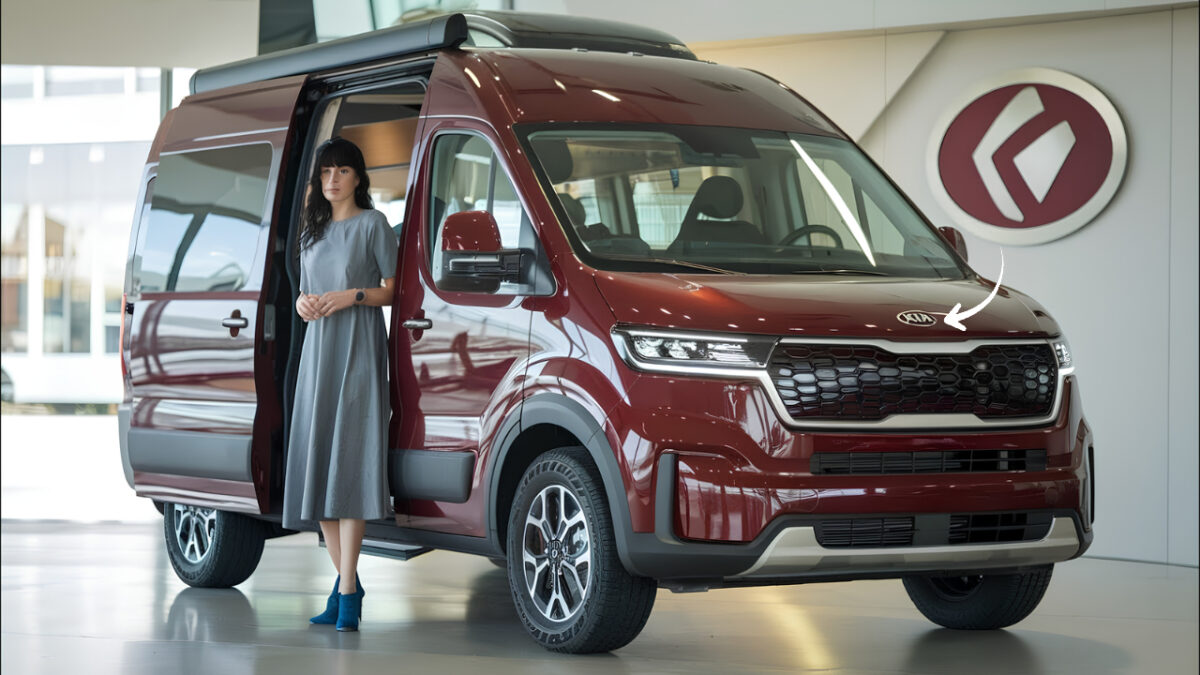
2026 Kia Camper Van : The company’s electric PV5 platform, adventurous WKNDR concept, and emerging camper conversions point toward a growing leisure vehicle story.
However, these are not interchangeable products, and an overseas announcement does not establish United States availability. Kia’s American website still identifies the WKNDR as a concept vehicle that is not available for purchase.
That distinction matters for anyone hoping to turn an appealing headline into an actual road trip reservation or driveway delivery.
What the Kia Camper Van Actually Is
The phrase “2026 Kia camper van” can describe several different developments rather than one clearly defined American model. There is the production PV5 electric van, Kia’s camper focused conversion plans, independent conversion projects, and the more dramatic WKNDR show vehicle. Each serves a different purpose.
The production platform provides the foundation; conversion companies develop usable camping arrangements; the concept explores a more adventurous direction.
Understanding those layers helps explain why photographs and specifications circulating online may show vehicles with very different equipment, interiors, and intended markets despite sharing the Kia name.
WKNDR Brings the Outdoor Personality
Unveiled at the 2024 SEMA showcase, the PV5 WKNDR presents Kia’s most expressive camping vision. Its lifted stance and off-road tires give it a tougher appearance than the everyday van underneath the idea.
Inside, Kia emphasizes a flexible, modular layout rather than a permanently fixed arrangement. The intention is to adapt the available space around different activities and equipment.
For American readers, the important limitation remains straightforward: these details describe a concept. They should not be presented as confirmed standard features on a production camper arriving at local Kia dealerships soon.
A Clever Approach to Carrying Gear
One of WKNDR’s more interesting ideas is its “Gear Head” storage feature. Kia describes an external, sheltered storage area that becomes useful when the vehicle is parked.
Moving equipment outside frees interior space while keeping frequently needed items accessible. That approach addresses an obvious camping challenge: the same small cabin may need to accommodate people, luggage, and outdoor equipment.
Rather than treating every storage problem as a reason for a larger vehicle, the concept explores how a compact footprint might work harder once travelers stop driving and settle into their destination.
The Production PV5 Provides the Foundation
Beyond the concept styling, the more substantial development is Kia’s dedicated electric van architecture. The PV5 uses E-GMP.S, a platform developed specifically for the company’s purpose-built vehicles.
Kia describes a modular structure that supports different bodies and applications, including passenger transport, cargo work, and leisure conversions. Its global materials identify a Light Camper among those possibilities.
That matters because camping applications are part of the platform’s broader development story, rather than merely an imaginative use suggested by an isolated show vehicle. Still, global product descriptions do not confirm American retail availability.
Independent Converters Add Another Chapter
The camper story also extends beyond Kia itself. Netherlands-based Vantrack announced plans to put its PV5 Passenger-based LightCamp into production after showing a prototype earlier in 2026.
Reporting described a compact electric camper designed to function as an everyday vehicle while opening into a more useful outdoor living arrangement at a destination.
This is a separate conversion project, not proof that Kia’s WKNDR concept has entered production. For readers following developments closely, the converter’s identity and the base vehicle matter just as much as the badge on the front of it.
Why American Availability Needs Careful Wording
For a United States audience, availability is the central unanswered issue. Kia’s American concept page explicitly rules out purchasing WKNDR, while its global PV5 information describes a wider family of vehicles and applications.
Those statements should not be combined into an unsupported claim that a finished 2026 Kia camper is available nationwide. An overseas conversion announcement likewise does not establish American ordering, certification, service coverage, or delivery arrangements.
The accurate news angle is that Kia’s electric camping ecosystem is developing internationally, while the sources reviewed here do not establish a confirmed United States camper launch.
Specifications Must Match the Actual Vehicle
Another source of confusion is the temptation to assemble one impressive specification sheet from several different vehicles. WKNDR’s off-road appearance, the production PV5’s modular architecture, and an independent converter’s camping interior belong to distinct projects.
Combining them would create a vehicle that the cited announcements do not establish. The same caution applies to sleeping capacity, kitchen equipment, battery specifications, and charging performance: details need to match the particular version and market.
Without that connection, a polished camper description can drift away from the actual vehicle a customer might eventually encounter elsewhere.
The Bigger Picture for Road Trip Fans 2026 Kia Camper Van
The strongest takeaway from Kia’s 2026 camper news is not a promised American delivery date. It is the connection between a dedicated electric van platform, manufacturer interest in leisure variants, and converters developing their own camping interpretations.
Together, those developments make the PV5 worth watching without turning speculation into a product announcement. American travelers can appreciate WKNDR’s inventive design and follow real conversion progress while keeping expectations grounded.
For now, the story is about an expanding electric camping direction, not a verified nationwide rollout of a single, fully specified Kia camper van.