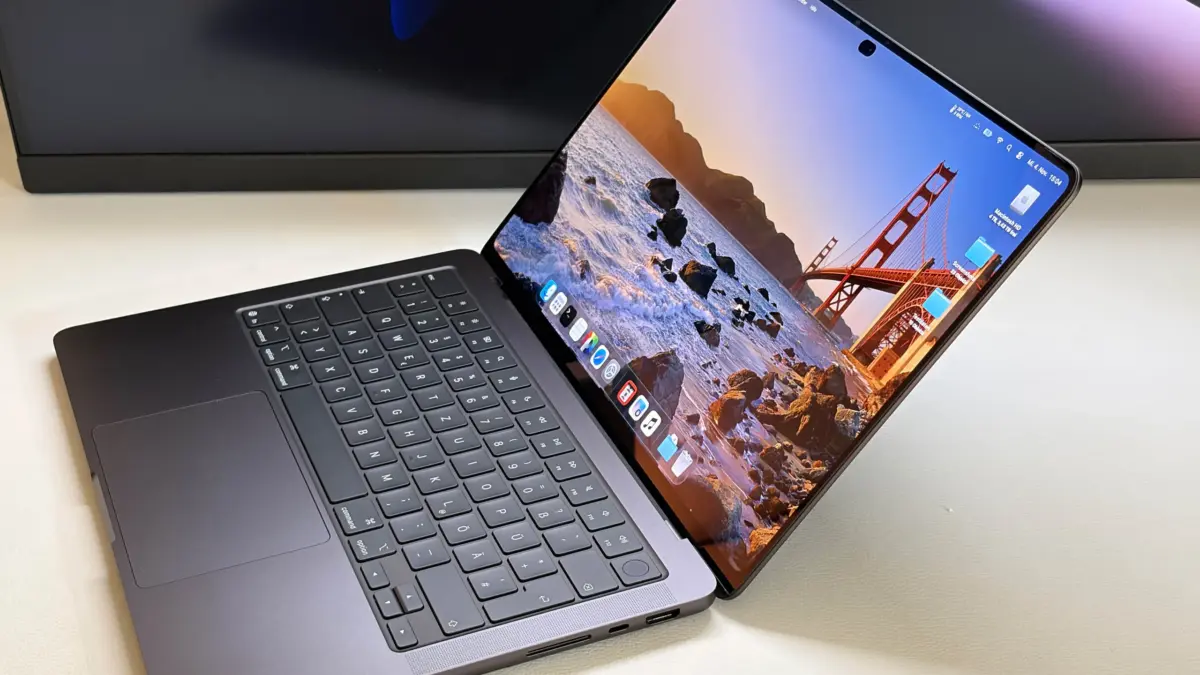
OLED MacBook Air, Digi Mart USA News: Apple’s MacBook Air models currently use IPS displays with a 60 Hz refresh rate, while the base MacBook Pro 14 offers a Mini-LED display running at 120 Hz on essentially the same processor. According to a Notebookcheck analysis, this difference is a key reason the Pro model is the only way to get a better screen in the current lineup.
The publisher argues that a MacBook Air with an OLED panel would be technically feasible, but it would likely reduce demand for the more expensive MacBook Pro 14. The article suggests Apple has traditionally been focused on maximizing profits, which is why it has kept the display gap between the two lines.
The newly introduced OLED MacBook Pro is now being sold alongside the existing Mini-LED model. Notebookcheck expects that in the medium term only the OLED version may remain, which could also mean the end of the base MacBook Pro 14. That change would create room for an OLED MacBook Air, though at a higher price.
The article also notes that Apple would probably limit an OLED MacBook Air to preserve the gap with the Pro models. These limits would likely affect brightness and color gamut, and the Air would almost certainly not use tandem OLED.
The publisher adds that the refresh rate might also remain at 60 Hz, pointing to the iPad mini, which has an OLED screen limited to 60 Hz while a 120 Hz OLED panel is available only on the iPad Pro.
These points are the publisher’s analysis and expectations rather than confirmed Apple plans. The article is based on a single Notebookcheck publisher report that was not independently verified.