HalZero zero-emission aluminum production, Digi Mart USA News (Norway): Aluminum has been produced using largely the same basic method for about 140 years, and that method releases roughly 1.5 kg of CO2 for every kilogram of metal produced. Researchers at Norwegian firm Hydro, working with SINTEF and the Norwegian University of Science and Technology (NTNU), have developed an alternative process called HalZero that they say could eliminate these direct emissions.
Aluminum is the second most widely used metal in the world, after iron. The US Geological Survey estimates that the world produced about 74 million metric tons of primary aluminum in 2025, excluding recycled material.
Most production still relies on Hall-Héroult electrolysis, which dissolves alumina in a molten cryolite-based electrolyte and passes current through carbon electrodes. The oxygen released reacts with the carbon anodes to form CO2, so powering the process with renewable electricity alone would not remove these emissions.
HalZero takes a different chemical route. Alumina is first converted into aluminum chloride through chlorination, and electrolysis of that compound yields pure aluminum and chlorine gas.
The chlorine is recycled back into the chlorination step. Hydro says it has also developed a method to capture the CO2 from chlorination and convert it back into carbon monoxide for reuse, so that carbon and chlorine circulate in closed loops.
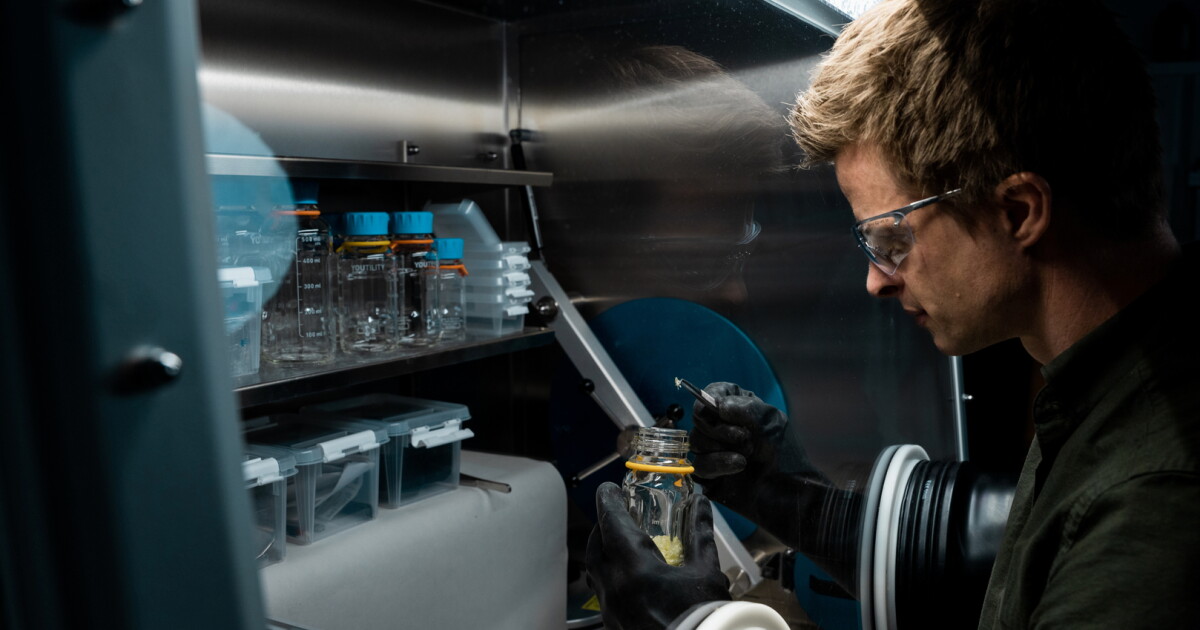
According to the publisher’s report, Hydro researchers last month produced aluminum from aluminum chloride using HalZero electrolysis for the first time at the company’s research and test facility in Porsgrunn, Norway. Hydro’s president and CEO, Eivind Kallevik, described the result as an important milestone.
The approach builds on work Alcoa is reported to have experimented with in the 1980s, and Hydro says it has spent about a decade developing its own patented process.
The company acknowledges significant limits. The current experimental setup still generates CO2 because the CO2-to-CO conversion step has not yet been tested, so the process is not yet zero-emission.
Hydro has not disclosed figures on the quantity, purity or energy use of the aluminum produced. SINTEF’s Egil Skybakmoen said preliminary studies suggest an industrial-scale facility could need roughly the same energy and capital as a conventional smelter, but that claim still needs industrial-scale demonstration.
Next, Hydro plans a larger integrated industrial concept pilot to test continuous production with chlorine and carbon recycling. Enova, a Norwegian state enterprise, has provided an additional NOK 82 million (about US$8,725,000) to support planning and feasibility studies, and the pilot would be built in Norway’s Grenland region pending final construction approval.
Hydro says several more years of testing will be needed before commercial deployment, and it aims for net-zero carbon emissions in aluminum production by 2050.