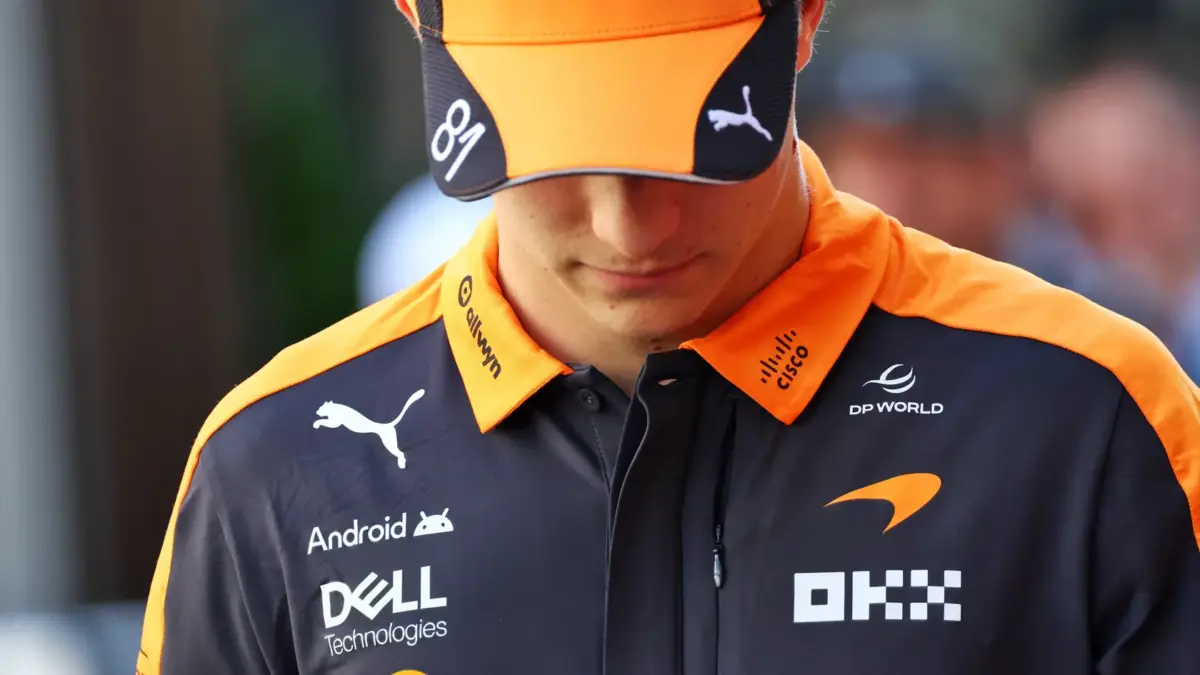
Oscar Piastri McLaren 2026 season, Digi Mart USA News: Oscar Piastri has conceded that he is “missing the stress” of fighting for the Formula 1 drivers’ championship this season. Last year, Piastri appeared poised to become Australia’s first world champion since the late Alan Jones in 1980, but a poor final third of the campaign saw him finish third behind McLaren team-mate Lando Norris and Red Bull’s Max Verstappen.
Moving into this season under the new regulations, Piastri has struggled to adapt. He has failed to win a race and has finished on the podium only twice in 20 races, leaving him seventh in the drivers’ standings, 96 points behind Norris, who sits directly ahead of him.
Asked in an interview with RacingNews365 whether it was a setback not to be involved in this year’s title fight, Piastri gave a nuanced answer. “Yes and no,” he said.
“I want to be in a championship fight every year if I can be, but also, it’s definitely a bit more relaxed this year.
“Obviously, we’re not wanting to be in this position, but there’s not quite the same stress. But that stress that you have in a championship fight is the feeling you want, because it means you’re fighting for something that is your goal.
I am missing that feeling this year for sure, and it adds a bit of extra intensity and things like that. But yeah, it’s not all…
there are some things that are a little bit easier when you’re not in a championship.”
Piastri’s drop down the order has coincided with McLaren’s difficulties in adapting to the sweeping 2026 technical overhaul, which introduced smaller cars, reduced downforce and a near 50/50 split between internal combustion and electrical power. McLaren has pointed to customer-team integration issues that prevent it from extracting the same performance from its Mercedes power unit as the factory squad.
The team’s technical leadership has also flagged sharp downforce losses through medium and high-speed corners as a persistent handicap on the MCL40.
Piastri explained that the scale of the challenge was obvious from the opening races, with the focus initially falling on the power unit rather than the chassis itself. “It was clear at the beginning of the season that they were going to be quite different, but mainly from the power unit side of things,” he said.
“The actual cars themselves are smaller, they have less downforce, so of course they’re always going to be different, but I think the first few races we were really occupied with the power unit and how to get the most out of that.
“After the first few races, and especially after they tweaked some of the rules, it became a bit more normal, and that’s when we really dug deep into what the car itself is like. It wasn’t that easy to drive, and it’s still not been easy to drive, even now.
So, pretty early on we identified that it was going to be challenging. It took us a while to understand exactly what needed to change, and then trying to actually change it is tough.
“But we’re making progress with it slowly, and that’s all we can keep trying to do. So yeah, that’s been the biggest thing.
We recognised pretty early on that the car had some things that were tricky to manage.”