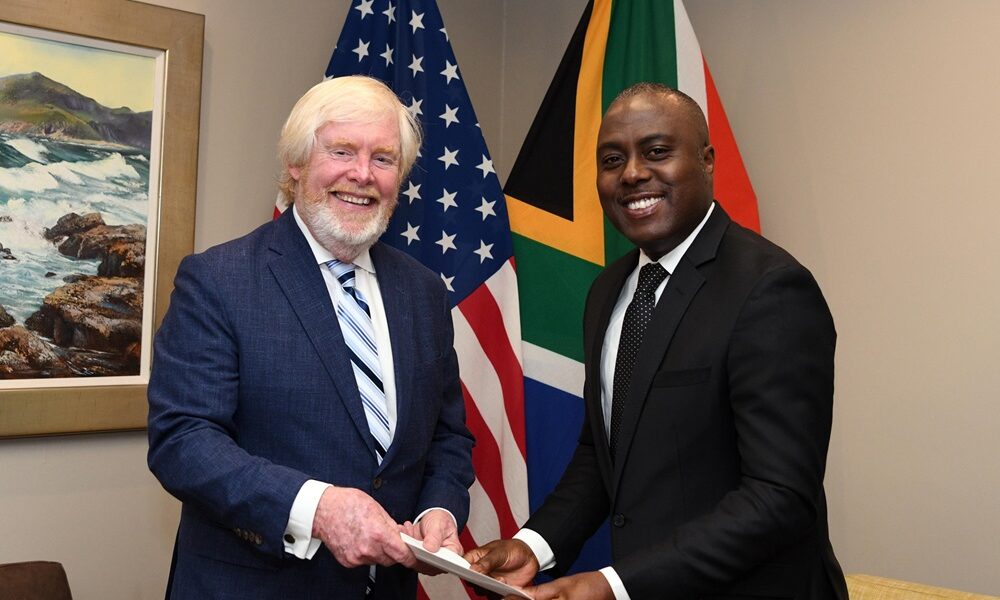
Calls to replace US Ambassador Leo Bozell in South Africa, Digi Mart USA News (Pretoria, South Africa): Calls are increasing in Pretoria for the replacement of US Ambassador Leo Bozell, as strained relations highlight his contentious diplomatic style rather than the state of US-South African ties. South Africa’s official relationship with the United States has reached its lowest point since 1994, yet the focus of growing discontent in Pretoria is the envoy himself, Ambassador Leo Brent Bozell III, rather than the American nation.
Increasingly vocal criticism from South African figures, including members of the ANC, the Economic Freedom Fighters (EFF), and Parliament’s Portfolio Committee on International Relations, centres on Bozell’s public statements and his approach to diplomacy. Critics argue that the ambassador’s confrontational and dismissive tone has made him ineffective at fostering bilateral trust, prompting calls for his replacement rather than a rupture in broader US-South African ties.
Bozell’s tenure has been marked by repeated diplomatic disputes. South Africa’s Department of International Relations and Cooperation (DIRCO) has issued three formal démarches against him in the past nine months, an unprecedented tally for a US ambassador in Pretoria.
DIRCO accuses Bozell of “undiplomatic conduct,” while Parliament’s related committee has reaffirmed the importance of mutual respect in constructive engagement between the two nations.
International relations expert Kingsley Makhubela said Bozell is “failing” in his core mission of rebuilding relations. “The basic function of an ambassador is to build relations between the two countries.
So based on that, you can see that he’s failing.” Makhubela warned that describing these repeated démarches as routine diplomatic measures misleads the public about the seriousness of the current breakdown.
South Africa’s International Relations Minister, Ronald Lamola, also criticised Bozell’s recent remarks, particularly his public assertion that diplomacy had become “useless” and that the US had “run out of patience” with Pretoria. Lamola stressed that the duty of a diplomat is to foster dialogue.
“You can’t have a diplomat who says time for talking is over. It’s our job to talk.” He further emphasised that a diplomat must not interfere in the host country’s domestic affairs.
The dispute escalated after Bozell published an op-ed criticising South African policy and made contentious comments in international media, including Fox News Digital. In response to Lamola’s critiques, Bozell posted on social media platform X, calling the situation “kabuki theatre” and accusing the South African minister of making personal insults.
The EFF has been the most vocal critic. The party has openly called for Bozell to be expelled and declared persona non grata, accusing him of contempt for South Africa’s president, legislature, and judiciary, and of overstepping by trying to dictate both domestic and foreign policy.
The EFF cited Bozell’s refusal to respect a South African court ruling that the song “Kill The Boer, Kill The Farmer” does not constitute hate speech as especially egregious for a foreign diplomat.
The ambassador’s actions have had consequences. In September, US Secretary of State Marco Rubio announced targeted visa restrictions against South African officials connected to controversial land reform policies and allegations of discrimination.
More recently, Bozell announced that South Africa will be removed from the African Growth and Opportunity Act (AGOA) from January 1, 2027, blaming Pretoria for its stance on a set of US “Five Asks” spanning issues from land expropriation to crime and hate speech.
Bozell has maintained his criticisms in various interviews, insisting that South African President Cyril Ramaphosa has failed to condemn incitement to violence and has disregarded the ruling of South African courts on matters of freedom of speech.
Despite the harsh rhetoric, South African officials stress that the push for Bozell’s replacement is not a rejection of the United States itself. Broad recognition remains of the substantial economic and strategic bonds between the countries, with more than 500 American companies operating locally and significant US investment in key sectors such as mining and telecommunications.
The message from both DIRCO and Parliament is clear: South Africa seeks to preserve and strengthen its partnership with Washington but believes this is unattainable under the current ambassador’s leadership. Analyst Ofentse Donald Davhie predicted at the outset of Bozell’s posting that “He is here to extract concessions, he is not here to make any new friends,” a warning that many in Pretoria now see as having come true.
Voices in the diplomatic community consistently suggest that with a different envoy, the United States and South Africa could repair and revitalise their relationship across trade, security, and development. Without such a change, however, skepticism remains about whether trust and meaningful negotiation can be restored.
The debate over Bozell reveals the resilience of the US-South African relationship, grounded in decades of partnership and trade, but also underscores how much depends on diplomatic leaders’ ability to build bridges rather than burn them.