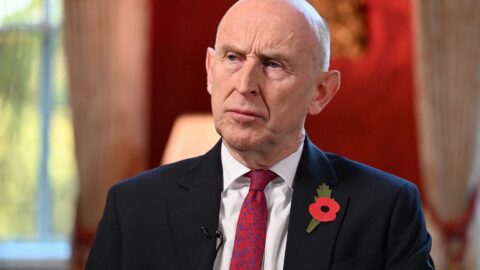
John Healey, USA News (London, United Kingdom): Chancellor John Healey has come under fire over his decision to slash £2 billion from the Ministry of Defence’s budget amid growing threats facing Britain. After delivering his first Budget, it was revealed the Chancellor will hand the Ministry of Defence £72.8 billion in 2027/28 and £75.5 billion in 2028/29. His predecessor, Rachel Reeves, previously set the MoD’s budget at £73.8 billion in 2027/28 and £76.5 billion in 2028/29 in Labour’s defence investment plan.
Mr Healey insisted the Government will aim to spend three per cent of economic output on defence by 2030, but said a plan to meet the target will not be put forward until next year’s spending review. He told the House of Commons that this year’s defence budget is £14 billion higher than it was in the Conservatives’ last year of Government.
“At the spending review next year, I confirm that I will set out the details of how we will meet our Nato commitment to spend 3.5 per cent of GDP on defence by 2035, with a target date for three per cent in 2030,” he stated.
Political Reaction and Criticism
Tory leader Kemi Badenoch slammed the Chancellor’s proposals as a “plan to have a plan”, as her party branded changes to the MoD budget a £2 billion cut. On Saturday, Shadow Chancellor Andrew Griffith urged Mr Healey to stop dithering and have a fully funded plan to boost defence spending to three percent of GDP or resign.
Liberal Democrat defence spokesman James MacCleary described the move as shameful and warned it will leave troops worse off and undermine national security.
Cost of Living and Energy Support
Addressing wider economic pressures, Mr Healey admitted that Labour cannot remove all the pressures that people are facing today amid the cost-of-living crisis and rising bills. Speaking to Sky News, the Chancellor insisted his announcement of £100 off energy bills for about 20 million households in England was an important payment.
Prime Minister Andy Burnham defended the Budget against claims that it was not bold enough, highlighting council tax cuts for winter energy costs and business rate exemptions for 70,000 businesses. However, the Resolution Foundation economic think tank warned that the scattergun approach fails to tackle Britain’s mounting financial challenges, noting that support is spread too thinly.