Restore, USA News (Great Yarmouth, UK): As a major landlord in Great Yarmouth, David Carter is worried. In recent weeks, six of his flats in the Norfolk seaside town have been vacated. The tenants, migrant workers from Romania, tell him that the time has come for them to head home. Prime Minister Andy Burnham this week called for an “honest discussion” over a return to freedom of movement between Britain and the European Union. But Carter is grappling with what he says is a sobering reality of EU nationals looking to exit – rather than flock towards – the UK.
“People are leaving,” he told The i Paper. “They think they’ve read the writing on the wall and they’re going to be asked to leave the UK anyway. So they want to go back home and get a job before everyone else has to do the same. The problem is that these are precisely the sort of people we need to have here. These guys are hard working, they pay their taxes, they make their lives here and they contribute to the economy by doing the jobs that no-one else wants to do.”
The Brexit Town on Migration Front Line
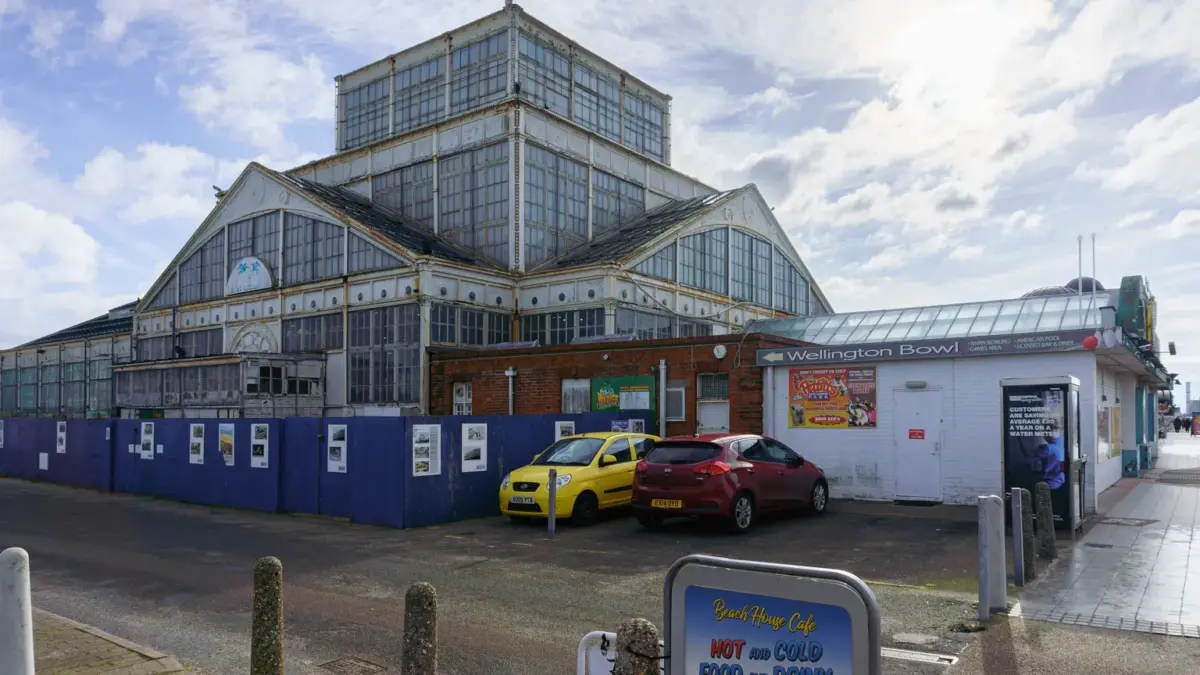
Despite its far-flung location on the North Sea coast, Great Yarmouth remains firmly on the front line of the debates that continue to rage around Brexit and migration. The town, which is towards the bottom of multiple deprivation indicators, recorded the UK’s fifth highest leave vote in the 2016 referendum. Seventy per cent backed departure from the EU after a decade or so in which large numbers of EU nationals had arrived to work in agriculture and the food processing industry.
Local MP Rupert Lowe is leader of Restore Britain, the insurgent right-wing party backed by Elon Musk which is providing Nigel Farage’s Reform UK with a political headache. The party has won support with a range of hardline policies, including a promise of mass deportations of illegal migrants. Lowe’s supporters in the town are quietly hopeful that Restore’s local iteration – Great Yarmouth First – will sweep to a majority on the borough council in elections next year. A survey last month found that Yarmouth was just one of four UK constituencies where rejoining the EU is not currently the preferred choice of voters.
Migrants and Locals ‘Live Separate Lives’
On that basis, it might be expected that Burnham’s flirtation with reopening Britain’s door to a fresh wave of EU migration would be as appetising to Great Yarmouth’s residents as a discarded seaside chip butty. But when The i Paper visited this week, a more nuanced – even contradictory – picture emerged. It is one of a place where recent migrants and locals live largely separate lives, and yet the newcomers are valued for their contribution to the economy.
As Martin Kirby, 54, who has run his stall selling soft toys and DVDs in the town centre for the last six years, put it: “As long as people are working and paying their dues, I don’t have an issue with bringing back freedom of movement. We probably need these people.”
The Grinding Work Locals Don’t Want
The once bustling fishing port visited by Charles Dickens – and latterly an entertainment resort which hosted Houdini, Charlie Chaplin and The Beatles – has had several waves of post-war migrants. An influx of Cypriots in the 1950s set up their own restaurants or businesses. Then migrants from Portugal, Poland and the Baltic states, and more recently Romania and Bulgaria, came to work in the “3 Ps” of picking, packing and plucking. The labour-intensive, minimum-wage work in agriculture and poultry processing is so grinding that it has little attraction for Yarmouth’s settled, largely white British population, multiple locals said.
The result is that whereas Yarmouth’s Cypriot community is well-integrated, the more recent arrivals have had less reason or opportunity to mix with the local population. Many workers are bussed daily in and out of the town to nearby packing and processing plants where 12-hour shifts are routine, returning to live in rented accommodation concentrated in areas south of the town centre.
Schisms and Economic Pressures
Professor Catherine Barnard, an expert in EU law at Cambridge University and a deputy director of UK in a Changing Europe think-tank, has conducted a joint ten-year study of the impact of EU migrant labour on Yarmouth. She said: “There’s a real schism between the migrant community and the local community. A lot of migrants still don’t have very good English at all because in the chicken factories there are no British people. So they learn the languages of their line managers – the common language can often be Russian.”
She added: “From the perspective of local residents, the problem has been that the level of migration meant that people felt that their town was no longer their own. In a place like London, there are such high levels of migration that it becomes part of the identity of the city. That’s not the case for the identity of Yarmouth and it is still coming to terms with that.”
Many of the migrant workers already in Great Yarmouth took up their right remain in the UK under settled status rules after Brexit. About 10 per cent of the 100,000-strong population of the wider borough of Yarmouth are EU nationals.
Gary, a retired mechanic and life-long Yarmouth resident who declined to give his full name, said: “The world doesn’t owe you a living does it, so I respect people who come here and try to do better for themselves. But people already struggle in this town and it’s easy for resentment to build. We have to find a balance.”
Stephen Ledington, a butcher of 14 years who opened his business in Yarmouth’s revamped market place in 2022, added: “Freedom of movement has been a double-edged sword. I don’t see how you can have a problem with people coming here legally to work and benefit the economy. I’ve worked with Romanian guys and they are hard workers. The problems come if people come here and look to do things like exploit the benefits system. But the real problem is that regardless of where you are from, people feel ground down by the economy. Whatever changes are made, people feel they have less in their pocket.”
Catia Quental, 48, who has run her All In One Mini Market since arriving from Portugal in 2012, said: “I think a lot of people are already deciding to go home. The only reason you leave your native country is to have a better life – to save and raise a family – and for a long time the UK offered that. But now the economy is not so strong and for many people they work hard just to pay their bills and eat. There is nothing for those people here, so why would more come?”
Government statistics rank the town as the 18th most deprived local authority district in England. Carter, the landlord, said he would like to see a job requirement attached to any return of freedom of movement rules, adding: “Right now, I genuinely think we’re chasing away the wrong people. If we should be getting anyone out, it’s the English people who just don’t want to work.”
Prof Barnard said the number of “pull factors” that brought EU migrants to the area has diminished, while many early 2000s arrivals are developing health problems due to intense physical labor. In the meantime, the poultry processing sector and farmers warn they routinely face struggles to source labor.
Getting People Together
Yet there is a sense that all is far from being lost for a town that was packed with half-term visitors and has enjoyed significant investment in new facilities, including a renovated £5m market and a £26m seafront leisure centre. In the marketplace, retired NHS surgeon Hugh Sturzaker, founder and chair of the Civic Society in Great Yarmouth, was found filling planters placed outside shops with volunteer colleagues.
Sturzaker, 86, who has lived in Yarmouth for nearly 60 years, said: “Some people have told me they feel threatened walking into areas with migrant housing. I have to say I have never felt unsafe. The point is that there is so much potential in this town. It is just a question getting rid of the negativity and getting people together.”