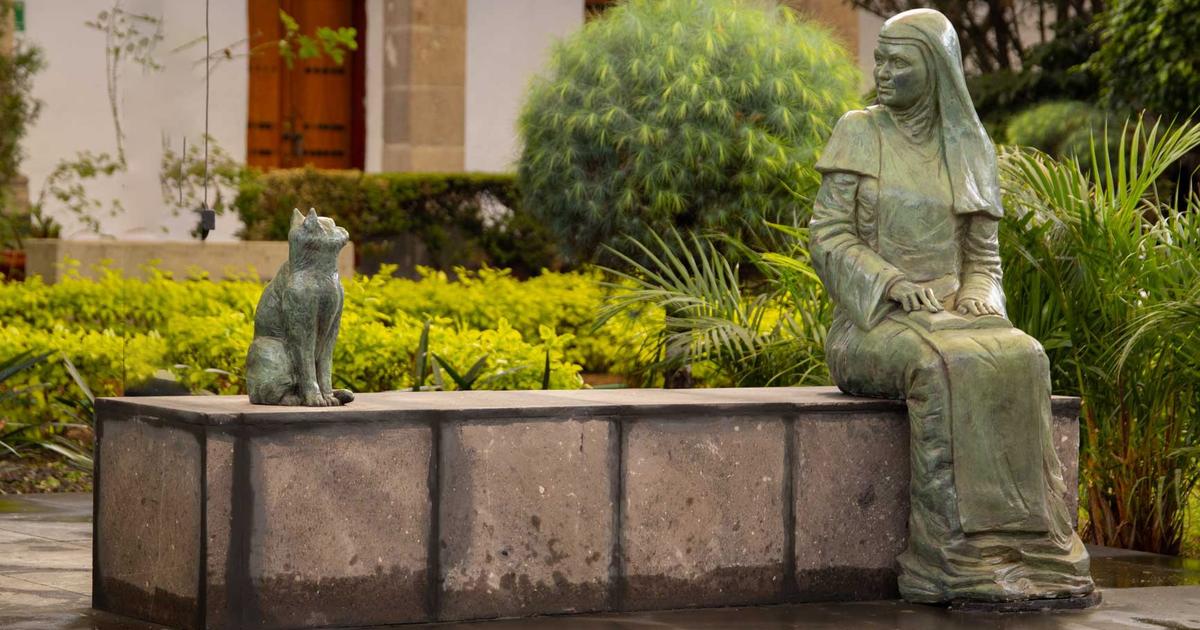
Sor Juana Inés de la Cruz and the Seminario de Estudios Sorjuaninos, Digi Mart USA News (Mexico City): While Sor Juana Inés de la Cruz lived in the Convent of San Jerónimo, its parlor was, as one would say today, a tourist attraction in Mexico City. Through the parlor space, beside the street now named 5 de Febrero, scholars, noble poets and curious visitors orbited around the “Tenth Muse.”
Some came simply to enjoy her verses read aloud; others sought her help with difficult questions of theology and other learning of the period; still others traveled from distant lands to see whether the nun’s fame was deserved. The grilles of the parlor both concealed and allowed the “American Phoenix” to be heard and admired.
The parlor also served as a workshop where some of the greatest works of Mexican Baroque literature were produced. The author imagines María Luisa, the Countess of Paredes, working with the poet on the details of several plays she had requested to brighten the monotony of the Court.
The author also imagines a heated discussion with don Carlos de Sigüenza y Góngora about the frozen tails of comets and their influence on the earth. It was there that the nun first delivered the discourse that later became the highly controversial Carta atenagórica, a theological text on the greatest act of kindness of Christ.
Since June of this year, at the Universidad del Claustro a few steps from the site of the former parlor, about ten specialists and admirers of Sor Juana’s work have met monthly to continue studying her. The recently created Seminario de Estudios Sorjuaninos brings together academics of varied ages, interests and disciplines, some based in Mexico City and others in cities across Mexico and abroad.
The authors believe studies of the Tenth Muse will develop more fruitfully if pursued collectively and as a community. The seminar’s sessions are expected to yield publications, talks and conferences.
They aim to draw interested members of the public into the conversation.
The authors want Sor Juana’s legacy to remain alive and her work to receive greater study among new generations. They aim for the Convent of San Jerónimo to remain, as it was at the close of the seventeenth century, a beacon of art and knowledge.
By Jorge Gutiérrez Reyna.