
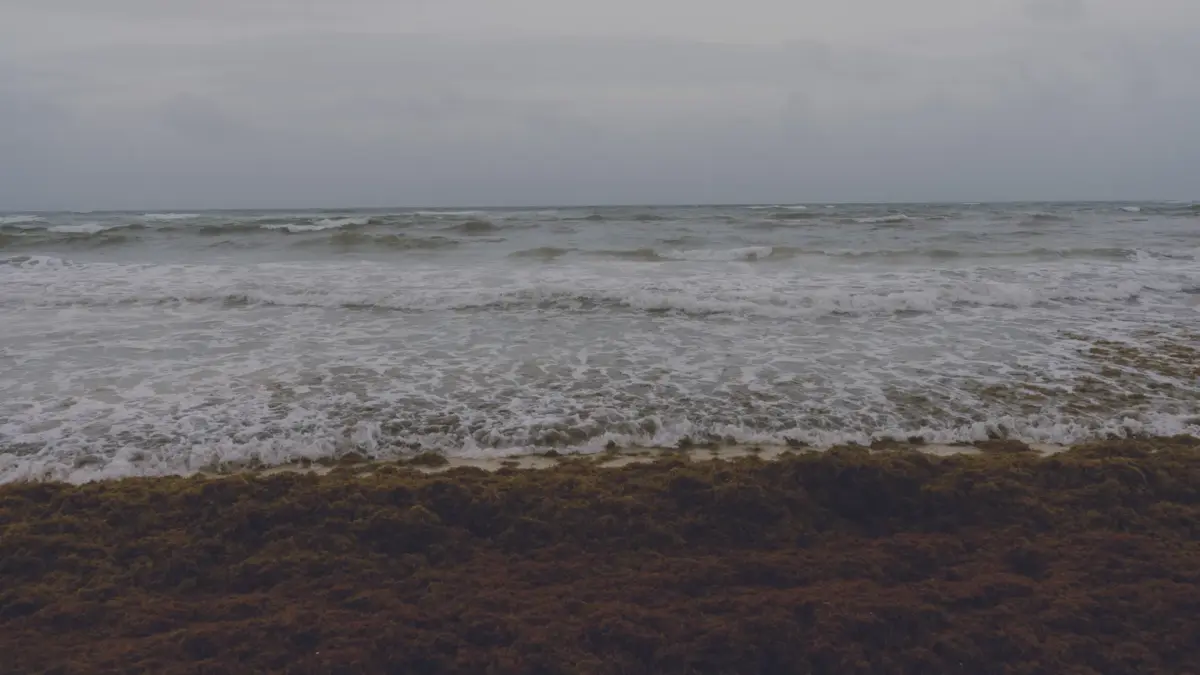
Sargassum seaweed impacts on Mexico’s Caribbean coast, Digi Mart USA News (Mexico): New satellite data confirms an unprecedented expansion of the seaweed belt in the Atlantic, with historic peaks and growing environmental, health and economic consequences for the region.
Sargassum is a genus of brownish marine macroalgae (Sargassum) that floats freely in the ocean without being anchored to the seabed. When it arrives in large quantities on coasts and beaches, a phenomenon known as a “brown tide,” it forms dense mats that alter the landscape and ecosystem.
According to the source, sargassum reaching Mexican beaches results from a combination of natural and human factors. Large inputs of agricultural fertilizers, wastewater and discharges from major rivers, such as the Amazon and the Mississippi, add nitrogen and phosphorus to the water, acting as a natural fertilizer that accelerates the algae’s reproduction.
The source also notes that rising ocean temperatures help sargassum grow faster and survive longer in the tropical Atlantic. Changes in ocean circulation patterns and winds are pushing large accumulations westward from the open sea, directly affecting coasts facing the Caribbean, including Tulum, Playa del Carmen, Mahahual and Cancun.
The NASA and the University of South Florida detected that the Great Atlantic Sargassum Belt reached historic accumulation levels in the Caribbean and the Gulf of Mexico. In June 2026, approximately 33.6 million tons of sargassum were measured crossing the ocean, the second-highest biomass year on record after 2025.
Upon reaching the coast, sargassum suffocates corals and seagrass, releases hydrogen sulfide gas as it decomposes, and seriously affects tourism and local fishing. The source states that solving the problem requires a comprehensive strategy combining prevention, containment at sea, proper collection and use of the biomass.
Beyond monitoring sargassum growth, the source says specialized floating barriers at sea, different from those used for oil spills, can divert or stop the seaweed before it reaches the shore. Boats and “pontoon-ramp” systems can also lift the algae while it is still alive in the water, preventing it from sinking, contaminating the seabed or rotting on the beach.
Once the mass reaches beaches, the source recommends mechanical removal using light machinery that lifts only the sargassum and minimizes sand extraction to avoid coastal erosion. Workers should be protected from hydrogen sulfide, a toxic, foul-smelling gas released as the seaweed decomposes, through appropriate protective equipment and regulated working hours.











