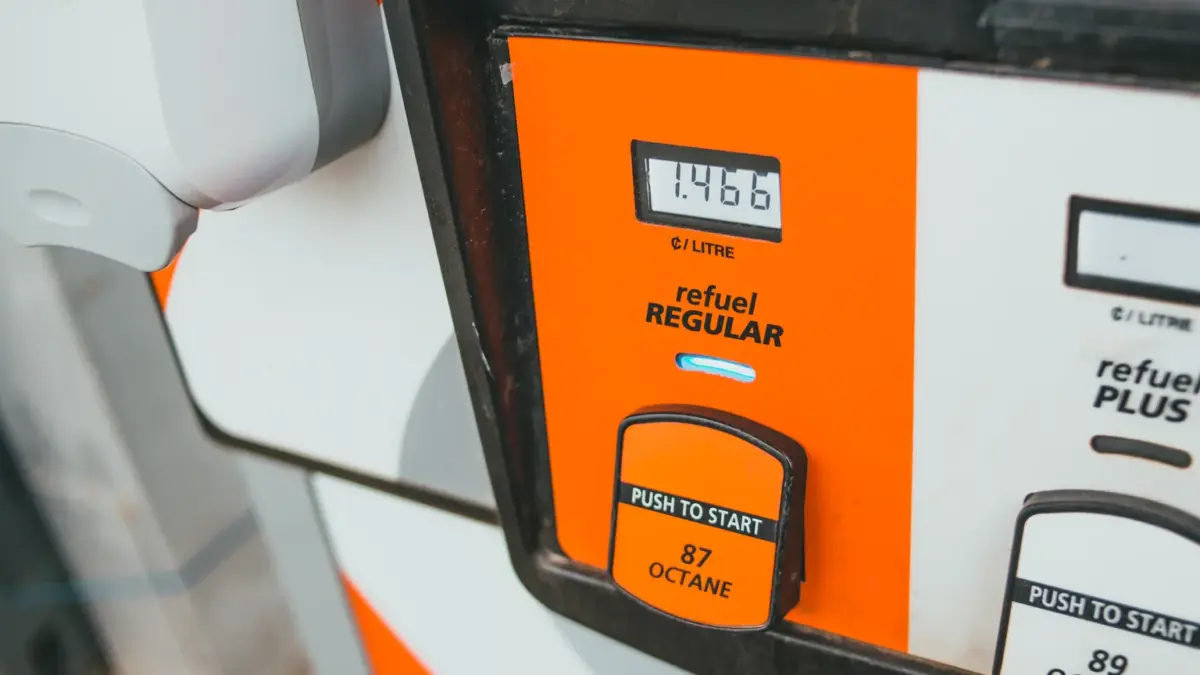
Mexico gasoline prices versus U.S. prices, Digi Mart USA News: Magna gasoline in Mexico costs 14.1% more than regular gasoline in the United States, while Premium is 13% more expensive, despite fiscal incentives applied by the federal government to contain fuel prices, according to an analysis by the consultancy Caraiva y Asociados.
The analysis, with data as of October 31, places the average price of Magna gasoline in Mexico at 23.699 pesos per liter, compared with 20.77 pesos for its equivalent in the United States, a difference of 2.93 pesos per liter. For Premium, the national price reaches 28.597 pesos, against 25.31 pesos in the U.S.
market, a gap of 3.29 pesos per liter.
Diesel follows a different pattern. In Mexico it costs 26.994 pesos per liter, compared with 31.33 pesos in the United States.
This means fuel sold in the Mexican market is approximately 13.8% cheaper than its U.S. benchmark.
The differences persist despite tax support that reduces the collection of the Special Tax on Production and Services (IEPS) on fuels. For the week of October 31 to November 6, the Treasury reduced the incentive for Magna from 3.2365 to 2.9187 pesos per liter, while for Premium it was reduced from 2.8756 to 2.5714 pesos.
Diesel, by contrast, retained an incentive equivalent to 100% of the IEPS fee, at 7.3634 pesos per liter.
The report also estimates a cumulative fiscal impact of 154,556.74 million pesos from uncollected IEPS on gasoline and diesel, to which it adds 6,377.31 million pesos for the complementary diesel incentive, for a calculated total of 160,934.05 million pesos. These figures correspond to estimates of foregone tax revenue and complementary support calculated by the author, not to budget spending actually executed.
Mexico still imports nearly half the fuel it consumes. The price gap occurs in a context where domestic production still does not cover all demand for petroleum products.
Between January and September 2026, Mexico recorded average fuel consumption of 1.430 million barrels per day, compared with domestic production of 724,000 barrels per day and foreign purchases of 706,000 barrels per day. According to the report, domestic production covered 50.6% of demand, while imports accounted for 49.4%.
Dependence is higher for some products. Mexico imported about 89.6% of the Premium gasoline it consumed in the period, as domestic production was only 19,000 barrels per day against demand of 182,000 barrels per day.
For jet fuel, production covered 30.6% of demand.
Refining capacity was also not fully used. The seven refineries considered in the analysis have an adjusted capacity of 1.78 million barrels per day, but processed an average of 1,097,400 barrels per day of crude between January and September, equivalent to a utilization rate of 61.7%.
The report calculates average idle capacity at approximately 683,000 barrels per day.
In that context, the Olmeca, Tula and Salina Cruz refineries together contributed 57% of the system’s gasoline and diesel production.
Although IEPS incentives are intended to cushion fuel prices, the comparison shows that, at the close of October, Mexican gasoline prices remained above their U.S. benchmarks.
Diesel, by contrast, recorded a lower price in Mexico, in a scenario where the government maintains full fiscal support for the tax fee on that fuel.