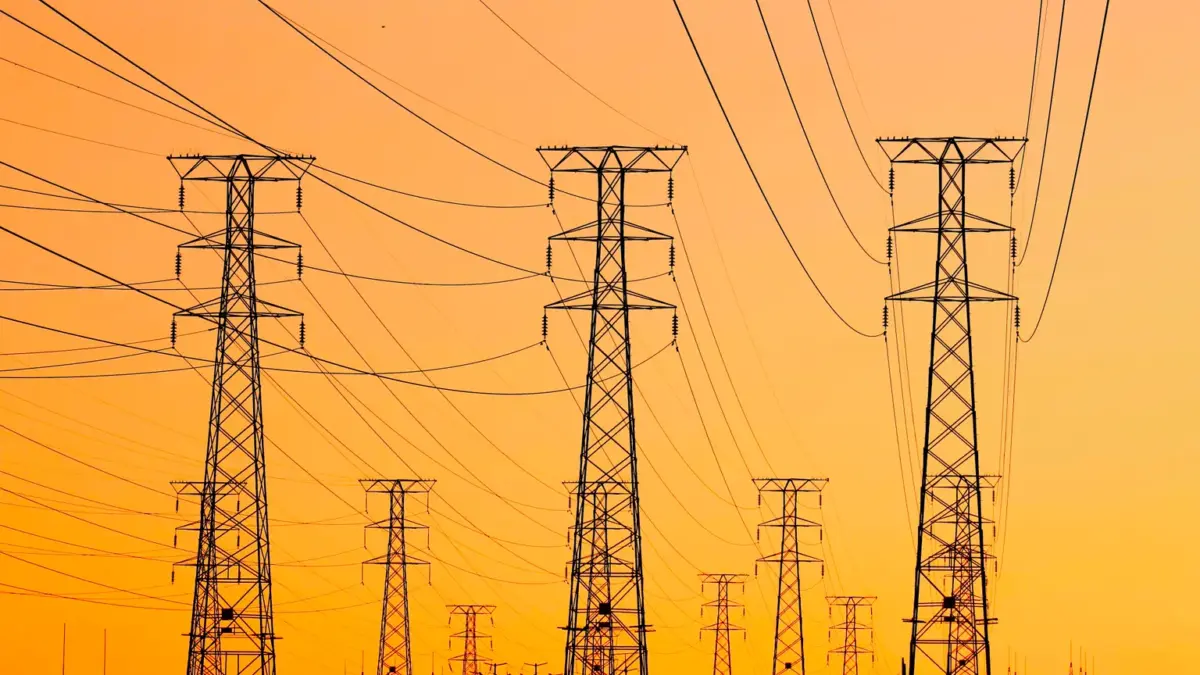
Mexico electricity transmission investment and energy expansion, Digi Mart USA News (Mexico): Energy executives warned that a lack of investment in electricity transmission networks threatens to become one of the main obstacles to adding new generation capacity in Mexico, as demand grows and renewable and thermal projects are planned through 2030. The warnings were made during the Energyear México 2026 forum.
Brice Clemente, Country Manager of ENGIE México, said one of the biggest challenges is translating the government’s energy investment goals into concrete transmission projects, whose infrastructure is essential to support the expansion of generation. He said Mexico needs greater ambition in its electricity expansion plans, since the integration of renewable energy must be accompanied by firm capacity to guarantee competitively priced electricity and avoid supply interruptions.
Clemente also warned that the simultaneous development of new projects could place pressure on the supply chain for critical materials and on construction capacity. He estimated that around 8 gigawatts (GW) of projects could be signed by 2029, implying a significant deployment of infrastructure in a short period.
Eva Ribera, General Manager for Mexico and the Caribbean at ContourGlobal, said investment in transmission lines is one of three fundamental components for meeting growing electricity demand, alongside renewable energy and firm generation. She said Mexico consumes more than 400 terawatt-hours (TWh) of electricity per year and faces demand growth of about 4%, equivalent to roughly 16 TWh of additional annual demand.
Given this scenario, Ribera proposed that modernizing existing power plants through automation and repowering would allow generation capacity to increase in less time, while new infrastructure projects advance. She also warned of the need to maintain legal certainty in new public-private investment schemes, because projects require bank financing and stable regulatory conditions to be realized.
Firm generation as another challenge
The need to expand transmission coincides with calls from industry participants to strengthen firm generation to support the integration of renewable energy. Narcis de Carreras, CEO of Valia Energía, said reliability should occupy a central place in electricity planning, since thermal generation can provide electricity when weather conditions limit solar and wind output.
De Carreras also said natural gas can contribute to decarbonizing Mexico’s electricity system by displacing more polluting fuels such as fuel oil, diesel and coal. He said the energy transition should not focus exclusively on installing renewable plants, but should consider a combination of technologies that guarantees supply and system stability.
Ribera added that more than 25% of installed capacity in Mexico corresponds to technologies such as coal, fuel oil and open-cycle plants, so modernizing those assets represents an opportunity to improve the performance of the existing generation fleet.
Challenges in execution
Executives also said the return of public-private participation schemes represents an opportunity to revive investment in the electricity sector, but warned that the main challenge will be carrying out the announced projects. Clemente said the new investment mechanisms are bankable and have received a positive response from the private sector, but warned that Mexico faces challenges in executing infrastructure projects after several years of little activity in this segment.
De Carreras said the country needs to coordinate permits, financing, equipment availability and construction so that projects can be incorporated into the electricity system on time. He recalled that after the 2016 electricity auctions several years passed without an equivalent development of new capacity, and argued that current planning should avoid repeating the imbalances of that period, particularly the lack of attention to firm generation.
Alberto Cúter, Vice President for Latin America and Italy at Jinko Solar, said developers should consider not only the price of photovoltaic components but also their quality, reliability and manufacturer support over the useful life of projects. He said the expansion planned for coming years will require greater attention to supplier selection, given the possibility that some manufacturers may not remain in the market for the full operating cycle of plants.
Finally, Rafael Navarro, Director General of AME, said the coming years will be decisive for deploying power plants and large transmission projects, but stressed that the challenge is not only adding megawatts of capacity, but ensuring that this electricity effectively reaches supply and consumption.