IECM citizen observation publications Mexico City democratic processes, Digi Mart USA News (Mexico City): The Instituto Electoral de la Ciudad de México (IECM) presented the collection Perspectiva Ciudadana: Informes de personas observadoras y visitantes extranjeras 2025 y 2026, a set of publications that recover the experiences, analyses and recommendations of those who accompanied various electoral processes and civic participation exercises in the capital.
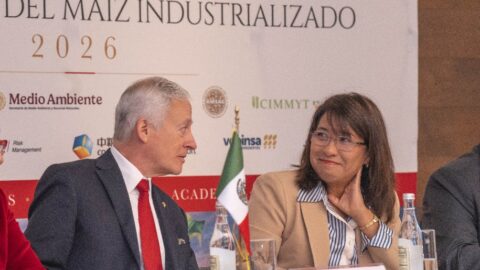
During the presentation, IECM council president Patricia Avendaño Durán said the publications are a valuable testimony to the contributions of domestic observers and foreign visitors, whose experiences help identify areas for improvement, strengthen electoral integrity and expand guarantees of security and transparency in democratic processes.
The Perspectiva Ciudadana collection includes three reports on different democratic exercises held in Mexico City: the 2025 Extraordinary Local Electoral Process of the Judiciary; and the civic participation exercises, namely the 2026 election of the Community Participation Commissions (COPACO) and the Participatory Budget consultations for 2025, 2026 and 2027.
In the first panel, moderated by Arturo Hernández Magallón, a member of the IECM Observation Network, reports from observers and foreign visitors on the 2025 Mexico City Judicial Extraordinary Local Electoral Process and the 2025 Participatory Budget consultation were presented. Alejandra Tello Mendoza of the Escuela Judicial Electoral stressed the importance of observation for strengthening institutional learning and recovering good practices, while Lorena Umaña Reyes of the Facultad de Ciencias Políticas y Sociales highlighted its contribution to historical memory, accountability and the improvement of democratic processes.
Electoral councilor Ernesto Ramos Mega said electoral observation is a citizen exercise that should not be limited to specialists, since any person who meets the established requirements and receives the corresponding training can take part. He said opening electoral processes to citizen scrutiny enriches democracy and helps identify opportunities for improvement in training, ballot design and accessibility conditions.
He also stressed the importance of distinguishing the responsibilities of the IECM and the INE when addressing recommendations and strengthening the organization of future electoral processes.
Councilor Erika Estrada Ruiz emphasized the importance of keeping institutional processes open to citizen observation as an ongoing exercise of oversight, transparency and democratic strengthening. She said the reports provide external perspectives and critical views to improve civic participation exercises and strengthen community deliberation, so that decisions about projects respond to collective needs.
She added that the findings, results and recommendations contained in the books are systematized by the Institute’s departments, with the aim that “their pages find their way to the streets of our city.”
The second panel presented the reports on the 2026 COPACO election, as well as the 2026 and 2027 Participatory Budget consultations. It was moderated by electoral councilor Cecilia Aída Hernández Cruz, who highlighted the Observation Network as a space for accompaniment and evaluation of civic participation processes.
She said the reports help identify areas of opportunity and generate institutional improvement actions through analysis and follow-up of recommendations.
Also participating in this panel were Julia Gugerli Lazos, a political scientist specializing in gender, migration and human rights, who stressed collaboration among boroughs to advance projects with greater community impact; Karla Fabiola Luna Hernández, a member of the IECM Observation Network, who pointed to the need to strengthen case review, transparency, accessibility and community engagement; and Nadia Amalevi, head of the Municipal Office of Citizen, Consumer and User Rights in Rosario, Argentina, who shared her experience as an international observer in Mexico City, where she visited eight polling stations in seven boroughs.
She acknowledged the IECM’s organization and pointed to opportunities for improvement in infrastructure and accessibility to guarantee equitable conditions for civic participation.
Electoral councilor Maira Melisa Guerra Pulido said the observation reports identify strengths and opportunities for improving citizen participation. She noted challenges in outreach, civic education, territorial inequality and project follow-up, and acknowledged institutional efforts to broaden inclusion and bring these mechanisms closer to historically excluded populations.
Finally, councilor María de los Ángeles Gil Sánchez, chair of the IECM Institutional Liaison Commission, invited citizens, students and the academic community to consult the Perspectiva Ciudadana collection, available in the IECM digital library, which brings together the experiences, analyses and recommendations of domestic and international observers as contributions to strengthening future electoral processes.
The publications can be consulted and downloaded free of charge from the IECM Electronic Library, and a recording of the event is available on the Institute’s YouTube channel.