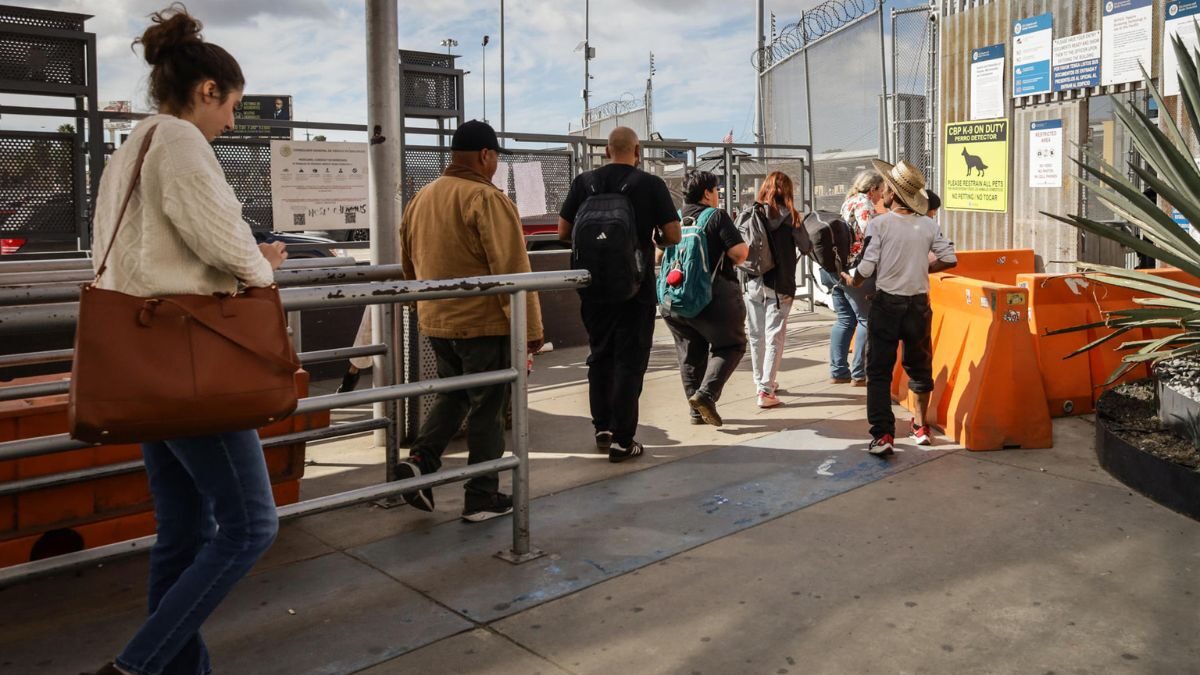
Democratic midterm victory and migrant hopes at the U.S.-Mexico border, Digi Mart USA News (Tijuana, Mexico): Migrants at the U.S.-Mexico border are hoping that the Democratic victory in the U.S. midterm elections will end the harsh policies of President Donald Trump.
The Democrats regained control of the House of Representatives and the Senate, a development that represents a setback for Trump at the midpoint of his second term.
The result gives the Democratic opposition greater capacity to oversee the administration’s decisions, investigate its actions and block legislative initiatives. The shift in congressional balance takes effect in January 2027, but it does not by itself halt deportations or immigration enforcement operations, which also depend on the executive branch led by Trump.
In Tijuana, the largest city on the border between Mexico and the United States, organizations that assist people in situations of mobility are watching the election result with some hope. They warn, however, that its effects on migrant communities will depend on the decisions of the new legislative majority and on Trump’s response.
José María García Lara, director of Movimiento Juventud 2000 and coordinator of the Alianza Migrante de Tijuana, told EFE that the results could bring changes to U.S. immigration policy.
“Perhaps there may be changes, we don’t really know. That is now in the hands of American citizens, of what they are living through,” he said.
The activist noted that, despite tighter border security and the low occupancy of Tijuana’s shelters, migrants continue to arrive. “They keep arriving here, but they are not visible because the shelters are even half-empty,” he said.
José Luis Pérez Canchola, a member of the Mexican Academy of Human Rights, said the election result could curb the administration’s policies. “I feel there is currently a rejection of President Trump by all migrant families because of his discriminatory rhetoric.
If this happens, his persecution of migrants could slow down a little,” he said.
Pérez Canchola also said that, based on his experience, deported minors separated from their families arrive in Mexico every day, though he did not provide official figures. “Every day one, two, three deportees arrive, from six, seven, eight years old, because they are detained in a park, a school, a church.”
Finally, Raúl Ochoa, director of the Casa del Migrante in Tijuana, warned about the consequences of deportations to places far from communities of origin, saying they reduce the chances that people can reunite with their families. “They have moved people away from their places of origin and diminished the possibilities of reuniting with their families, right?
Which is also a form of death,” he said.