
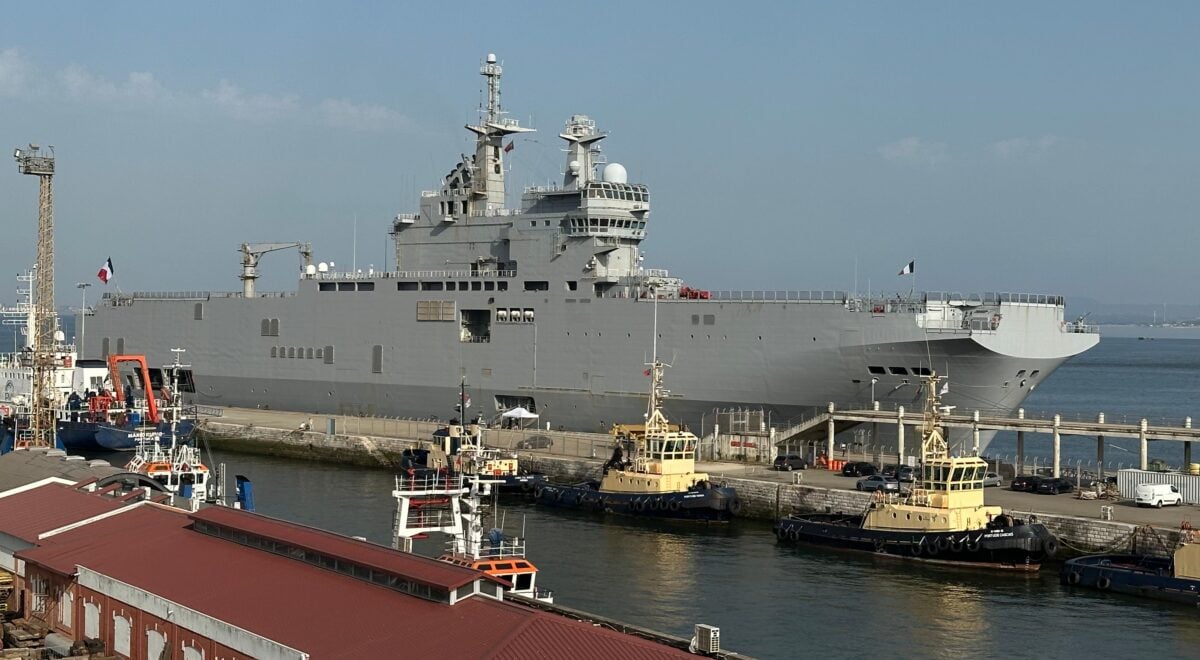
Second French Aircraft Carrier Proposal, Digi Mart USA News: A second French aircraft carrier could cost 30% less than the France Libre, according to a budget opinion registered by the National Assembly’s defense committee on October 22, 2026. The text recommends a twin ship.
The stakes are direct: the French Navy loses its power-projection capability whenever its only nuclear aircraft carrier is in maintenance.
In 2027, the Charles de Gaulle will enter a major technical stoppage. The Navy will field no aircraft carrier for roughly eighteen months, and the ship will not return before March 2029.
Its availability is capped at 63% over its entire career, so the country regularly finds itself without a carrier air group. The vessel remains the only nuclear aircraft carrier in service outside the United States.
The report also assesses extending the ship beyond 2038, the date when the France Libre is due to take over. The two vessels would sail simultaneously to train crews for the new ship.
Prolonged irradiation has weakened the reactor vessels, and inspecting certain lower sections of the hull remains difficult. A fourth stoppage would cost about two billion euros for a few additional years of service.
Building a twin of the France Libre, the future 80,000-tonne carrier powered by two K-22 nuclear reactors, could yield savings of about 30%. The lead ship has already absorbed all design costs, and series effects on reactors, hull and equipment would lower the overall price.
This estimate comes from the parliamentary analysis and still needs to be confirmed by an industrial quote. The shipbuilding schedule at Chantiers de l’Atlantique in Saint-Nazaire determines these savings: chaining the two constructions would preserve them, whereas inserting a civilian liner would reduce them.
According to the National Assembly’s budget opinion, the order should be placed before 2029. That timing would allow maintenance cycles to be staggered, so that one carrier at sea while the other is in maintenance would ensure a continuous carrier group.
In Toulon, hosting the second ship would not require a second dry dock; an additional quay would suffice. Part of the work, including port infrastructure preparation, could fit within arrangements already planned for the lead ship.
Rapporteur Yannick Chenevard considers this configuration industrially realistic.
The scenario would not require duplicating the entire escort fleet. Rotation of frigates, submarines and replenishment ships would rely on the dual crewing of air-defense frigates, a system already in use.
The multimission FREMM frigates have tested it successfully, and crews could be distributed without ordering new hulls. On the air side, needs remain limited: twelve Rafale Marine fighters and two E-2D Hawkeye early-warning aircraft would complement the existing air wing.
The report sets eighteen first-rank vessels as the minimum format needed to support this arrangement.











