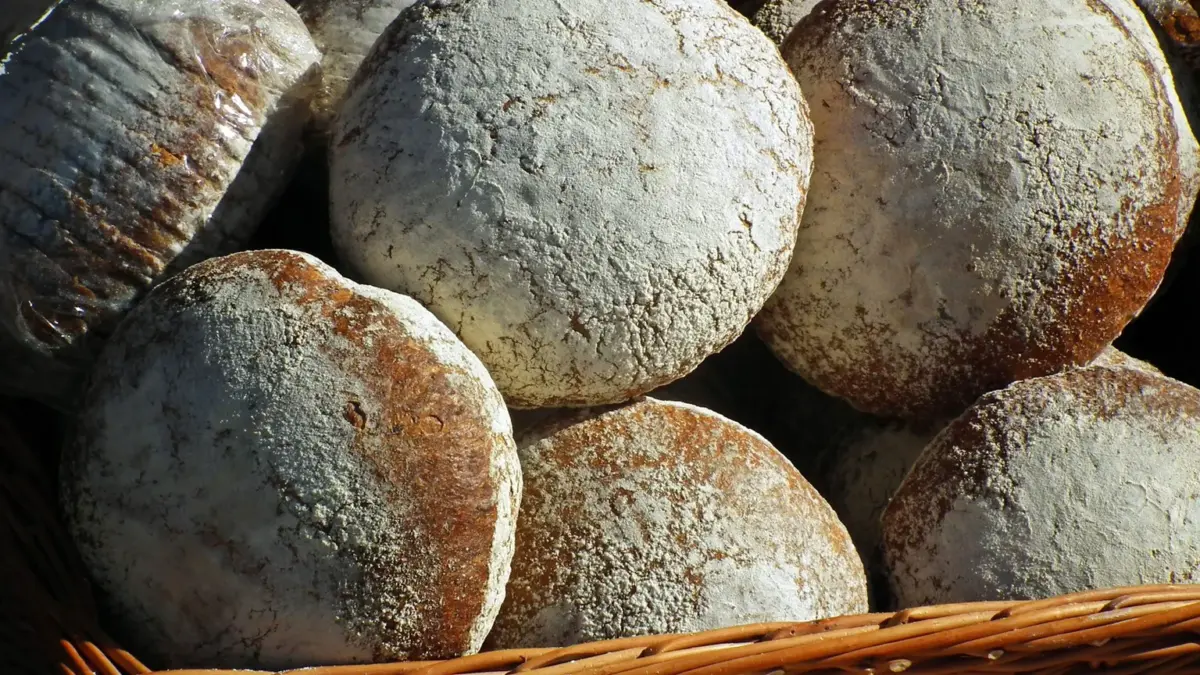
Pain de Minuit beer made from unsold bread, Digi Mart USA News (Lille, France): Bread and beer share the same core ingredients: grain, water and yeast. Because bread can replace up to 30% of the grain needed for brewing, Pain de Minuit collects unsold bread from nearly 1,500 bakeries, has it sorted and processed, and then recovers the resulting breadcrumbs at its brewery in Lille, where they come out as liquid beer.
The company is growing steadily, and its model appears to be working, with consumers responding well to the beer, which is sold in bakeries among other outlets. “In an ultra-saturated beer market, you have to be able to tell a very good story,” said Martin Marescaux, founder of Pain de Minuit.
“Selling our beer in bakeries is that story, and it is developing well!”
Marescaux said the company aims to capture as much bread as possible. “We collect all the unsold goods from our partner bakers, and sorting is done according to our house recipe to keep the profile and taste of the final product consistent: a Belgian-style pale ale, slightly round, with notes of fresh baguette on the finish.” The beer is sold in northern France and the Benelux countries, including on board Eurostar trains.
Originally, beer brewed in Flanders was shipped from Lille to reach regions further south. To bring production closer to consumers, Pain de Minuit asked the Ninkasi brewery, based in the Lyon region, to take over.
Ninkasi, one of the pioneers of craft beer in France in the 1990s, now offers a wide range of beers and sodas, whiskies, custom distillation, a new mint liqueur, restaurants and cultural projects.
Ninkasi recently opened a new brewing space in Tarare (Rhône), large enough to host Pain de Minuit and brew its beer on site: 80,000 liters per year, with the same recipe and label, already available at Ninkasi venues and set to supply the southern half of France.
“Beer is the only alcoholic beverage that is both a drink and a food,” Marescaux noted. This was already true about 4,000 years before the common era in Sumer, where beer was called sikaru, or “liquid bread,” and was made by fermenting dried bread cakes soaked in water.
For a long time, beer remained a staple food that sustained monks during Lent and refreshed families, children included, at a time when water was not always safe to drink. Its low alcohol content helped make it popular.
It was considered beneficial for lactation and was regularly given to wet nurses, a function reflected in many Belle Époque advertisements. Only repeated campaigns against alcoholism in the 20th century succeeded in ending beer as a food, though not as a drink.
Although no one drinks beer for nutrition anymore, scientists continue to study it. A 2019 study highlights its nutritional value through its numerous polyphenols, including catechins, quercetins and xanthohumol, which are said to benefit the gut microbiota and may also have anti-inflammatory, antidiabetic and anticancer effects.
Research is still in its early stages, but results so far offer some reassurance to beer drinkers about the benefits of their favorite drink.