
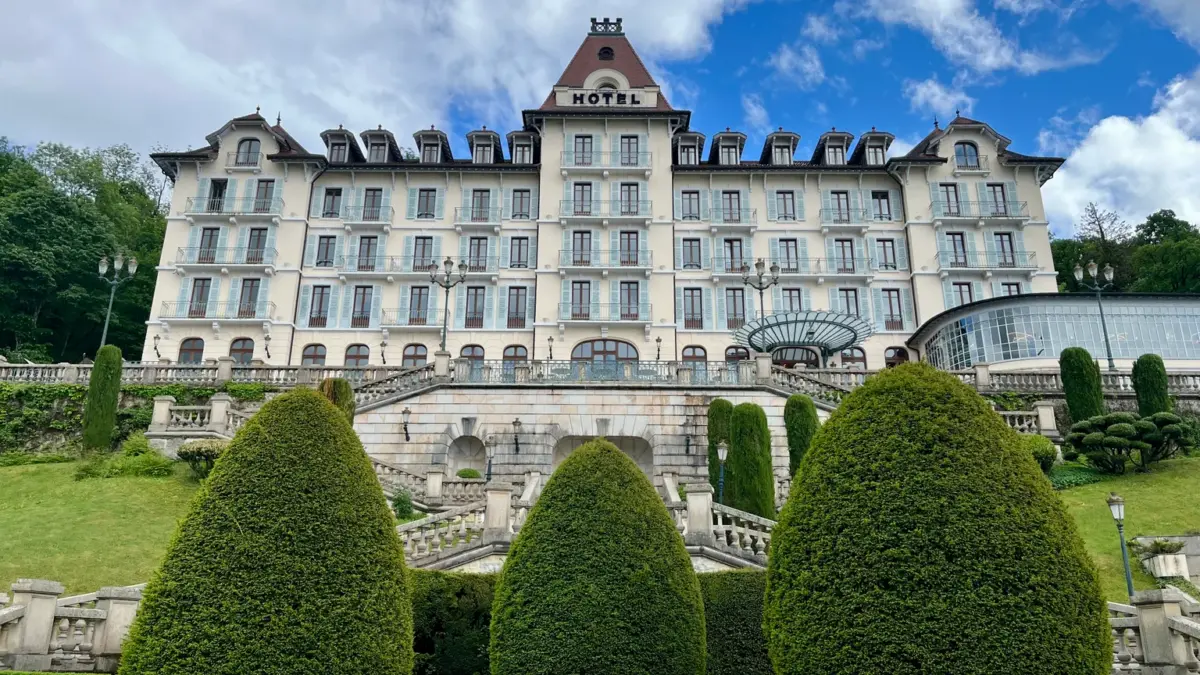
Le Chapitre hotel in Remiremont, France, Digi Mart USA News (Remiremont, Vosges, France): Located in Remiremont, at the edge of the Hautes Vosges, Le Chapitre Hôtel, Restaurant & Spa combines the charm of heritage with contemporary elegance. The establishment occupies the former landmark building of the Banque de France, which underwent a complete renovation to give new life to a structure rich in history.
Inaugurated in 1922, the former Banque de France building spent a century as a local landmark before being reinvented. The project was led by the Claudel family, who aimed to preserve the spirit of the place while giving it fresh momentum.
The name “Le Chapitre” was chosen to symbolize a new page being written.
Heritage, the art of living and well-being now define the hotel’s identity. Charlotte Drap, the hotel’s director, said that architecture and facilities alone are not enough to create a memorable experience.
“That is not enough to make the difference. The rest is the people.
It is the team and the soul they bring,” she said.
Hospitality and attention to guests are central to the hotel’s philosophy. Drap said the hotel also focuses on well-being, gastronomy, nature and sport, so that guests can enjoy a distinctive and special experience.
Guests can be seen moving through the dining areas in bathrobes after visiting the spa, reflecting a sense of luxury in which people can relax and feel almost at home.
Customer feedback also reflects the experience offered. One guest described the hotel as a superb property in the former Banque de France building, praising its stunning decor.
Another said the spa experience was very pleasant, the venue beautiful and well maintained, and the staff attentive and friendly.
The hotel’s identity extends to its details. The pine cone, a symbol evoking the Vosges landscapes, is the hotel’s signature and appears throughout the property and on various materials, including guest bathrobes and the elevator.
The identity also has a scent: the hotel’s signature fragrance, Forest by Aroma, evokes the forests surrounding the building.
From architectural heritage to visual and olfactory identity, each detail contributes to telling a single story: that of a historic site reinventing itself without losing its roots.











