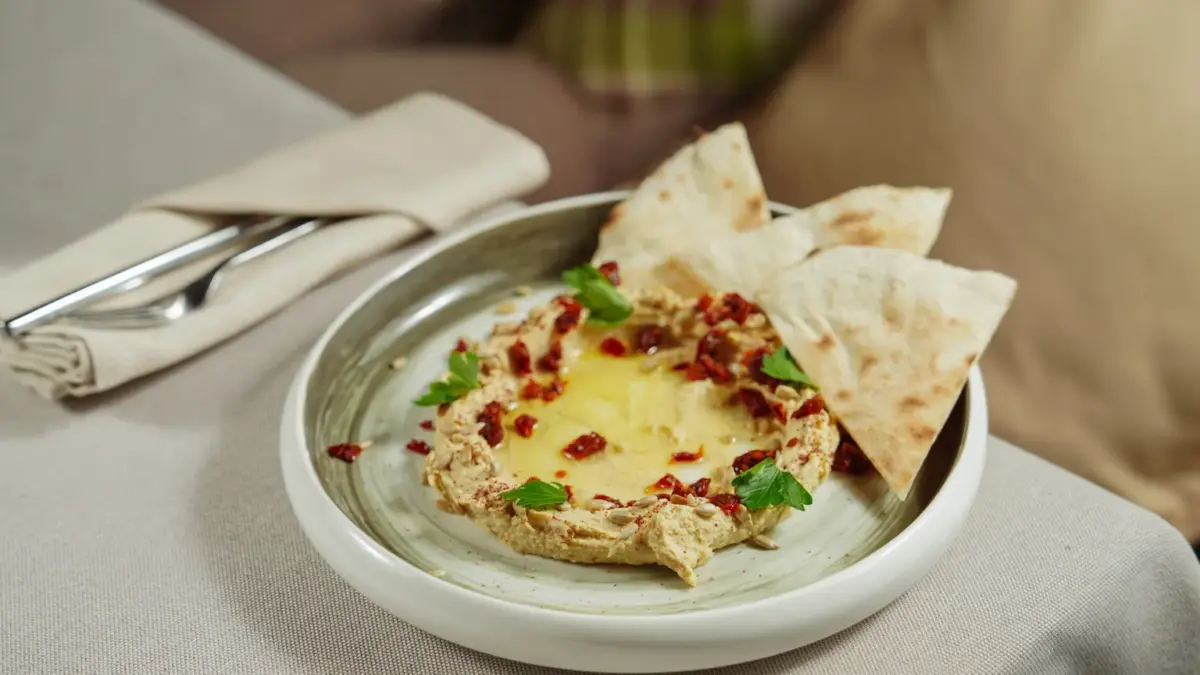
Hummus controversy over France 3 Provence-Alpes report, Digi Mart USA News (Aix-en-Provence, France): A France 3 report on bassar hummus has prompted reactions from Lebanese readers of Libnanews. The caption on the Instagram post presents a street food address in Aix-en-Provence described as Israeli, while also calling the dish a specialty of the Middle East.
The double framing is central to the debate. According to the post, the caption refers to an Israeli street food venue and does not state in its text that hummus originated in Israel.
Attributing such a claim to the broadcaster would not reflect the published wording.
The official France 3 Provence-Alpes account presents a street food venue in Aix-en-Provence associated with Israeli cuisine. The featured dish is bassar hummus, which combines hummus with minced meat.
The promotional text links this specialty to the Middle East.
France.tv also offers the segment in its “Le monde dans l’assiette” collection. The episode listing indicates a broadcast on October 28, 2026 at 6:53 p.m., with a running time of four minutes and thirty seconds.
The report was therefore already broadcast and is being discussed again today, rather than being a new program announced for November 3.
The phrase describing street food refers to the positioning of the venue. On its own, it does not establish a claim about who invented the dish.
The distinction between a restaurant’s commercial identity, the practices of its cooks and the history of a recipe should remain clear.
In messages sent to Libnanews on November 3, readers criticized the framing as reductive for Lebanese and Arab culinary traditions. Their critique focuses on the place given to the Israeli label in the media presentation.
One argument stresses the exchanges among Lebanese, Syrian, Palestinian and Jordanian cuisines.
These private reactions are reported without identifying their authors. They reflect the concerns of those who sent them; they do not constitute a poll or a measure of collective opinion in Lebanon.
They also do not establish that an organized campaign targets France Télévisions.
For these readers, the issue concerns recognition of a heritage they value. Hummus appears in Lebanese culinary practice and in those of several Levantine societies.
Presenting its use in another contemporary cuisine does not erase that presence, but imprecise promotional language can be received as sidelining the cultures that transmit it.
The debate therefore calls for a full reading of the publication. Retaining only the words associated with Israel would omit the explicit reference to the Middle East; conversely, citing only the latter would not capture the framing that provoked the reactions.
This article is based on the caption and the official listings consulted. It attributes no quotation to the report’s audio track.
The original post is embedded below to preserve publication context, subject to its availability and Instagram settings.