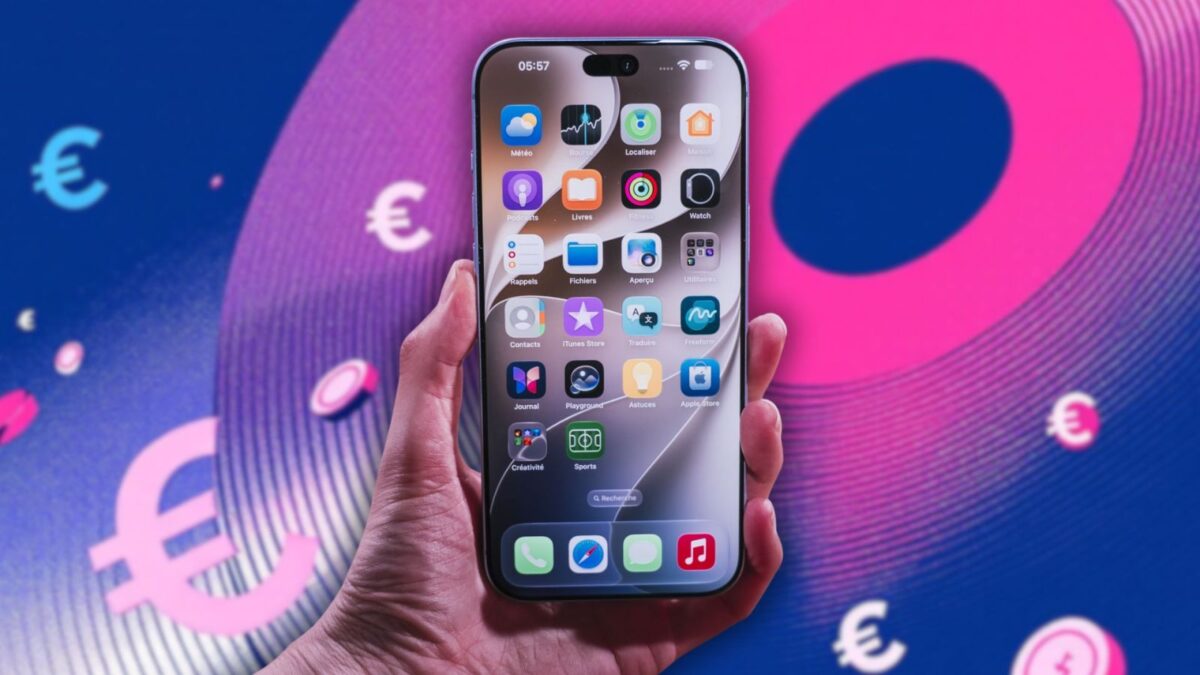
France Copie privée levy on smartphones and computers, Digi Mart USA News (France): Every new smartphone sold in France carries a 16.80-euro Copie privée levy, including VAT, intended to compensate rights holders for films, series and music stored on a device’s internal memory. According to Frandroid, that fee is currently a flat charge based on storage capacity and is paid regardless of whether a buyer ever makes a copy.
In spring 2026, rights holders sought sharp increases on smartphones, tablets and PCs, reaching up to 28.80 euros including VAT for a smartphone and 36 euros for a laptop, before scaling back those demands. A newer version, reported by L’Informé on November 5, would raise the levy on a new smartphone to 20.40 euros including VAT for 256 GB of storage and 24 euros above 512 GB.
It would also tax computers for the first time, at 30 euros for a new laptop and 24 euros for a desktop.
According to that outlet, collections could rise by 100 million euros, roughly 40 percent more than the 243.5 million euros collected in 2025. The Copie privée commission, placed under the Ministry of Culture, is set to examine the text on Friday, November 13, and again on November 27.
If adopted, it could apply from January 1, 2027.
The levy allows individuals to make personal copies of lawfully obtained works. In return, a fee is charged on devices capable of storing those copies, including smartphones, tablets, USB drives, external hard drives and set-top boxes.
Manufacturers and importers pay it and typically pass it on to consumers. The organization Copie France collects the money and distributes it to authors, performers and producers, with a quarter funding cultural activities such as live performance and arts education.
The fee is a flat amount set by storage capacity, not by how the device is used. Today a new smartphone with more than 64 GB carries 14 euros excluding VAT, or 16.80 euros including VAT, and a refurbished one 10.08 euros including VAT.
Copie France collected 246.3 million euros in 2024 and 243.5 million in 2025, with 70 percent coming from smartphones and 13 percent from tablets. A March 2026 study by CISAC cited in the article ranks France as the highest collector worldwide, just ahead of Germany at 235.5 million euros in 2024.
Although often called a tax, the Copie privée is legally a remuneration meant to offset harm, and rights holders insist on that term. Its amount is nonetheless set by a government-placed commission, is flat-rate and is paid by all buyers, which is why it is commonly described as a tax.
The levy originated in 1985 to compensate for home-recorded audio cassettes and VHS tapes. In 2026, the article notes, most music and films are consumed online through streaming platforms rather than copied to devices.
The rate schedules are supposed to reflect actual usage, measured by studies commissioned by the commission. The current proposal relies on a study by the CSA institute at the end of 2024.
Those studies are not public, and their methodology is disputed. Deputy Philippe Latombe has accused Copie France of giving investigators a very broad definition of private copying that mechanically maximizes recorded usage.
The commission, where rights holders hold a large majority, has adopted that broad definition, which the article says helps maximize recorded usage and therefore high payments to rights holders. Frandroid also reports an informal poll of its own staff, none of whom said they had copied a film, series or song from a CD, DVD or Blu-ray they owned to a phone, and the outlet suggests the same is likely true for most people in France.
The article also reports that on April 16, 2026, the Court of Justice of the European Union ruled that files downloaded for offline viewing in streaming applications such as Spotify or Netflix do not fall under the private copy exception. The platform makes the copy, users cannot move or transfer it, and rights holders keep control through DRM, so such offline files should not, in principle, be counted in the levy calculation.
To justify the increase, rights holders argue that copies are now made in the cloud and that the levy base should therefore be broadened. Yet the fee remains calculated on a device’s storage capacity.
A file saved to iCloud, Google Drive or OneDrive sits on a server rather than in a phone’s memory, and the more users rely on the cloud, the less local storage they theoretically need. The article calls this reasoning odd: copies made elsewhere are invoked to tax the storage of devices more heavily, while cloud providers pay nothing.
The article notes that the law already reaches the cloud in certain cases. Since the July 2016 Création law, services that record TV or radio programs in the cloud pay the levy themselves, as with online video recorders offered by Molotov or operator set-top boxes.
Their schedule, adopted in 2017, depends on user numbers and storage space provided. That regime does not cover general online storage such as Google Drive, and extending it would require new legislation, which would be difficult to pass given the influence of large American companies.
Another weakness is the calculation method. The levy is a flat fee per storage tier rather than a percentage of price.
Nearly all new smartphones exceed 64 GB and therefore pay exactly 16.80 euros including VAT. According to Copie France, the average levy actually paid on a new smartphone reached 13.78 euros in 2025.
On a 200-euro smartphone, the 16.80 euros represents 8.4 percent of the price, compared with 1.1 percent on a 1,500-euro model, so buyers of affordable devices bear the heaviest burden. The new proposal does not correct this, the article argues, since it remains a flat fee that ignores device price.
The problem is even more visible for computers. The proposal sets a single 30-euro fee on any new laptop regardless of storage.
That would equal 7.5 percent of the price of a 400-euro entry-level laptop, compared with 1 percent of a 3,000-euro editing workstation. The article further notes that since 1985 the levy never targeted computers, which were viewed as work tools and as the place where originals are kept rather than copies.
For twenty years people ripped CDs, burned compilations and stored MP3 files on computers, yet the levy taxed blank CDs and portable players rather than the machines making the copies. Rights holders are now targeting computers just as file copying has nearly disappeared.
A refurbished smartphone has already paid the levy on its first sale as new, yet since 2021 it is charged again on resale, currently 10.08 euros including VAT for a model above 64 GB. The industry members of the commission calculated that a smartphone above 64 GB resold twice as refurbished generates nearly 37 euros in levies over its life, though the copying it is meant to compensate does not multiply with each new owner.
The new version of the proposal retreats noticeably on this point: the levy on a refurbished smartphone above 512 GB would fall from 10.08 to 2.76 euros. However, the principle of double taxation remains and would extend to refurbished computers at 3.60 euros for a laptop and 3 euros for a desktop.
The article describes this as a tactical concession. It also cites the 2026 Arcep and Credoc Digital Barometer, which finds that 20 percent of French smartphone owners have a used or refurbished device.
Phone memory is increasingly filled with 200-megapixel photos, high-definition videos, heavier applications and embedded AI models, none of which the article says fall under private copying. The current schedule has one merit: it caps the fee from 64 GB upward.
The proposal reintroduces tiers up to more than 512 GB, so choosing higher storage would cost more in levies, even though additional storage mostly holds a user’s own content. The timing is also poor, the article notes, because memory prices are rising and already feeding into smartphone and computer retail prices.
The schedules are voted by the Copie privée commission. Of its 24 members, 12 represent rights holders, the beneficiaries of the funds.
Industry and consumer associations hold six seats each, and a government representative chairs the commission and breaks ties. Rights holders therefore need only one additional vote to adopt their schedule.
Que Choisir Ensemble has denounced this imbalance. A 2023 bill by Deputy Philippe Latombe aimed to revise the calculation and decision-making process but has not advanced.
For buyers, the levy remains nearly invisible. The law requires that its amount be shown, but most invoices do not display it.
Professionals may theoretically claim refunds, but they are rarely aware of this and the procedure is described as cumbersome. Defenders of the levy have arguments that the article acknowledges as coherent.
On the other side, the industry bloc made a much lower counterproposal on June 12, ranging from 0.17 euro to about 5.50 euros for a laptop depending on capacity, with a 60 percent reduction for refurbished devices instead of 40 percent. The November version goes further on refurbished smartphones, at 2.76 euros compared with 24 euros for a new model above 512 GB.
No one disputes that artists should be paid. The article’s objection is that the mechanism no longer measures much: storage is taxed to compensate copies that are almost no longer made on devices, using studies no one can consult, through a commission where beneficiaries vote the amounts.
Possible reforms include independent and public usage studies, a rebalanced commission, the amount shown on the receipt, or a levy no longer tied to storage capacity. None of these appears in the schedule under review this month.