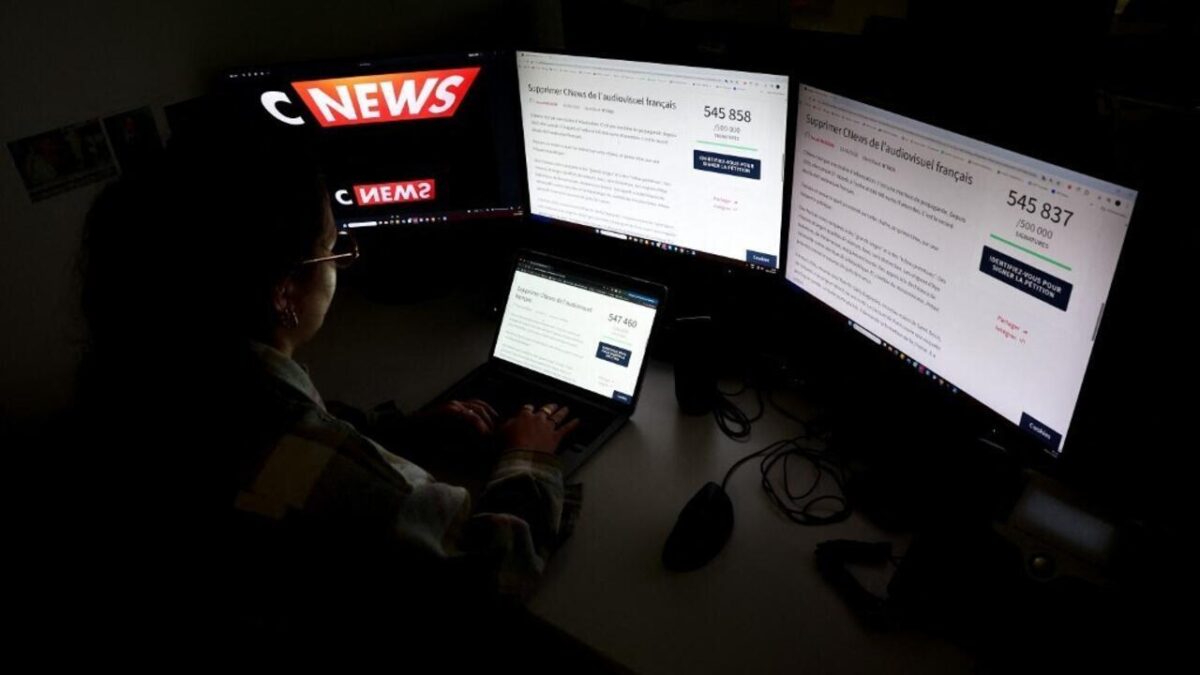
CNews petition and BFM TV tensions over far-right ideas in French media, Digi Mart USA News (France): Since the racist attack in Trappes at the end of October, a petition calling to “remove CNews from French broadcasting” has gone viral, surpassing one million signatures. The news channel of the Bolloré group, accused of being a “propaganda machine” serving the far right, has become a focal point of anger and polarized debate.
Now BFM TV is also accused of broadcasting openly racist ideas. The channel was criticized after the killing of Pengo Bassio Wendi on October 23 in Trappes, near Paris.
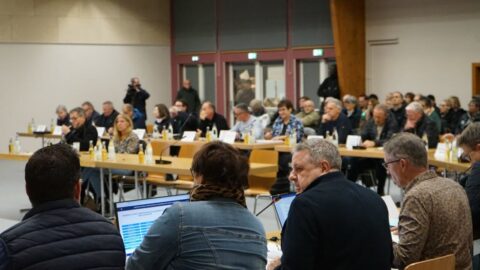
During a tribute to the young man in the Yvelines town, BFM TV reporters were confronted on the ground and extracted from the scene.
Inside the channel’s newsroom, the figure of Sonia Mabrouk has become a point of tension. The conservative journalist, who moved from CNews at the start of the new season, is at the center of an internal conflict.
Journalists at the channel, owned by billionaire Rodolphe Saadé through the CMA group, went on strike on November 5. According to Le Monde, the journalists’ society sent management a letter signed by 213 journalists calling for “concrete measures” to break with the image of a racist channel.
Asked whether CNews could lose its broadcast frequency, historian of the media Alexis Lévrier, a lecturer at the University of Reims, said the petition has legitimacy and could prompt a debate in the National Assembly. He argued that any withdrawal should be decided by the audiovisual regulator Arcom, because broadcast frequencies are public property under the 1986 audiovisual law.
He said the law requires pluralism and prohibits the stigmatization of population groups, and that the misuse of a public resource is at issue.
Lévrier said the far-right press is experiencing a new golden age, tracing the trend back to the Dreyfus affair and the interwar period. He identified 2012, when Yves de Kerdrel became editor-in-chief of Valeurs actuelles, as a turning point, and said the Bolloré media empire gave these ideas a broader structure and reach than France had previously seen.
He also questioned the independence of Arcom, noting that its appointments depend on political power and that Senate president Gérard Larcher had publicly criticized the regulator in June. Arcom has issued 27 sanctions against CNews, which he considered insufficient given the threat to democracy, and said the regulator lacks adequate human resources to monitor both the internet and broadcast media.
Lévrier described a process he calls “Bollorization,” in which other media tend to imitate the Bolloré channels. He said Sonia Mabrouk’s move to BFM TV had raised hopes after she criticized Jean-Marc Morandini’s continued presence on CNews, but that she appears to be influencing BFM TV’s style.
He argued that BFM TV remains a newsroom that deserves defense, while stressing the difference between Bolloré’s media and other outlets.