
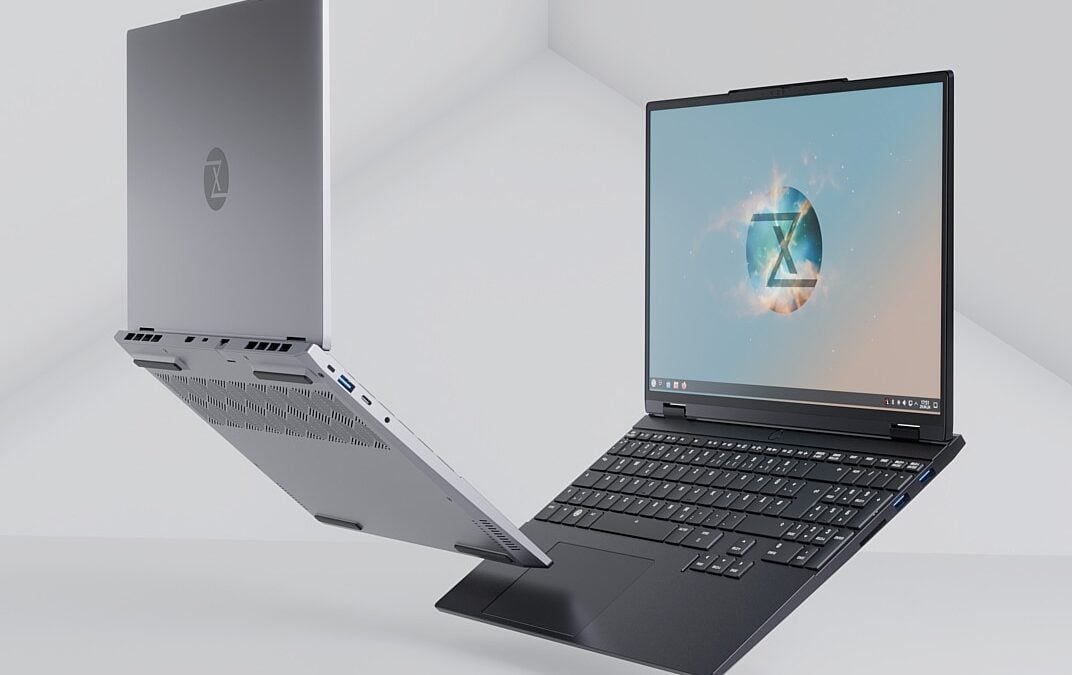
Tuxedo InfinityBook Pro 15, Digimart Global: Consumer electronics brand Tuxedo has introduced the InfinityBook Pro 15 Gen 11, its latest entry in the Linux ultrabook segment, according to a report published by Notebookcheck.
At the core of the laptop is a 12-core AMD Ryzen AI 9 HX 470 Gorgon APU, which can be paired with up to 128 GB of RAM. The publisher says that in synthetic raw benchmarks, the chip should be able to keep up with the Intel Core Ultra 9 386H Panther Lake CPU in multi-threaded workloads.
Graphics and performance
The laptop does not include room for discrete graphics. Instead, it relies on the built-in Radeon 890M integrated GPU, which the report describes as capable of playable frame rates in some lightweight AAA titles.
Casual GPU tasks such as lightweight photo and video editing should also be workable, though the publisher notes that users with heavy GPU-based workloads will still be better served by a laptop with a discrete GPU.
Display, memory and storage
The 15.3-inch IPS display has a resolution of 2560 by 1600 and, according to Tuxedo’s claims, covers 100% of the DCI-RGB color gamut and can reach 300 Hz. Tuxedo also claims peak brightness of 500 nits and a 1,000:1 contrast ratio, which the publisher describes as fairly standard for mid-range premium laptops.
The RAM and storage are both user-upgradable. The laptop has dual DDR5-5600 slots and dual PCIe 4.0 M.2 slots, supporting up to 128 GB of RAM and 8 TB of storage.
The report notes that a 1 TB Samsung 9100 Pro is currently listed at $209.99 on Amazon.
Design and other features
Other specifications include a 99 Wh battery, a chassis measuring 34.2 by 23.8 by 2 cm that weighs roughly 1.75 kg (3.86 lbs), dual ultra-low-profile fans, a precision glass trackpad, TPM 2.0 and secure boot, and a 2 MP front camera with face recognition.
Pricing
The base variant, with 16 GB of RAM and a 500 GB SSD, is priced at €1,504.20, or roughly $1,652, according to the report. The publisher suggests the laptop may suit buyers looking for a powerful Linux-based laptop who do not need discrete graphics, although the report also refers to a 144 Hz display, which differs from the 300 Hz figure given elsewhere in the same article.