
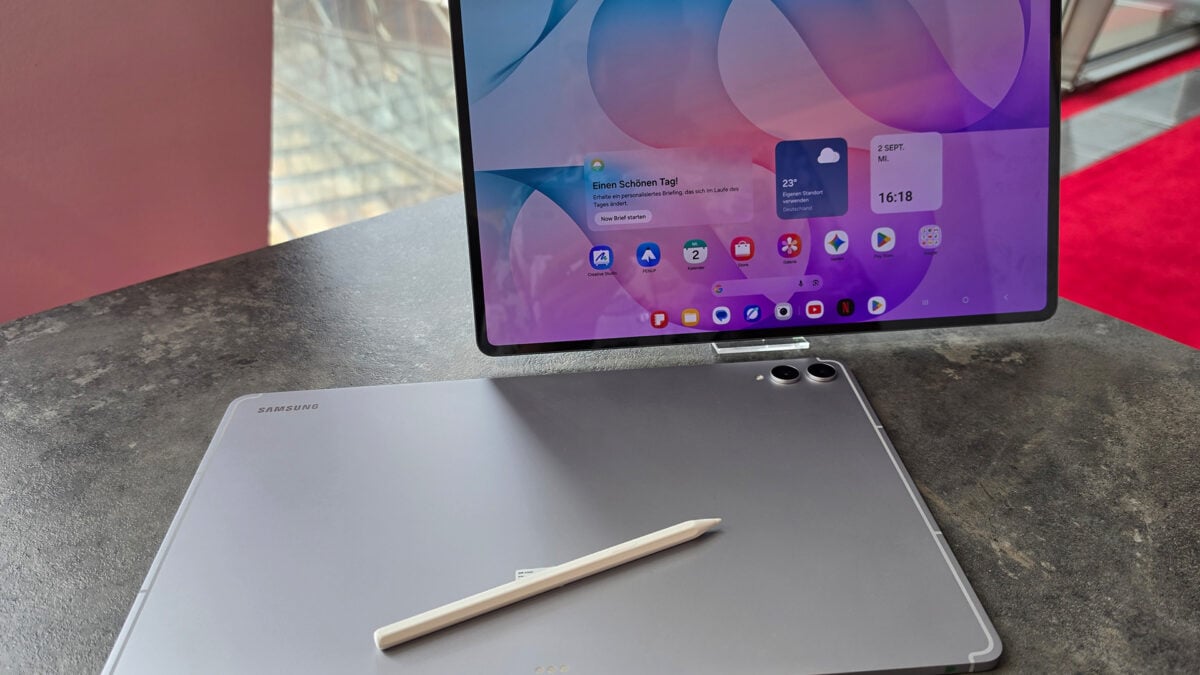
Samsung Galaxy Tab S12 Ultra review, Digimart Global: Notebookcheck has published a review of the Samsung Galaxy Tab S12 Ultra, which it describes as one of the most technically advanced Android tablets, while noting that it has changed only in small steps from its predecessor. The reviewer says the case is just as large as before and weighs 692 grams, though the tablet still feels comfortable to hold and is rated IP68 for dust and water resistance.
The standout feature in the review is the 14.6-inch AMOLED display, which offers high resolution, vivid contrast and an adaptive refresh rate of up to 120 Hz. Notebookcheck measured an average maximum brightness of around 914 cd/m², rising to 1,601 cd/m² with reduced white levels and 1,747 cd/m² with HDR content.
Brightness drops to as low as 730 cd/m² without an active ambient light sensor.
Performance is less impressive. The tablet uses the MediaTek Dimensity 9500, and the review says graphics performance is disappointing compared with the Galaxy Tab S11 Ultra.
Under sustained load the new model throttles significantly, with stability of 30.8 percent in the 3DMark Wild Life Extreme Stress Test and 18.7 percent in the Steel Nomad Light test. Surface temperatures reach nearly 59 °C in some areas.
The review notes that the older model also throttles, but sometimes achieves higher performance despite its older chip.
On features, Notebookcheck highlights Wi-Fi 7, Bluetooth 6.0, a fast USB-C port with video output and DeX support, and a microSD card slot. The microSD slot reached only 42 MB/s in a copy test.
The included S Pen is described as handy for handwritten notes and creative work, but offers little new compared with its predecessor and still lacks Bluetooth support. The tested model is a Wi-Fi version, which can also be ordered with an optional built-in 5G modem.
The review describes the cameras as adequate rather than outstanding. Daylight photos are decent, but digital zoom and low-light shots show significant quality loss.
The front camera is considered good for video conferences. The speakers reach 87.8 dB and deliver mostly balanced sound, though deep bass is largely absent.
Notebookcheck also flags concerns about heat generation and portability due to the large chassis, saying desk users are likely to be less bothered than those who frequently hold the tablet. The publication further reports that the display uses low-frequency PWM dimming at 240 Hz, which may cause discomfort or eyestrain for sensitive users at the stated brightness setting and below.
Overall, the reviewer concludes that the tablet offers an outstanding display and wide feature set, but falls short of its predecessor in graphics performance and suffers from significant throttling.