Russian nuclear weapon in space, Digimart Global: A report published by the French science outlet Futura, based on a German investigation by the WDR media outlet and information attributed to Germany’s intelligence service (BND), claims that Russia intends to launch a satellite called Sputnik-S that would carry a nuclear weapon. The report has not been independently verified.
According to the publisher’s account, the reported device could be launched soon and could disrupt the balance of nuclear deterrence. The claim comes amid heightened tensions over military activity in orbit, following recent statements from the United States about having weapons in space.
Why a nuclear device in orbit would be different
The article notes that a nuclear weapon launched into orbit would have little military advantage over intercontinental ballistic missiles, which can already strike targets on Earth. An orbital weapon would also have a more predictable trajectory.
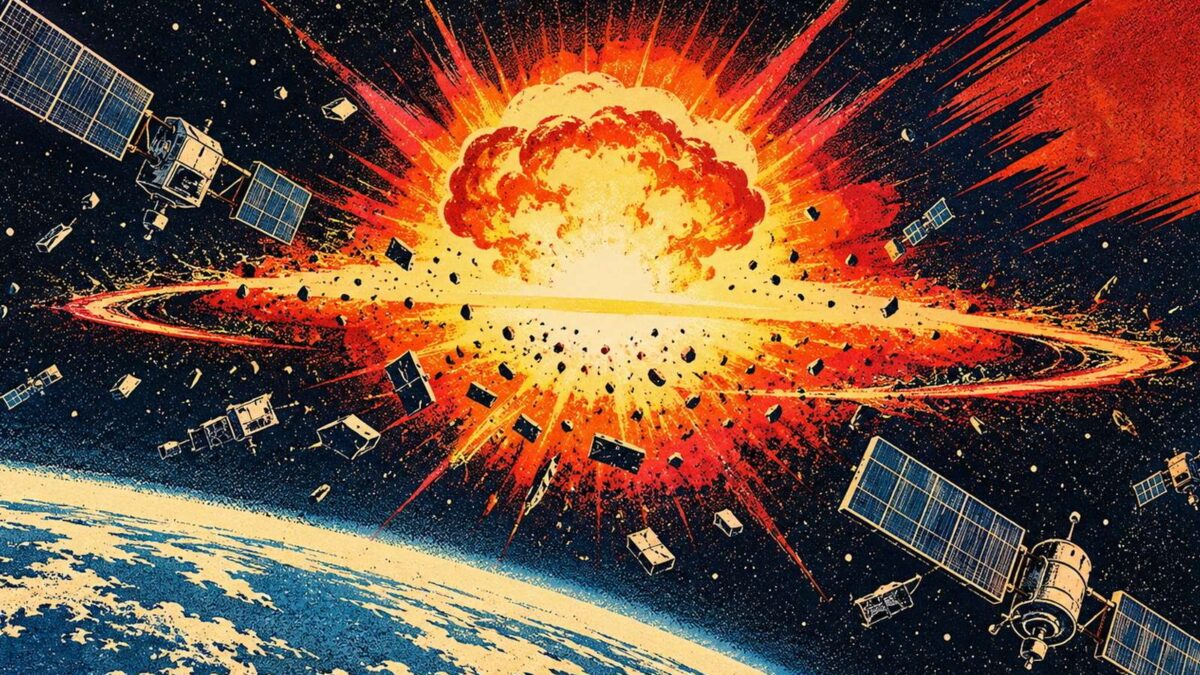
The greater concern is the effect of a nuclear explosion in space on satellites that support communications, navigation and military systems.
Past tests illustrate the risk. In 1962, the United States detonated a 1.4-megaton device in low Earth orbit during the Starfish Prime test, at an altitude of about 400 kilometres.
The blast destroyed some American satellites, damaged others through radiation, and disrupted telecommunications on the ground through electromagnetic pulse effects.
The publisher also cites estimates that about 130 million debris fragments currently orbit Earth, and that such debris forces Starlink satellites to manoeuvre up to 200,000 times over six months to avoid collisions. A simulation based on the 1962 test, cited in the article, suggests a single nuclear detonation in low orbit could destroy the entire Starlink constellation within days.
Legal and strategic implications
If the reported claims were confirmed, the article states that the presence of a nuclear weapon in orbit would represent a clear violation of the 1967 Outer Space Treaty, which bans placing weapons of mass destruction in orbit. The publisher adds that an explosion would likely also affect Russia’s own satellites and those of its potential allies, including China, and that the situation remains uncertain.