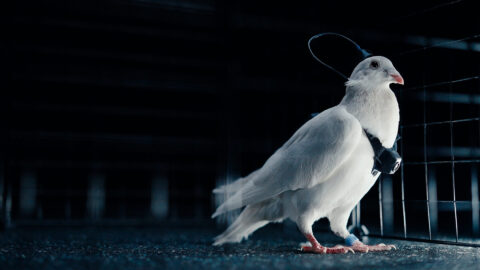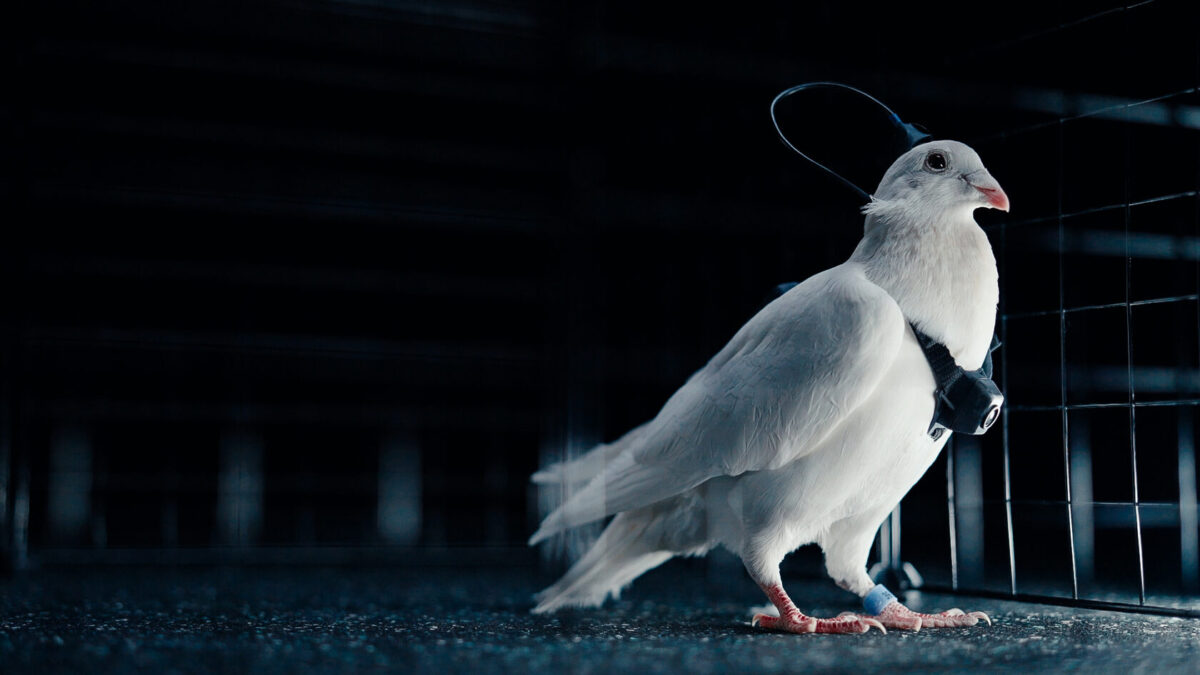
Brain-implanted pigeons for aerial photography, Digimart Global (Russia): A Russian technology company, Neiry, has begun taking commercial orders for aerial photography using pigeons fitted with brain implants that allow operators to influence the birds’ direction of flight. The company calls the animals “biodrones” and says they could be used to monitor infrastructure and urban areas, as well as for environmental observation.
The service is currently available in Russia in beta, with prices starting at 300,000 rubles (about $3,800) per square kilometer. According to the publisher’s report, the system uses biocompatible electrodes implanted in the birds’ brains and connected to a small electronic device carried in a backpack-like unit.
Electrical impulses sent to specific brain areas encourage the pigeons to change direction, and operators can either control flight remotely or upload a route for them to follow.
Cameras attached to the birds’ chests capture the aerial images. Neiry says the pigeons do not need conventional flight training and can take off, gain altitude, land and perform other manoeuvres on command.
Unlike mechanical drones, the birds can also navigate around obstacles on their own.
Neiry states that the technology has completed more than 100 flights outside the laboratory and captured over 1,000 images. The longest flight lasted more than 10 hours, and operators were able to control the birds from distances exceeding 100 km.
The cameras currently provide a ground resolution of less than 20 cm per pixel, and the company plans to improve this to 1–2 cm per pixel.
The company sees potential uses in monitoring power lines, pipelines, gas distribution facilities and other infrastructure, as well as environmental surveillance. Neiry also claims its biodrones can operate where conventional drones face flight restrictions, although the company’s statements about their regulatory status have not been independently established.
The company says its starting price is comparable to conventional drone services and expects prices to fall for repeated flights along the same route.
Before images are delivered, artificial intelligence software is used to blur people’s faces. The project also raises animal welfare questions.
Neiry says it follows an approved ethical protocol and aims for a 100% survival rate during implantation, but this is a stated goal rather than independently verified evidence. The service remains in its early commercial testing phase, and its first customer orders will indicate whether the approach can become a practical alternative to conventional aerial photography.