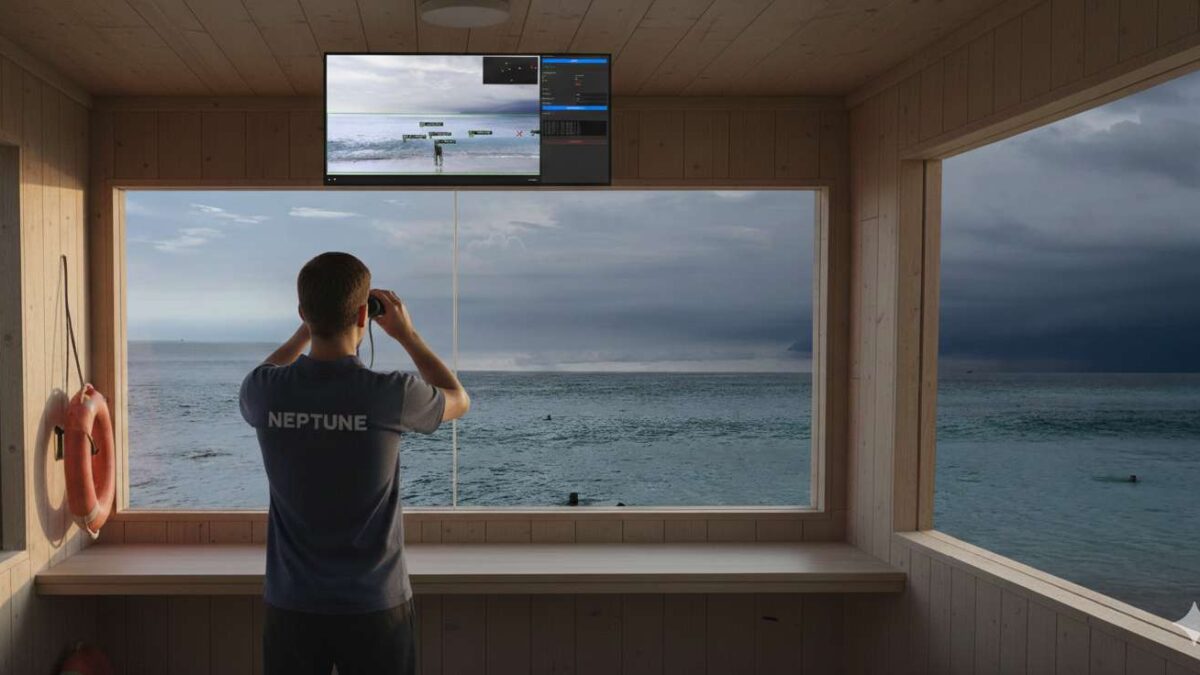
AI drowning detection, Digimart Global: Neptune is an artificial intelligence project developed by students at Epitech, a French computer science school, with the aim of helping lifeguards detect drowning at beaches. The project was launched by Ariel Chambaz, a former lifeguard and co-founder, together with fellow engineers Lucas Iglesia and Adrien Picot.
The team says the idea grew from Chambaz’s experience on the beach, where fatigue, sun glare and large numbers of swimmers can make constant watching difficult. According to the article, Santé publique France reported a 16% rise in drowning deaths between 2024 and 2025, which the founders cite as part of the public health context behind the project.
How the system is designed to work
Neptune analyses live video of swimming areas and is designed to flag early signs of drowning, such as prolonged immersion, a person disappearing underwater or other abnormal situations. Its three modules are described as detecting people in the water even when partly submerged, identifying the water surface despite changes in light, and analysing immersion phases to spot distress.
The system is also said to adjust to tides through an open-source model called NWSD, and it provides a 2D map so a rescuer can locate a victim quickly.
The founders stress that Neptune is intended to assist lifeguards rather than replace them. The rescuer remains responsible for the response once an alert is issued.
Next steps for the project
The team won 3,000 euros in the IONIS Good Wheels competition run by the IONIS Group, which they plan to use to buy equipment for thermal vision and improve detection reliability. In the coming months they say they want to test Neptune in real conditions by working with sea rescuers and sites with pools, such as leisure centres and campsites.
Longer term, they describe a vision of augmented lifeguards that could recognise signs of difficulty before a drowning occurs, though this remains a stated aim rather than a demonstrated capability.