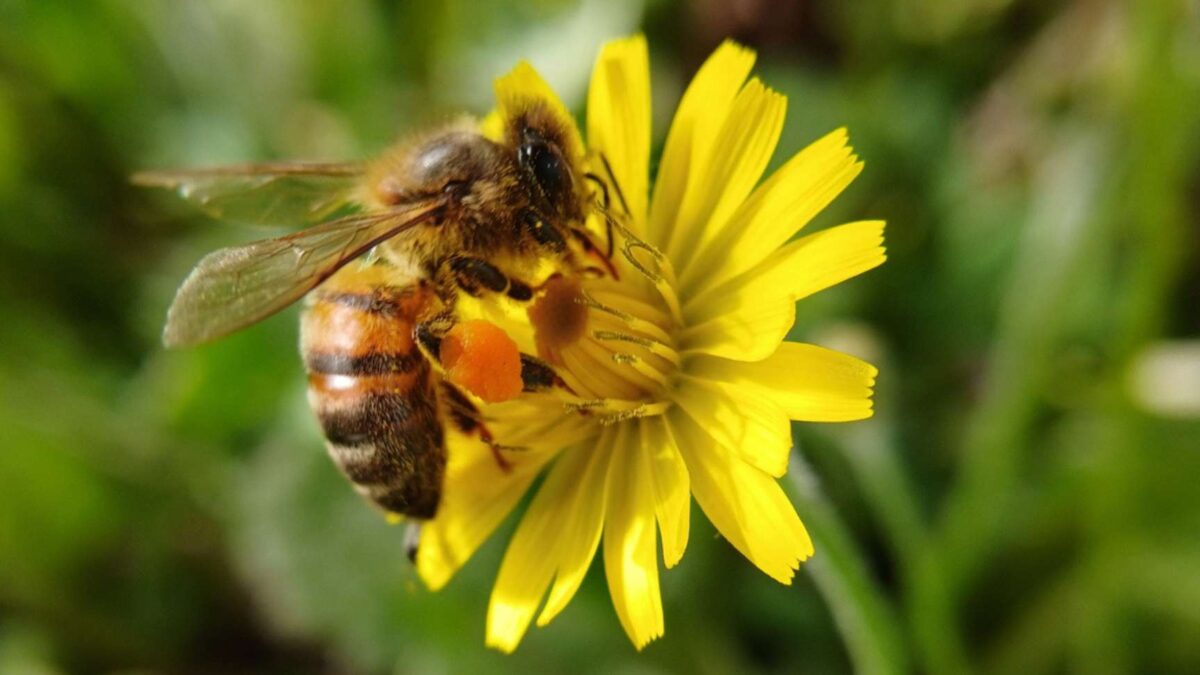
honeybees compete wild pollinators, Digimart Global (United Kingdom): A study published on 17 October 2026 by Anglia Ruskin University suggests that honeybees may do more than deplete flower resources for wild pollinators, as long assumed. According to the publisher’s report, the research documents direct competition in which honeybees actively displace other flower visitors.
The article reports that the team recorded 300 interactions between flower visitors over two years. In 28.4 percent of interactions observed on brambles and 35.6 percent on ivy, other pollinators actively avoided honeybees.
In about 20 percent of contests won by honeybees, they dislodged the rival by landing on it, pushing it or chasing it.
Victoria Buckle, a doctoral researcher at Anglia Ruskin University and lead author, described what the researchers call interference competition. The report says the behaviour is linked to the social organisation of honeybees, in which certain castes are programmed to defend the hive.
Buckle said the aggression was clearly visible, with honeybees seeking to push others off the flower.
The study also found that areas with high hive density recorded fewer bumblebees, solitary bees and hoverflies. The publisher notes that the researchers linked heat to stronger competition, probably because nectar evaporates and plants face thermal stress.
Climate projections for the United Kingdom cited in the report foresee summer average temperature rises of up to 4 °C by 2080.
The report also notes one localised exception: the ivy bee, first detected in the United Kingdom in 2001 and specialised on ivy, resists honeybees and can displace them. According to the article, beekeepers who want to limit their impact can choose better-placed hives in flower-rich environments, since protecting wild pollinators may depend more on hive placement than on the number of hives.