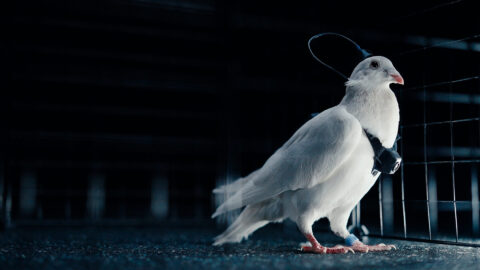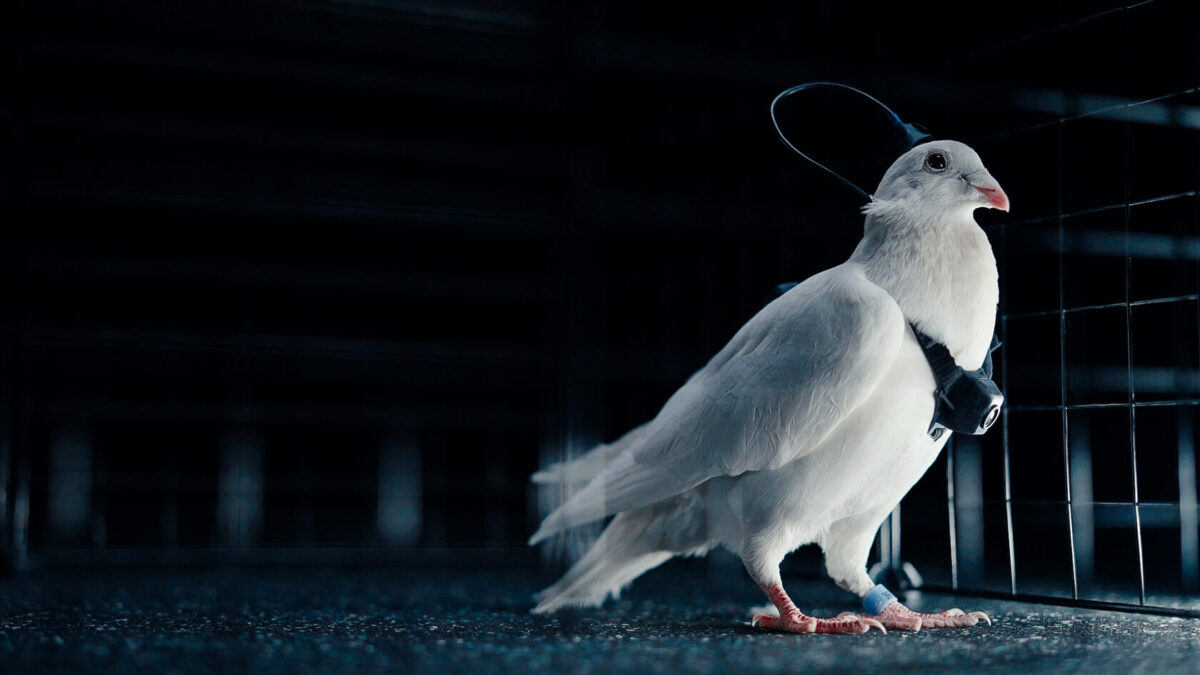
Brain-implanted pigeons aerial photography, Digimart Global (Russia): A Russian technology company has begun accepting commercial orders for aerial photography carried out by pigeons fitted with brain implants that allow operators to influence the birds’ direction of flight.
The company, Neiry, calls the animals “biodrones” and says they could be used to monitor infrastructure and urban areas, as well as for environmental observation. The service is currently available in Russia in beta, with prices starting at 300,000 rubles (about $3,800) per square kilometer.
According to the source report, the system uses biocompatible electrodes implanted in the pigeons’ brains and connected to a small electronic device carried in a backpack-like unit. Electrical impulses sent to specific areas of the brain encourage the birds to change direction.
Operators can either control flight remotely or upload a route for the birds to follow, while cameras attached to their chests capture aerial images.
Neiry says the pigeons do not need conventional flight training and can take off, gain altitude, land and perform other maneuvers on command. Unlike mechanical drones, the birds can also navigate around obstacles on their own.
The company states that the technology has completed more than 100 flights outside the laboratory and captured over 1,000 images. The longest flight lasted more than 10 hours, and operators were able to control the birds from distances exceeding 100 km.
The cameras currently provide a ground resolution of less than 20 cm per pixel, and Neiry plans to improve this to 1–2 cm per pixel.
The company sees potential uses in monitoring power lines, pipelines, gas distribution facilities and other infrastructure, as well as environmental surveillance. Neiry also claims its biodrones can operate where conventional drones face flight restrictions, although the source notes that these statements about regulatory status have not been independently established.
Neiry says its starting price is comparable to conventional drone services and expects prices to fall for customers ordering repeated flights along the same route. Artificial intelligence software is used to blur people’s faces before images are delivered.
The project also raises animal welfare questions. Neiry says it follows an approved ethical protocol and aims for a 100% survival rate during implantation procedures.
That is a stated goal rather than independently verified outcomes. The service remains in its early commercial testing phase, and its first customer orders will show whether the approach can become a practical alternative to conventional aerial photography.