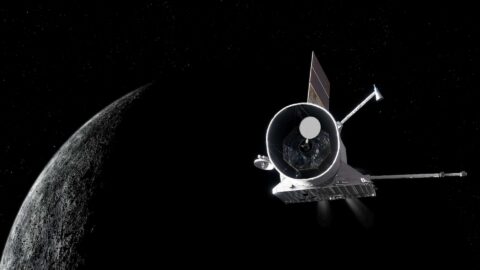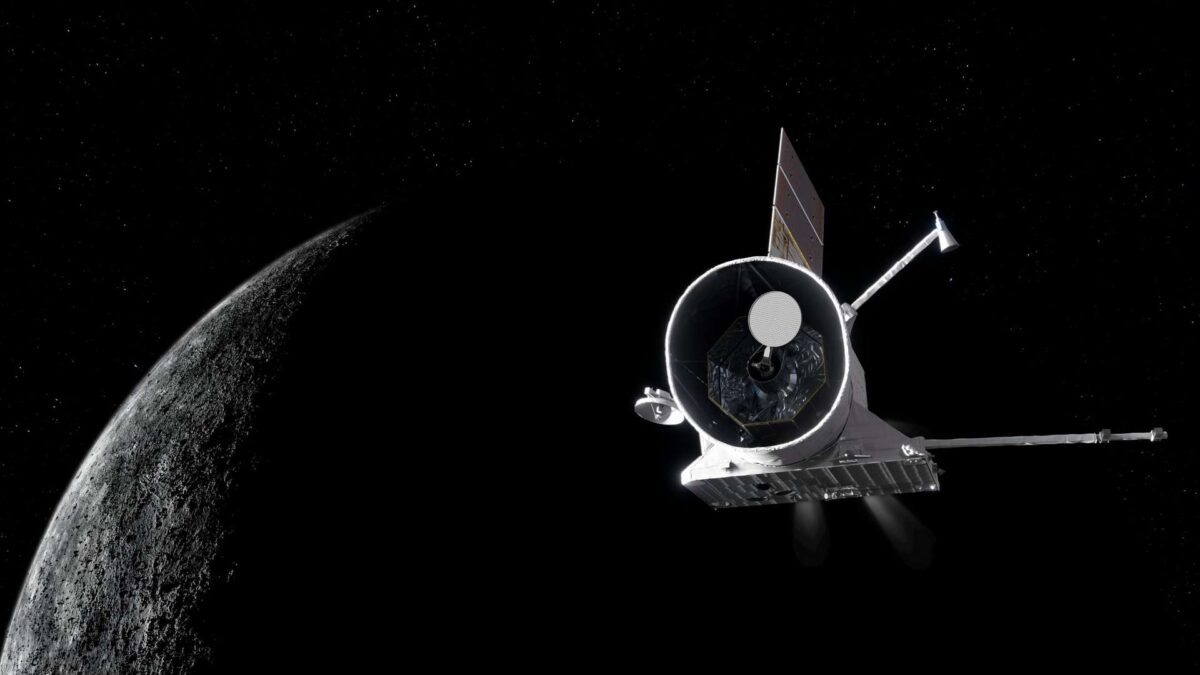
BepiColombo Mercury mission, Digimart Global: The BepiColombo spacecraft has been captured by Mercury’s gravity and is now in orbit around the smallest planet in the Solar System, according to a publisher report from Futura Sciences. The mission, led by the European Space Agency with Japanese participation, travelled for roughly eight years and about 10 billion kilometres before reaching its destination.
The spacecraft currently follows a highly elliptical orbit of 674 by 178,000 kilometres in altitude. The report notes that the full scientific programme will not begin until April 2027, because a series of manoeuvres must be completed first.
Planned manoeuvres before science begins
On 9 and 10 December 2026, the MPO planetary orbiter is scheduled to separate from the Mio magnetospheric orbiter and release it into an orbit of 590 by 11,640 kilometres. On 16 December 2026, MPO is due to eject its solar shield and move toward its own final orbit, which it is expected to reach on 10 March 2027, at an altitude between 480 and 1,500 kilometres.
The report describes BepiColombo as the third mission to Mercury and the first European mission to the planet. It is also the first to place two spacecraft in orbit around Mercury at the same time, a configuration the mission is expected to use to address questions left open by NASA’s Messenger probe.
Why Mercury matters to scientists
According to the report, Mercury is the closest planet to the Sun and the least explored. ESA science programme director Alvaro Gimenez attributed this to the difficulty of reaching the planet rather than a lack of scientific interest.
The mission’s main goals include studying the planet’s surface and magnetosphere, tracing the history of its magnetic field, understanding its volcanism, and examining water-ice deposits found in many craters.
The publisher report also says that operating two spacecraft together will help separate spatial variations from temporal ones, which is useful for studying the dynamics of Mercury’s magnetic field and its interaction with solar particles.