wildfire home insurance costs, Digimart Global (California, United States): A homeowner in rural Northern California describes lost sleep over fire risk and the difficulty of finding affordable, reliable home insurance. In a column republished from NPR’s Planet Money, the writer says the problem goes beyond larger and more frequent destructive fires to a market that has become hard to navigate.
Insurers test what keeps homes standing
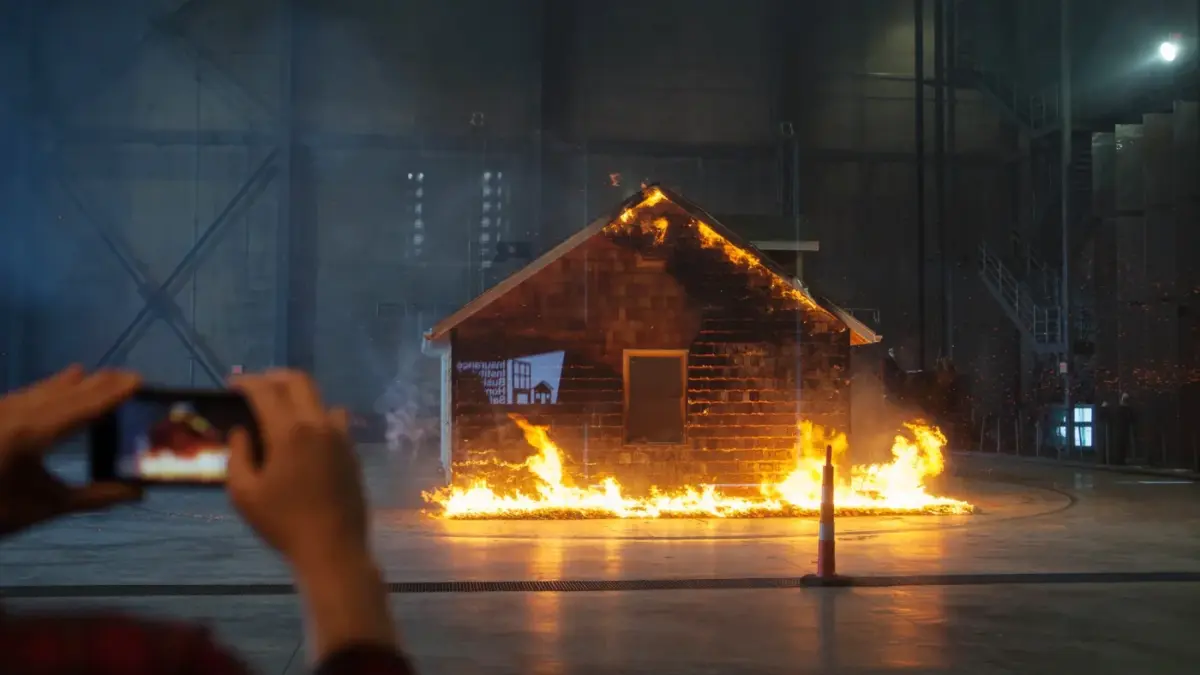
NPR’s Planet Money podcast series by Alexi Horowitz-Ghazi visits a destruction lab in South Carolina, where researchers, funded in part by major insurance companies, set mock houses on fire and expose them to hail and hurricane-force winds. The goal is to learn which building designs limit damage and reduce the payouts insurers must make after disasters.
The article notes that insurers have run similar experiments for more than a century, including early work by the insurer-funded Underwriters Laboratories on electrical wiring and appliances, and crash testing for cars by the Insurance Institute for Highway Safety.
Discounts and the moral hazard problem
The column raises the economic concept of moral hazard, the idea that insurance can reduce incentives to mitigate risk. A homeowner who expects a insurer to cover a rebuild may be less willing to pay for upgrades such as metal roofs or ember-resistant vents, and neighbours who do not upgrade can still leave a community exposed.
One proposed counter is premium discounts for hardened homes. In the second episode, the series reports that residents of Paradise, California, who have worked to protect their homes and community say the discounts insurers offer are small.
The writer asks whether this reflects an accurate insurer estimate of expected wildfire savings or a market failure.
California’s regulatory history
The article cites UC Berkeley economist Nancy Wallace, who argues that California’s regulatory system has made the problem worse. Proposition 103, approved by voters in 1988, required state approval before insurers could raise rates, and insurers were required to rely on historical wildfire losses rather than forward-looking catastrophe models.
Wallace suggested this kept premiums artificially low, encouraged building in fire-prone areas, and led insurers to withdraw when payouts mounted.
Coverage and the state backstop
The writer reports that insurers have declined to renew policies in fire-prone areas, pushing some families into the California FAIR Plan, the state’s insurer of last resort. The writer’s family later moved to a policy in the non-admitted market, which offers better coverage than the FAIR Plan but lacks the state-mandated backstop if the insurer fails after a large fire.
According to the series, California adopted rules in late 2024 allowing insurers to use forward-looking wildfire models in exchange for writing more policies in high-risk areas. Economist Judson Boomhower, quoted in the series, said higher prices could be one sign that the market has healed.
The column notes that a planned Planet Money newsletter next fire season will examine the non-admitted market and state efforts to restore the admitted market. NPR states that it does not offer or accept money for coverage or interviews.