

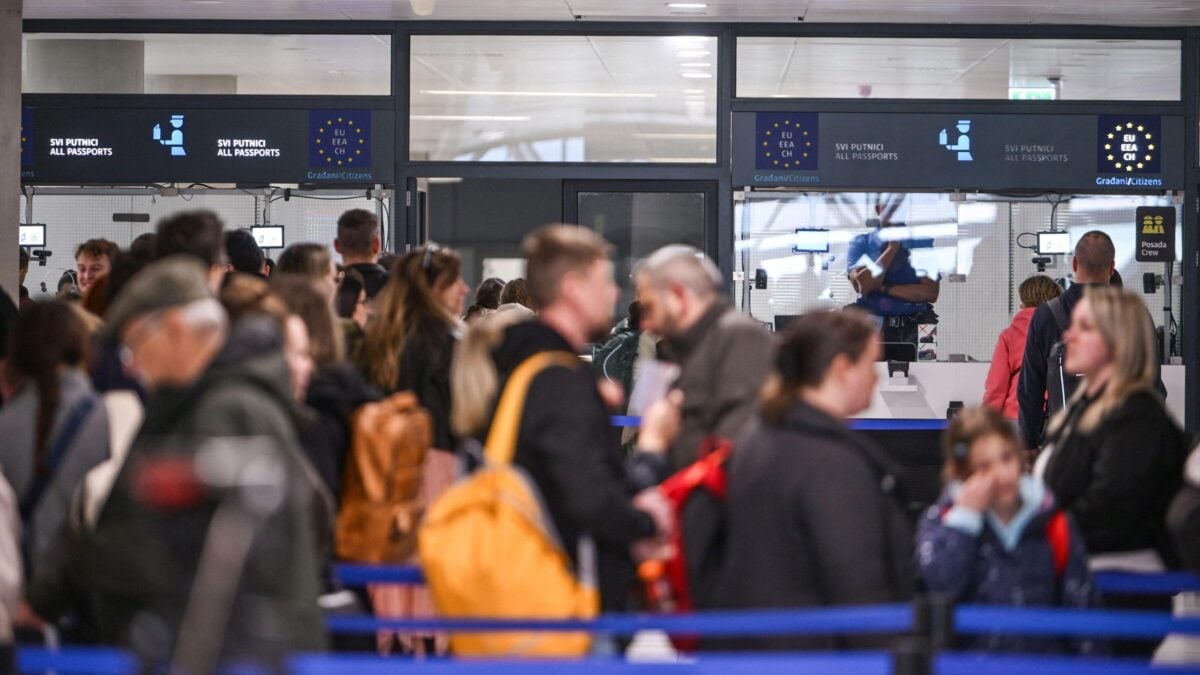
EES border system delays and record errors for British travellers in Europe, Digimart Global (Europe): According to a Telegraph travel report by Simon Calder, the Entry-Exit System (EES), a digital borders scheme covering the Schengen area, has caused continuing problems for British travellers. The system began registering third-country nationals, including Britons, in October 2025, and was reported to be operating across all Schengen frontiers from April 2026.
Under the rules issued by Brussels, non-EU travellers must be registered on the EES database on their first crossing, with passport data and biometrics recorded. On later crossings, usually only a facial biometric is required.
However, each of the 29 Schengen member states implements the system in its own way, and the report says some have added or changed procedures.
The report describes missed flights at Milan’s Linate Airport in April, where a family from Leeds said they had to pay more than £1,600 for replacement flights after their easyJet flight departed without them. It also describes long queues at the Port of Dover on the opening Saturday of May half-term, where some motorists waited three hours before French officials temporarily stopped registering passport details.
The more serious cases involve travellers whose departures were not recorded. The Telegraph reports that Paula Pugh from Norfolk was deported from Italy in September, despite having spent only 22 days in the previous six months in the Schengen area, because the database had not recorded an earlier departure.
Other readers have told the newspaper that the EES tool still shows them in the Schengen area months after returning home, including Neil Tungate of New Milton, Hampshire, who says French authorities have not corrected his record more than four months after his return.
According to the report, data privacy rules limit who can change EES records, and corrections generally need the traveller present at a border or supervision by national data protection officials. The European Commission told The Telegraph that member states are responsible for correcting inaccurate overstay data and that it has been urging them to register all border crossings correctly.