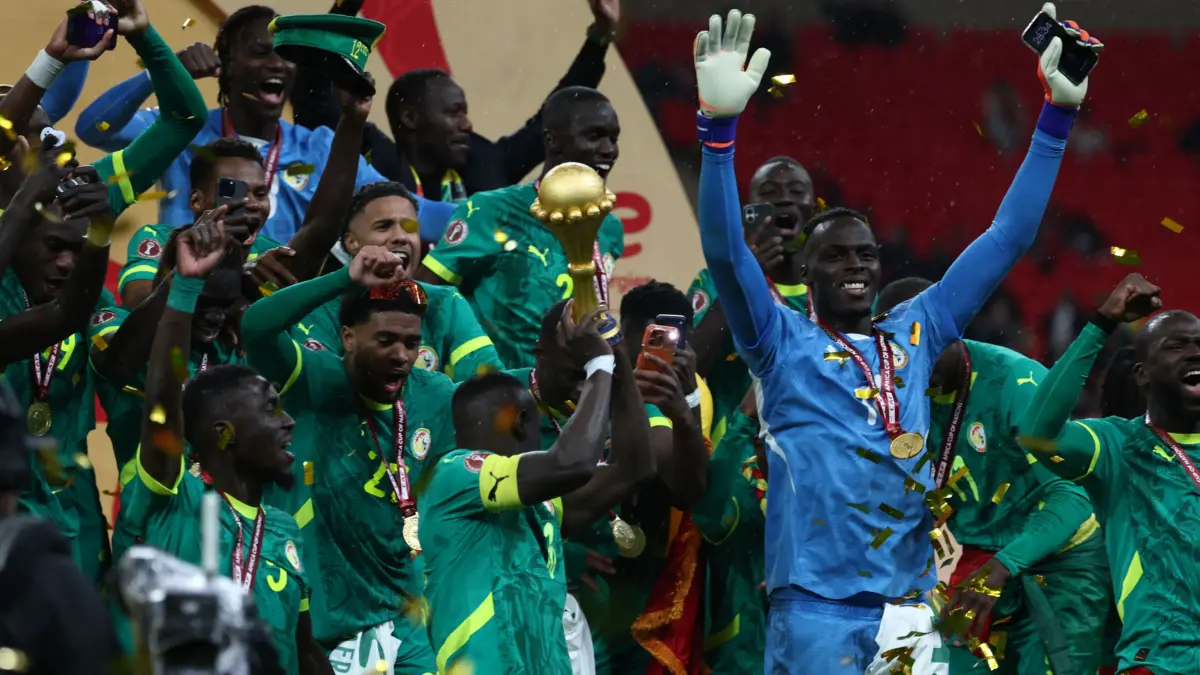
Africa Cup of Nations final, Digimart Global: The dispute over the 2025 Africa Cup of Nations final has shifted from what happened on the pitch to the procedure that will lead to the final ruling. Mourad El Ajouti, president of the Lawyers’ Club of Morocco, has focused on a reported phone call between one of the Court of Arbitration for Sport (CAS) panel’s arbitrators and the president of the Senegalese football federation.
The Royal Moroccan Football Federation sent an official letter to the CAS Court Office notifying it of the call. In comments reported by Moroccan outlet Hespress, El Ajouti said that if the incident is proven, it would not be a simple procedural irregularity but would affect the integrity of the panel’s composition and the validity of any award it issues.
Independence and impartiality rules
El Ajouti pointed to Article R33 of the Code of Sports-related Arbitration, which requires arbitrators to be independent and impartial and to disclose immediately any circumstance likely to raise legitimate doubts. Because CAS is based in Lausanne, he said Swiss law also applies, including Article 182(3) of the Swiss Federal Act on Private International Law, which requires equal treatment of the parties and their right to be heard.
In his view, a private communication between an arbitrator and one party, outside official channels and about a case still under deliberation, runs counter to these guarantees. The other party would not know what was said or have the chance to respond.
He stressed that proof of actual influence on the ruling is not required; circumstances likely to raise legitimate doubts are sufficient, with the seriousness depending on the nature and content of the contact.
Possible challenges and appeal
El Ajouti explained that Article R34 allows any party to challenge an arbitrator where such doubts arise, with the request due within seven days of learning of the grounds. The International Council of Arbitration for Sport would then rule on it.
He distinguished between a letter reporting the incident, which documents it for the court, and a formal challenge, which is subject to strict conditions and deadlines.
He also noted that under Article 190 of the Swiss federal law, an award may be challenged before the Swiss Federal Supreme Court within 30 days if the panel’s composition was legally flawed or equal treatment was breached. He cited the case of Chinese swimmer Sun Yang, whose arbitral award was annulled by the Swiss Federal Supreme Court on 22 December 2020 over doubts about an arbitrator’s impartiality, leading to a new hearing before a fresh panel.
El Ajouti concluded that these guarantees are essential conditions rather than formalities, and that a breach could affect the outcome of the entire proceedings. He added that an offending arbitrator could face measures affecting their professional standing, including removal from the list of accredited arbitrators.