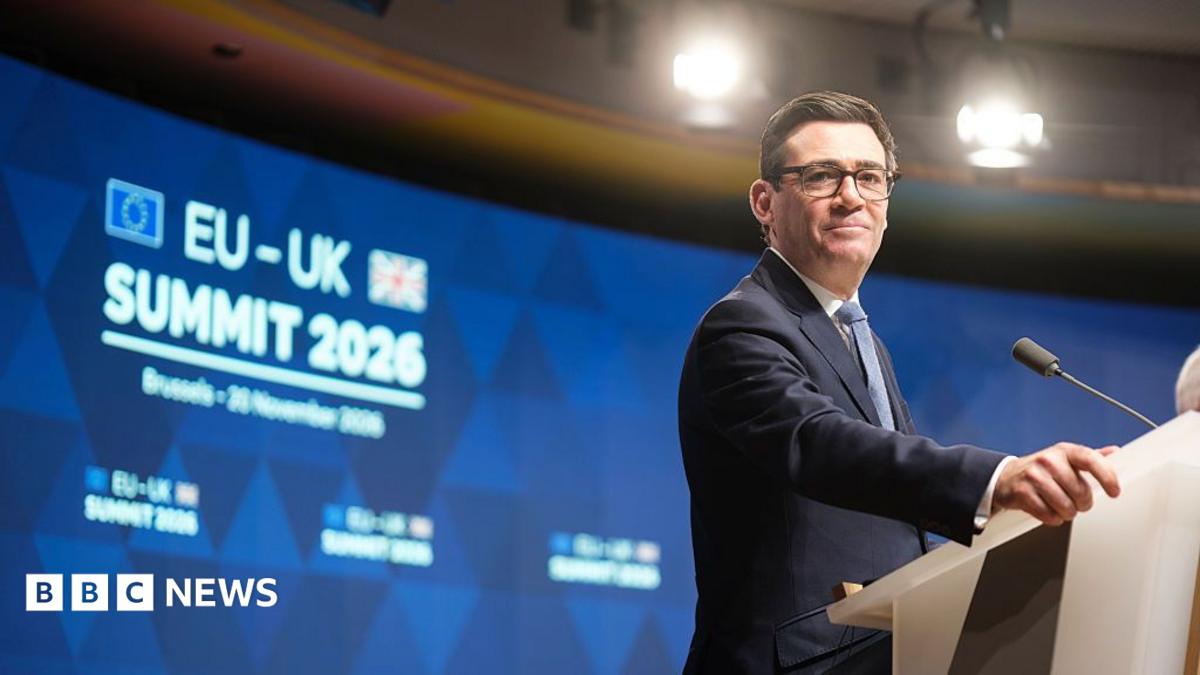
Burnham EU relationship, Digimart Global (United Kingdom): Prime Minister Andy Burnham has told MPs he will not rule out seeking a mandate for another in/out referendum on Britain’s membership of the European Union at the next general election. Speaking to the Commons after Friday’s EU-UK Summit in Brussels, he said he would recommend a referendum only if it were in Britain’s national interest.
Burnham said there was “no fixed opinion” and “no fixed destination” on the question, and suggested his public comments on Europe may be less frequent, promising a “calm, constructive and pragmatic consideration” of Britain’s long-term interests rather than a “running commentary”.
Reaction and the European debate
The issue has already drawn organised responses. A campaign group called Stay Out has been set up to argue against rejoining, while the European Movement is helping launch a rival outfit called Get In.
Burnham also noted that Europe could change in coming years, pointing without naming her to the possibility that Marine Le Pen could become president of France.
What the EU has said
EU sources described Burnham’s wish to “brainstorm” the future relationship as normal diplomacy, outlining the options as the status quo, the customs union, the single market and full membership. They did not expect the discussions to involve additional meetings or bespoke talks, with one source saying: “We don’t need a template.
It will be part of the regular discussion.”
Agreements and next steps
The government is due to publish its European Partnerships Bill, the legislation needed to enact the summit agreements in UK law, with the legal text of those agreements expected later in the same week. Reporting on the deal indicates that if Britain changed its position on the food export arrangements within 10 years, Brussels could charge London for reinstating checkpoints that would otherwise no longer be needed.
Negotiations continue on other areas, including a possible deal on university tuition fees within six months, a reciprocal arrangement that both sides believe is within reach, the UK’s inclusion in the EU’s ‘Made in Europe’ plan, and the EU’s common electricity market. Burnham has said incremental changes only take the UK so far, and the central question remains how much further closer ties should go.