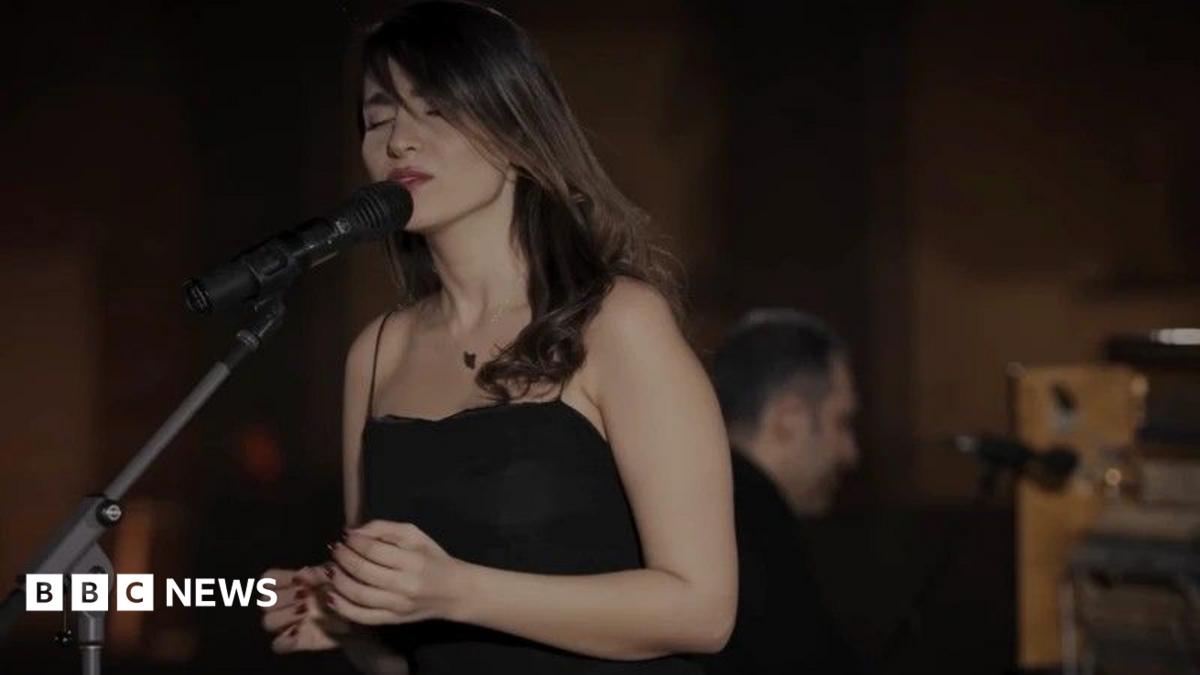
Parastoo Ahmadi flogging, Digimart Global (Qom, Iran): A prominent Iranian singer, Parastoo Ahmadi, and four members of her band and production team have been flogged, according to their lawyers. A defence team member told the BBC that Ahmadi, three musicians and a producer were each given 74 lashes in the city of Qom.
Ahmadi, 29, performed a concert without the mandatory hijab, wearing a sleeveless dress. The concert was livestreamed in December 2024. Iranian law bans public performances by women and requires them to wear headscarves and modest clothing.
In June, a criminal court in Qom convicted Ahmadi and eight others of “offending public decency” through the publication of “obscene and indecent material”, charges the defendants had denied. In addition to the lashes, they were banned from audiovisual activities and from leaving the country for two years.
At the end of September, an appeals court in Qom rejected their appeal and upheld the sentence, her lawyers said.
One of the defendants’ lawyers told the BBC that Ahmadi and four male co-defendants were flogged at the third branch of the Criminal Sentence Enforcement Office in Qom. He said the defence had sought to overturn the verdict, reduce the sentence or suspend it, and had also tried to postpone enforcement, but the enforcement branch insisted on carrying it out immediately.
The pro-reform daily Etemad, citing defence lawyer Mostafa Nili, named the four men flogged alongside Ahmadi as Soheil Faghih-Nasiri, Amin Taheri, Amirali Pirnia and Mohsen Lashkari.
Reaction and wider context
The sentences drew widespread condemnation from other Iranian artists and human rights activists, who said flogging amounts to cruel, inhuman and degrading punishment and violates the international prohibition on torture. Bahar Ghandehari, director of advocacy at the US-based Center for Human Rights in Iran (CHRI), described the flogging as a flagrant violation of Ahmadi’s fundamental rights.
Under Iranian law, which is based on the country’s interpretation of Sharia, women and girls above the age of puberty must cover their hair and wear long, loose-fitting clothing. The rules have been tested since 2022, when protests spread across the country after the death in custody of Mahsa Amini, a 22-year-old Kurdish woman detained by morality police in Tehran.
Since then, many women have stopped covering their hair in public, and authorities have responded with periodic arrests, warnings and business closures.
The Norway-based group Iran Human Rights says authorities have intensified their use of the death penalty against protesters since the start of Iran’s war with the US and Israel in late February. It reports at least 39 men convicted over January’s protests and two convicted over the 2022 unrest have been executed, and says another 121 protesters detained in January have been sentenced to death.