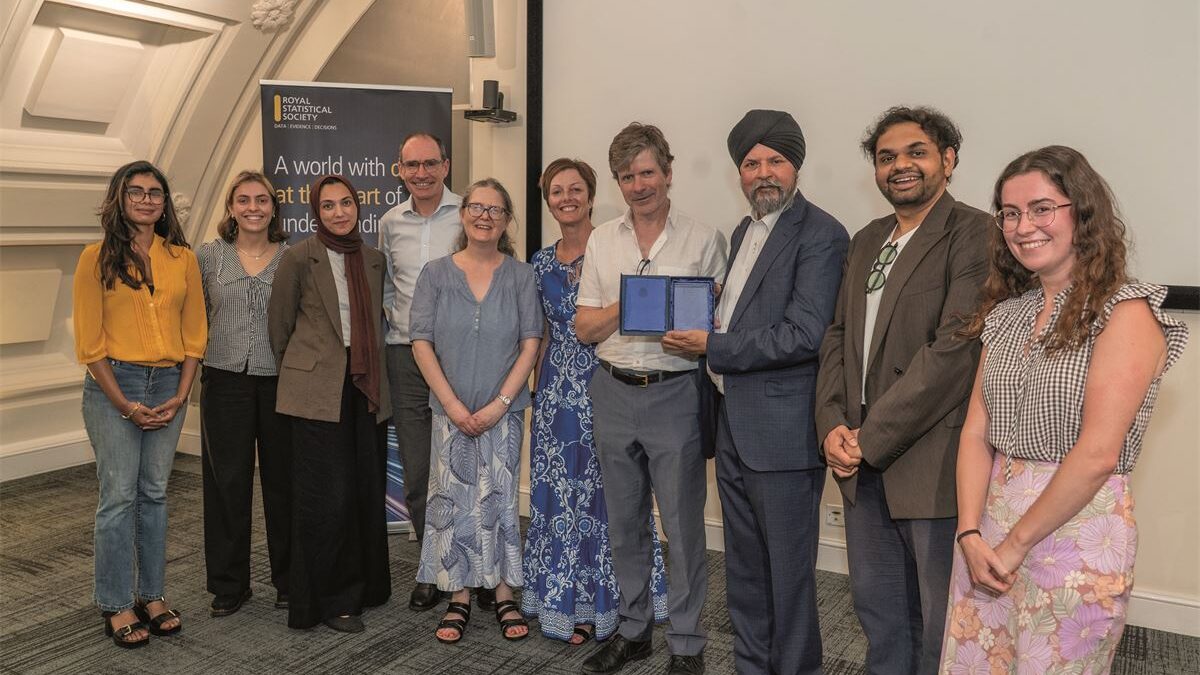
DWP benefits undercounting, Digimart Global (United Kingdom): Undercounting, the omission of some people from data collection, has long affected government surveys across Whitehall. Four teams at the Department for Work and Pensions have now received the Royal Statistical Society’s 2026 Campion Award for Excellence in Official Statistics for a project that addressed this problem in household survey data on poverty and income.
The award was presented in partnership with the UK Statistics Authority and Civil Service World. The winning teams were the Family Resources Survey team, the FRS Transformation team, the Households Below Average Income team and the Pensioners’ Incomes team.
According to the RSS, the work will strengthen the evidence base used by policymakers, researchers and academics.
A long-standing gap in the survey
The Family Resources Survey has run since 1995 to provide data for the DWP to make decisions on benefit payments and eligibility. Interviews target around 20,000 households, although the typical number is 16,000 households.
According to Donncha Burke, the FRS transformation project lead, the survey has been run in exactly the same way since its inception, creating a long-term baseline of standardised data.
The survey has consistently undercounted benefit recipients. Grossed estimates are, on average, 20% lower than the actual administrative caseload.
Burke said this meant income was being missed for respondents at the lower end of the income distribution, which in turn affected estimates of income distribution and the number of adults and children classified as in poverty.
Linking data to correct the count
Reasons for the undercount varied, from interviewer error to respondents who were unsure or wrong about the benefits they received. Burke described some obvious misrepresentations, such as respondents claiming benefits they could not be receiving.
Pensioners tended to know which benefits they received but not the total amount.
Work to correct the problem began about 10 years ago, when Burke and Joanna Littlechild, DWP’s head of surveys, sought to link what respondents said with personal data, with consent. A novel linking methodology developed by statistician Jacob Hamblin-Pyke raised the match rate from about 80% to more than 95%.
Emma Ringshaw later refined the approach and developed the quality assurance process, and contractor Alice Ndikumagenge made further contributions. The Institute for Fiscal Studies, the Joseph Rowntree Foundation and the Resolution Foundation also provided support and input.
Results and next steps
According to the account, the approach reduced the undercount by between half and a third, to between 6% and 10%. Further measures are planned to correct continuing sample bias and reduce the figure further.
The first research paper was published in March 2024, and the FRS integrated the policy in March 2026.
Burke advised other civil servants working on data linkage to be patient, noting that other departments may be wary of sharing data for protection reasons and that understanding the data takes time.