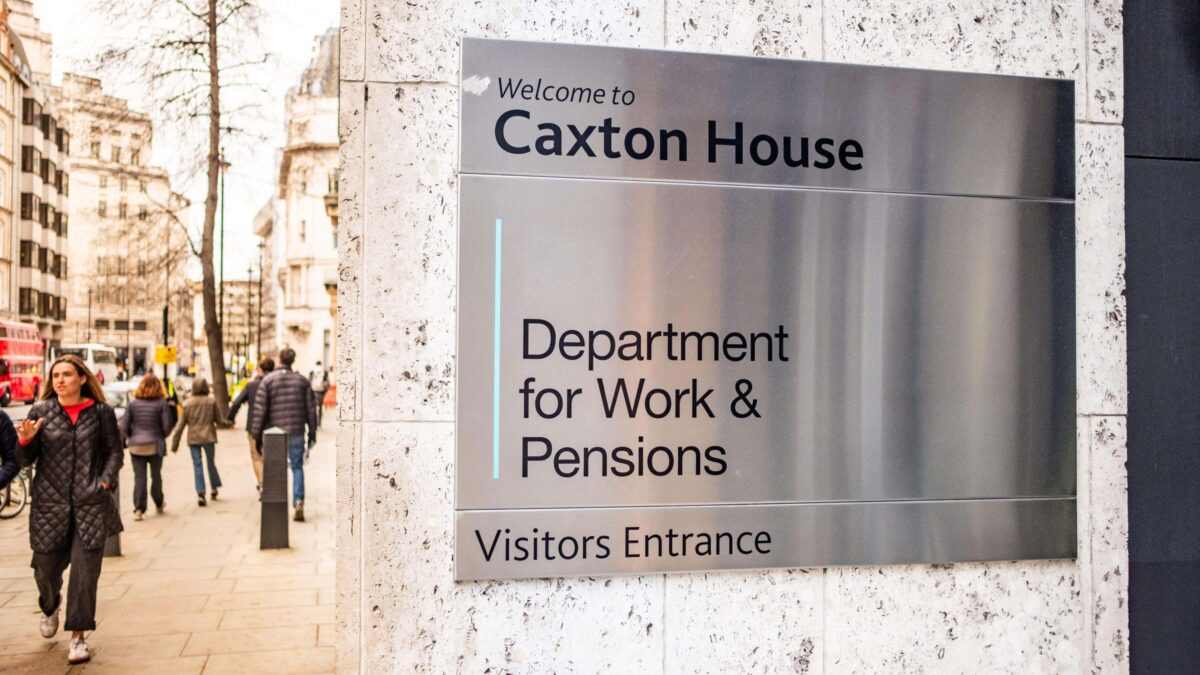
disability benefits Pip claimants, Digimart Global (England and Wales): A Government-commissioned review of Personal Independence Payment (Pip), the main disability benefit in England and Wales, is due to be published and is likely to recommend a major overhaul of who is eligible and how claimants are assessed, according to the Press Association.
Pip is paid to people with a long-term physical or mental health condition or disability to help with everyday tasks and extra living costs. It is available in England, Wales and Northern Ireland, although Scotland has a different disability benefit and Northern Ireland manages its own system, so the review focuses only on England and Wales.
The review is led by social security minister Sir Stephen Timms, who described the system as “no longer fit for purpose” when his interim findings were published in July this year.
Rising number of claimants
Department for Work and Pensions (DWP) data show that 4.09 million people in England and Wales were entitled to claim Pip as of 31 July 2026. This is up from 3.83 million a year earlier, a rise of 262,045 or 7%, and more than four times the 0.94 million recorded in July 2016. Pip was introduced in April 2013 to replace disability living allowance (DLA).
Initially the rise was partly due to people moving from DLA, but in recent years growth has been driven almost entirely by new claimants. Of current claimants, 1.34 million (33%) were former DLA recipients and 2.75 million (67%) have only ever claimed Pip.
Most claimants are of working age, at 3.4 million (83%), while 690,000 (17%) are at state pension age. People aged 50 and over make up 55% of those entitled, women account for 55% (2.26 million) and men 45% (1.83 million).
Nearly half of claimants (46%) have been entitled for at least five years, while 23% started claiming within the last two years.
Grant rates for new claims
Just over a third (35.8%) of new Pip claims in July 2026 were granted. Some 61.4% were disallowed and 2.8% were withdrawn.
The grant rate has been on a downward trend for two years, having stood at 41.1% in July 2025 and 46.4% in July 2024.
Most common disabilities among claimants
Of the 4.09 million claimants at the end of July, 1.60 million (39%) were listed as having psychiatric disorders, the highest proportion for any type of disability. General musculoskeletal diseases applied to 764,305 people (19%), and neurological diseases to 512,242 (13%).
Within psychiatric disorders, 268,965 claimants were classed as having autistic spectrum disorders, 159,316 had mood disorders and 106,087 had ADHD or ADD. Some 72,195 listed anxiety disorder as their primary condition, including 24,681 who started receiving Pip in the past two years, of whom 30% are aged 16 to 24 and 22% are aged 25 to 34.
Cost to the Government
DWP figures show total Pip spending in 2026/27 is forecast at £32.1 billion, of which £27.0 billion is for working-age adults and £5.1 billion for pensioners. The total is forecast to rise each year for the rest of the decade, reaching £41.5 billion in 2030/31, with £34.3 billion of that forecast for working-age adults and £7.2 billion for pensioners.