Alberta riding maps, Digimart Global (Alberta, Canada): Legislation implementing controversial new electoral riding maps in Alberta passed debate in the legislature on Wednesday, setting up a likely court battle between the provincial government and the Opposition NDP. NDP Leader Naheed Nenshi has alleged the changes are designed to favour the governing United Conservative Party at the polls by diluting the power of urban votes.
In a statement, Nenshi said the government’s gerrymandering was a direct attack on democracy, calling it unprecedented, illegal and unconstitutional. He said the NDP would launch a legal challenge and that more information would be shared at a news conference on Thursday.
The maps have been a major point of contention throughout the fall sitting, with the NDP repeatedly criticizing the government during question period. The debate heated up further on Wednesday when NDP deputy leader Rakhi Pancholi was escorted out of question period for saying the government was cheating to win the next election, a term Speaker Ric McIver had earlier ruled out of order.
Pancholi told reporters she wanted to draw public attention to the matter, saying the right to vote is a fundamental democratic right and that Albertans would face consequences for years if the maps are implemented. Nenshi said she would have to withdraw her comments to return to the legislature, but she did not say whether she would do so.
Justice Minister Mickey Amery began third reading by defending the maps and arguing that hybrid ridings, which combine urban and rural areas, are common across the country and have been upheld by the courts. He said the new boundaries reflect population growth, communities of interest and effective representation.
The bill must receive royal assent before it officially becomes law.
The maps combine some urban areas in Lethbridge and Calgary with surrounding rural areas to form hybrid ridings. In Lethbridge, the two existing urban ridings are set to become four, including one strictly urban district and three hybrids, some of which stretch to the U.S.
border. Urban ridings in Calgary and Edmonton are set to be about six per cent more populated on average than others in the province, while rural ridings are to be consistently underpopulated.
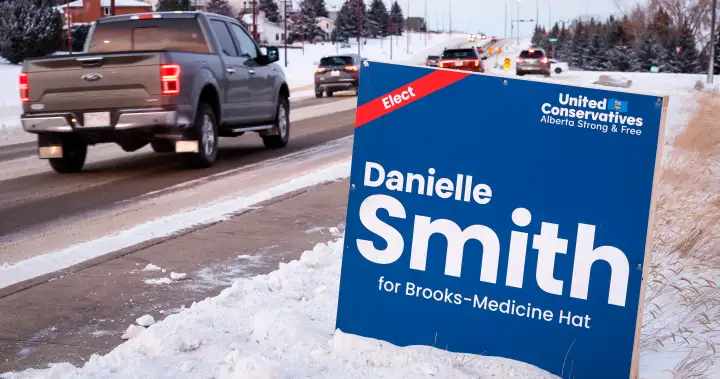
Premier Danielle Smith’s government has denied accusations that it is trying to rig the 2027 election. The boundary redrawing process, which occurs every eight to 10 years, has been controversial since the premier rejected the main recommendations of a public boundaries commission earlier this year.
The government voted those recommendations down and restarted the process with a new advisory panel, which was later given instructions to create two additional ridings.
Sixty-three Alberta professors in political science, law and public administration recently signed an open letter warning that the government was setting a dangerous precedent. The panel’s maps would increase the number of legislature seats from 87 to 91.